NIZWA Showcases Kuwait's Experience in Enhancing Beneficial Ownership Transparency and Technical Assistance Sustainability in Vienna
Press coverage 2 newspapers covered this event: Al-Rai · Kuwait News →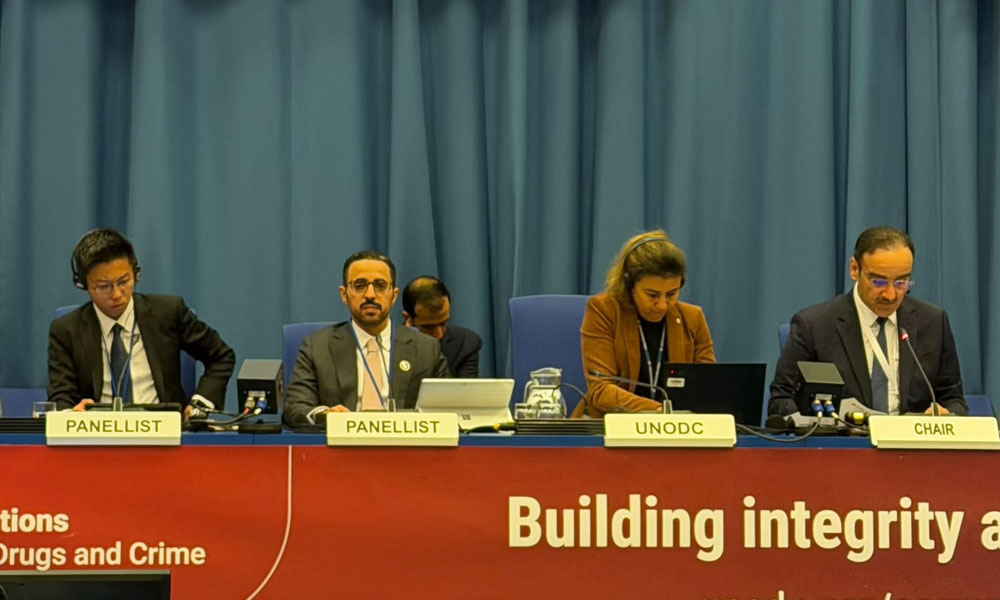
The Public Authority for Combating Corruption showcased Kuwait's experience in enhancing beneficial ownership transparency and technical assistance sustainability in Vienna.
Translated by Qiyas from كويت نيوز — Original source
The Public Authority for Combating Corruption (Nazaha) presented Kuwait’s experience during the meetings of the Open-Ended Intergovernmental Working Group on Asset Recovery, held in Vienna from November 2 to 6. The presentation highlighted the provision and receipt of technical assistance in enhancing beneficial ownership transparency, and the evolution of the initiative from an initial concept to a Gulf-wide guideline and resolutions at both the Arab and Islamic levels, culminating in the presentation of the experience and the exchange of expertise in international forums.
In a press statement, Nazaha noted that this occurred during the presentation by Dr. Abdullah Al-Dabbous, a member of the Authority’s Board of Directors, before the Intergovernmental Working Group in Vienna. He pointed out that Nazaha prepared a guideline on practices and measures for identifying the beneficial owner for Gulf Cooperation Council (GCC) countries, in cooperation with and drawing on the technical expertise of the United Nations Office on Drugs and Crime (UNODC), before the guideline was adopted at the Gulf level in October of last year.
Al-Dabbous stated that Nazaha continued its efforts by organizing a specialized Gulf workshop in July last year, which resulted in recommendations adopted by the GCC Ministerial Committee on Combating Corruption in September. The initiative was subsequently extended to the Arab and Islamic levels.
He added that the Conference of the States Parties to the Arab Convention on Combating Corruption adopted, in September last year, a resolution submitted by Nazaha on behalf of Kuwait regarding the enhancement of beneficial ownership transparency. Furthermore, the Third Ministerial Meeting of Anti-Corruption Law Enforcement Agencies of the Organization of Islamic Cooperation (OIC) adopted, last month, a resolution submitted by Nazaha in the same field.
Al-Dabbous emphasized the importance of sustaining technical assistance, expanding the utilization of its outputs, making knowledge available in the language of beneficiary entities, and strengthening cooperation with international organizations and networks. He noted that Nazaha was selected to co-chair two thematic working groups within the Global Anti-Corruption Network (GLOBE) Network, focusing on knowledge, peer learning, and information exchange.
Al-Dabbous concluded by reaffirming Kuwait’s aspiration to continue enhancing international cooperation, contributing to transforming technical assistance into sustainable institutional capacities and shareable knowledge that can be leveraged on a broader scale.
