Gulf Cooperation Council: 'War bill' costs GCC economies around $790 billion
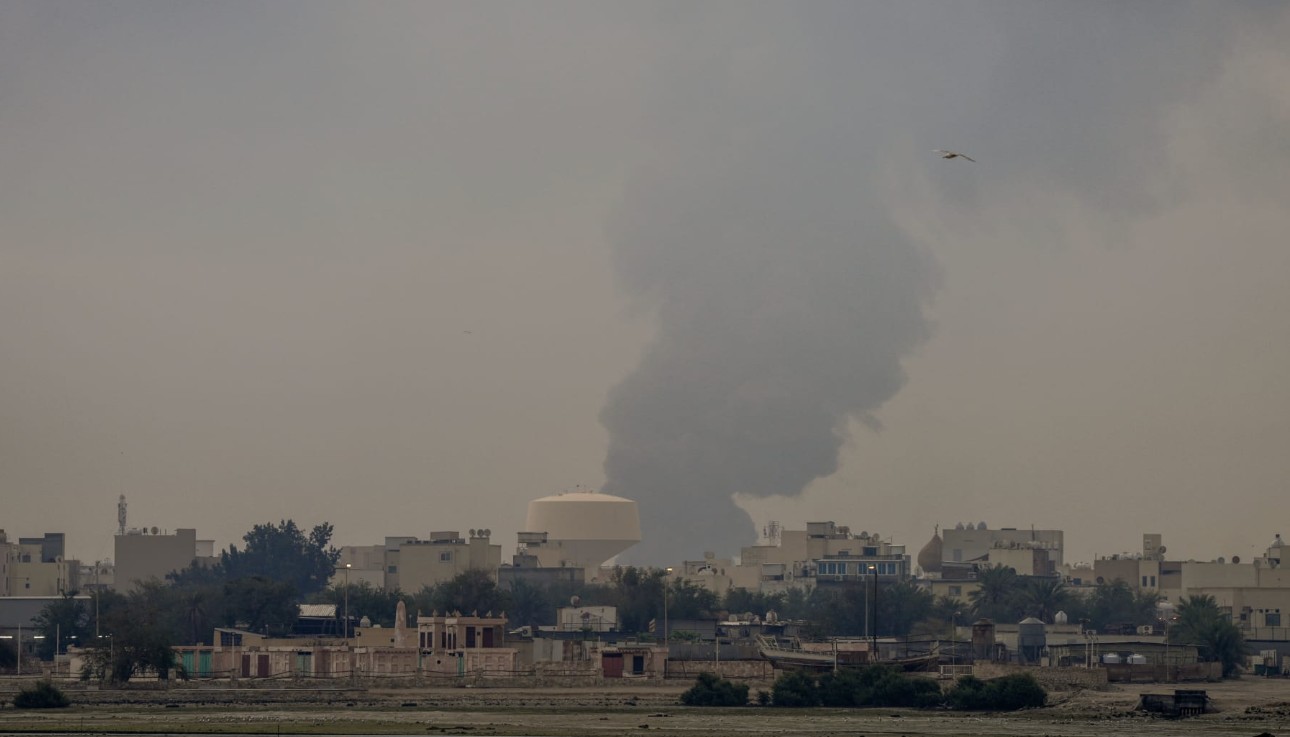
GCC report reviews an Allianz Research study on expected economic losses for Gulf countries from 2026 to 2030
Translated by Alqyas from Al-Wasat — Original source
- Wars are catastrophic even for countries that are not direct parties to them. Kuwait, Qatar, and Bahrain are the biggest losers from the closure of the Strait of Hormuz.
The weekly Al-Shal report noted that a study by Allianz Research, published on November 9, presented estimates of the direct and indirect, realized and potential, losses incurred by Gulf Cooperation Council (GCC) countries for the period 2026–2030. We believe reviewing these findings is useful to illustrate how catastrophic wars can be, even for nations not directly involved.
The study is rich in data; however, it is essential to reiterate what we have stated repeatedly: we live in a world where certainty is weak, perhaps resembling the global conditions of the 1930s. Therefore, the margin of error in the findings of this study, or any other, may be high.
The study states that the GDP of GCC economies will lose 8.2 percentage points, shifting from a pre-war positive growth projection of approximately 4.2% in 2026 to a negative contraction of about 4.0%. It predicts that their economies will lose approximately $790 billion USD during the 2026–2030 period, in addition to roughly $200 billion USD for war-related reconstruction costs. It further notes that Kuwait, Qatar, and Bahrain are the biggest losers from the closure of the Strait of Hormuz, meaning their economic contraction rates will be higher than those of Saudi Arabia and the UAE, while the Omani economy will grow at higher rates.
These developments will negatively impact other indicators. Tourism will lose 22% of its visitors, the energy sector will contract by approximately 8.5%, and trade will shrink by about 5.5%. Inflation rates will double to 2.6%, with the highest rates projected for Qatar and the UAE at around 4.5%, followed by Oman at approximately 3.9%. Inward portfolio investment flows will contract; the study cites one example: a 48% decline in Saudi Arabia from March to August 2026 compared to the same period in 2025.
We do not wish to elaborate further, as the study contains many other detailed figures. The purpose of reviewing the above is to conclude that shocks occur even if a country is not a direct party to them. If these shocks are absorbed and the approach to dealing with them is changed, they may create opportunities that compensate for and exceed the losses, provided that GCC countries elevate their concept of cooperation to a level commensurate with their financial and resource superiority on a global scale. The loss figures cited in the study assume that regional countries will remain passive recipients of external developments. This situation could change positively and fundamentally if they transition from passive recipients to active participants in collectively addressing events occurring within and around the region.
