Trump: We Carried Out New Limited Strikes Against Iran
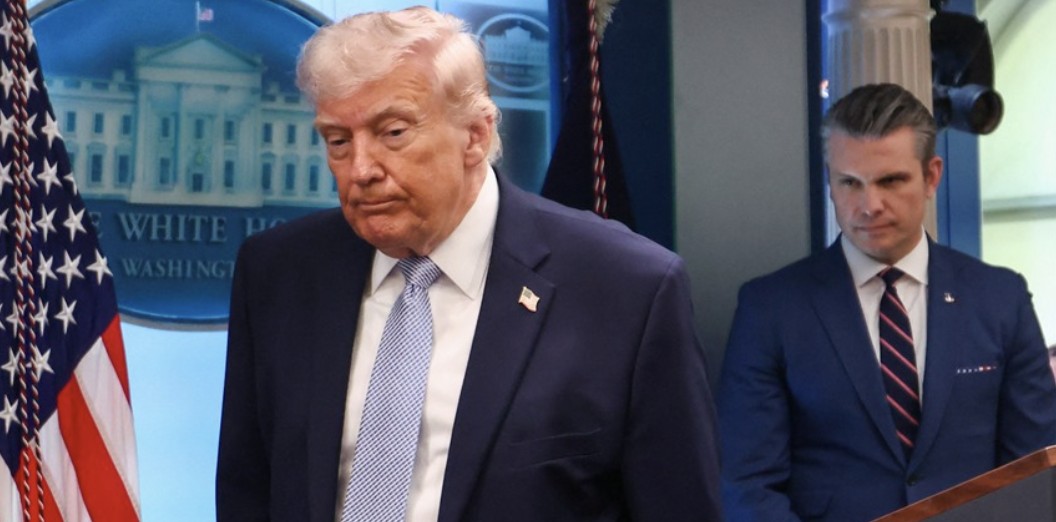
The US President confirms limited strikes against Iranian air defense systems, while Qatari mediators work on a confidence-building deal involving lifting the siege and releasing frozen funds in exchange for allowing IAEA inspectors access.
Translated by Qiyas from الوسط — Original source
- Qatari mediators are pushing a draft confidence-building agreement that includes reciprocal steps. US President Donald Trump renewed his confidence in Defense Secretary Pete Hegseth, affirming that the US military carried out new limited strikes against Iran, targeting its air defense systems. Trump said shortly after arriving at West Palm Beach, Florida: “They built a small air defense facility, but we destroyed it completely within 15 minutes, or perhaps five minutes.” Iranian state media reported hearing two explosions in the Soza area of Qeshm Island, located in the Strait of Hormuz, a vital waterway for oil shipments. In a clip from an interview with CBS, Trump was asked whether he still trusted Defense Secretary Pete Hegseth, to which he replied: “Yes, I trust him.” The US strikes were the first since the Republican Party’s unexpected defeat in Tuesday’s midterm elections. In the days following the Republicans’ landslide loss at the polls, Trump’s stance oscillated between threatening to “destroy” Iran and hinting that a settlement ending the war was near. On the diplomatic track, Qatari mediators are advancing a draft confidence-building agreement that includes reciprocal steps: lifting the US naval blockade and releasing part of Iran’s frozen assets, in exchange for Tehran inviting International Atomic Energy Agency inspectors to nuclear sites that were bombed, and reopening the Strait of Hormuz to pave the way for resuming negotiations on Iran’s nuclear program and its stockpile of highly enriched uranium. In return, Iran insists on seven conditions it says it has presented to Washington, refusing to reopen the strait or enter into negotiations until they are met. These moves coincide with Israeli pressure to resume strikes and divergent US positions on the merits of escalation and its repercussions, particularly on energy markets.
