Discovery of bronze artifacts dating back over 3,000 years in Hungary
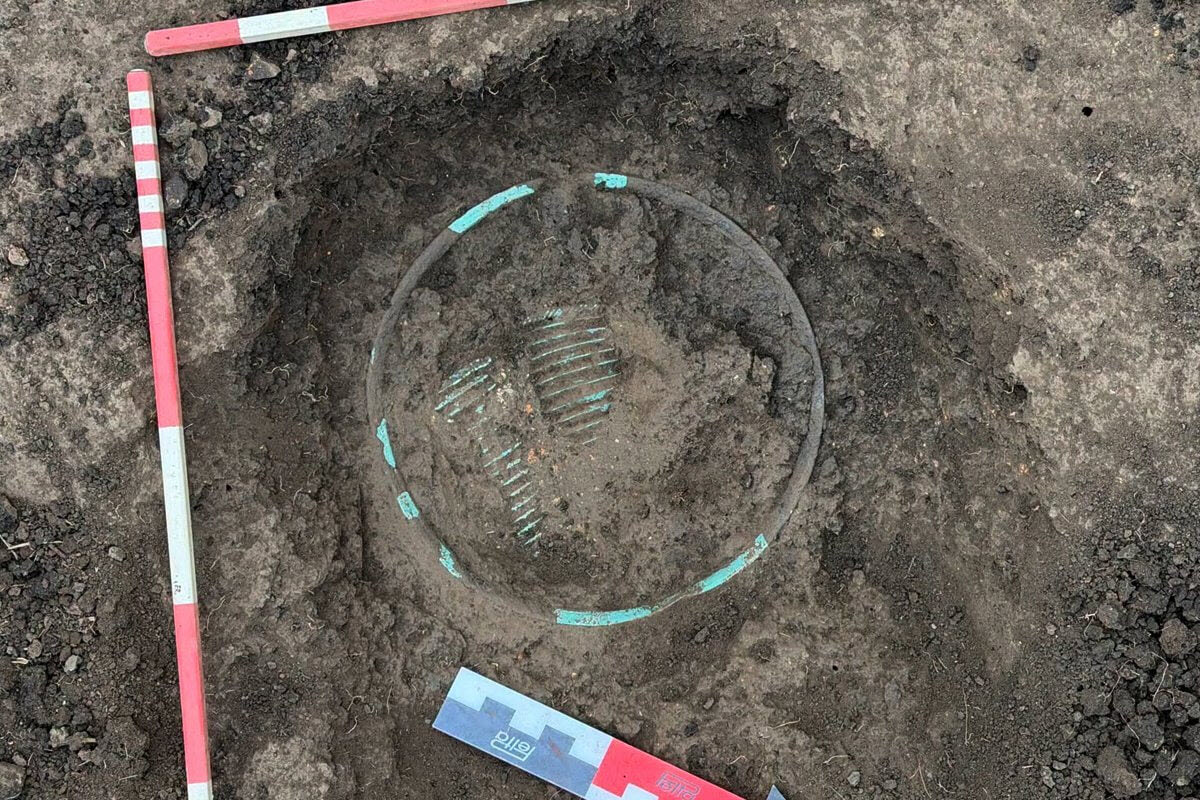
Hungarian archaeologists discover a collection of bronze artifacts at the Mezőkeresztes battle site
Translated by Qiyas from الوسط — Original source
Hungarian archaeologists have discovered a collection of bronze artifacts dating back more than 3,000 years during excavations at the historic Mezokerecseny battlefield site in northeastern Hungary, shedding light on the region’s history during the Bronze Age. According to the specialized archaeological news website Archaeological Times, the discovery was made by researchers from the National Institute of Archaeology affiliated with the Hungarian National Museum, in collaboration with the University of Miskolc. The find includes a large bronze vessel containing three twisted ring-shaped jewelry pieces, with a fourth piece revealed through laboratory analysis, bringing the total number of discovered bronze items to four.
The artifacts were spotted by archaeological volunteer Zoltan Vago during field surveys, under the supervision of archaeologist Gabor Bakos and geographer Andras Gomori. Their morphological and decorative characteristics indicate they date to the period between the 13th and 11th centuries BCE, a time when bronze craftsmanship flourished in the Carpathian Basin.
The team transported the vessel, its contents, and the surrounding soil to the laboratory to preserve the original context of the finds. There, Janos Gabor Tarbai and Andras Gomori conducted meticulous excavation procedures, including the gradual removal of soil, documentation of the artifacts’ positions, and the creation of 3D models.
The team is currently analyzing soil samples to detect plant remains, pollen grains, and chemical traces of organic materials, which will help determine the nature of the substances the vessel may have contained before burial. According to the Hungarian National Museum, this is the first such late Bronze Age assemblage in the Borsod region to undergo such a detailed and well-documented laboratory excavation.
The discovery adds new evidence to the archaeological significance of the Mezokerecseny site, whose human occupation dates back thousands of years.
