Abdul mocks Trump: 'You can call me Senator'
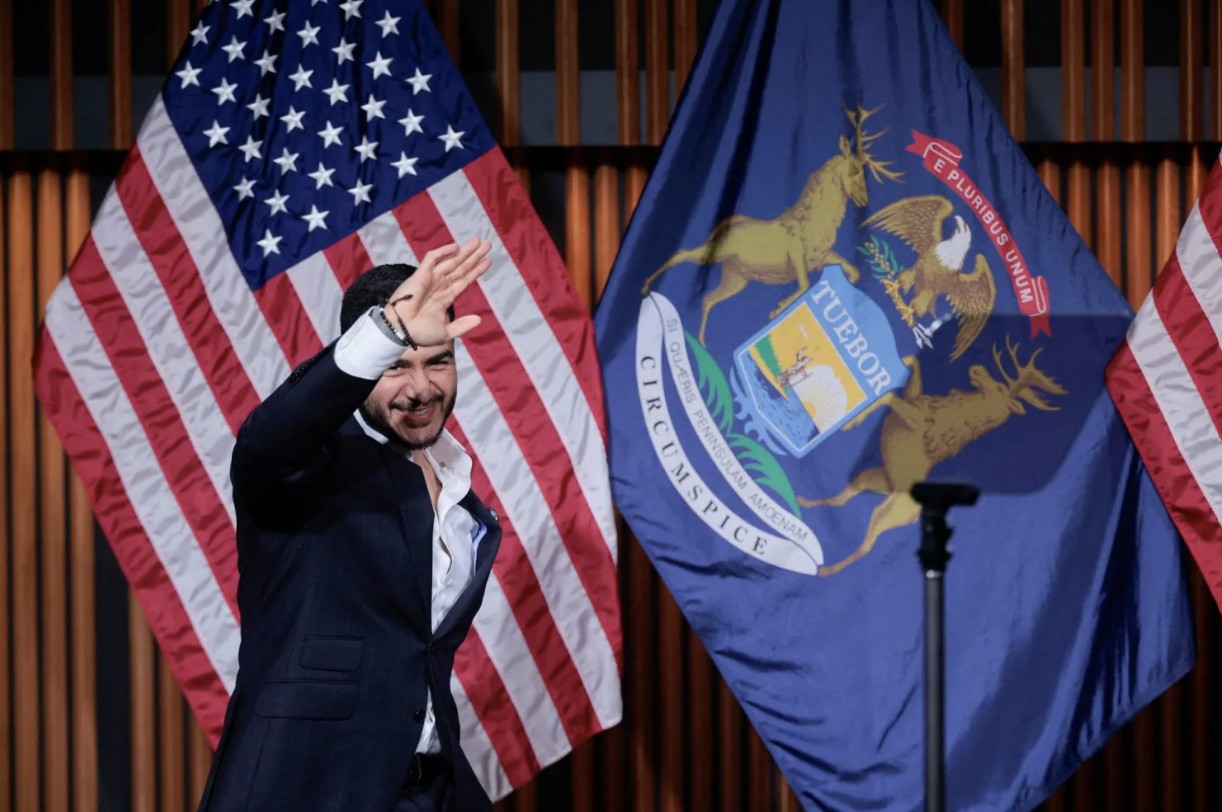
Abdulrahman Al-Sayed wins a US Senate seat for Michigan and exchanges mockery with Trump and Vance.
Translated by Qiyas from الوسط — Original source
Democrat Abdul Rahman El-Sayed, who belongs to the party’s left wing, sent sarcastic messages to U.S. President Donald Trump and his vice president, J.D. Vance, on Wednesday, following his election to the U.S. Senate from Michigan.
El-Sayed, the son of Egyptian immigrants, made history as the first Muslim elected to the U.S. Senate.
In a new round of exchanges between the U.S. president and his administration on one side, and Democrat Abdul Rahman El-Sayed and his campaign on the other, El-Sayed, in his victory speech delivered to supporters in Detroit, pointed out an irony: J.D. Vance would be constitutionally required to preside over the swearing-in ceremony in January, according to the U.S. news website USA Today.
Addressing Vance, he said, “J.D., there’s a funny irony in the fact that you’re constitutionally required to preside over my swearing-in in January.”
He then sent a direct and sharp message to Trump, saying, “Donald, I know you have trouble pronouncing my name; so, after J.D. completes my swearing-in in January, you can simply call me ‘Senator.’”
Earlier, announcing his victory, El-Sayed said, “I am Abdul Rahman Mohamed El-Sayed... I feel great pride and honor standing here as the elected Senator from the great state of Michigan.”
During his campaign, the U.S. president deliberately referred to Abdul Rahman El-Sayed as “Mohamed” instead of his actual name, and described him with terms such as “jihadist” and “leftist,” justifying this by claiming difficulty in pronouncing the name or for personal reasons.
The physician, a native of Michigan, succeeded in mobilizing voters around left-leaning campaign promises—including universal healthcare—thereby securing a vital Senate seat for Democrats, succeeding Senator Gary Peters, who decided to retire.
Throughout the race, Abdul Rahman El-Sayed drew large crowds across the state, even in areas that are strongholds of conservative Republicans. He also pledged to “get money out of politics” and address severe economic crises that led voters to seek a new political figure capable of changing the status quo.
