Iran offers to reopen "Hormuz" within two days.. continuous communications with Washington via intermediaries
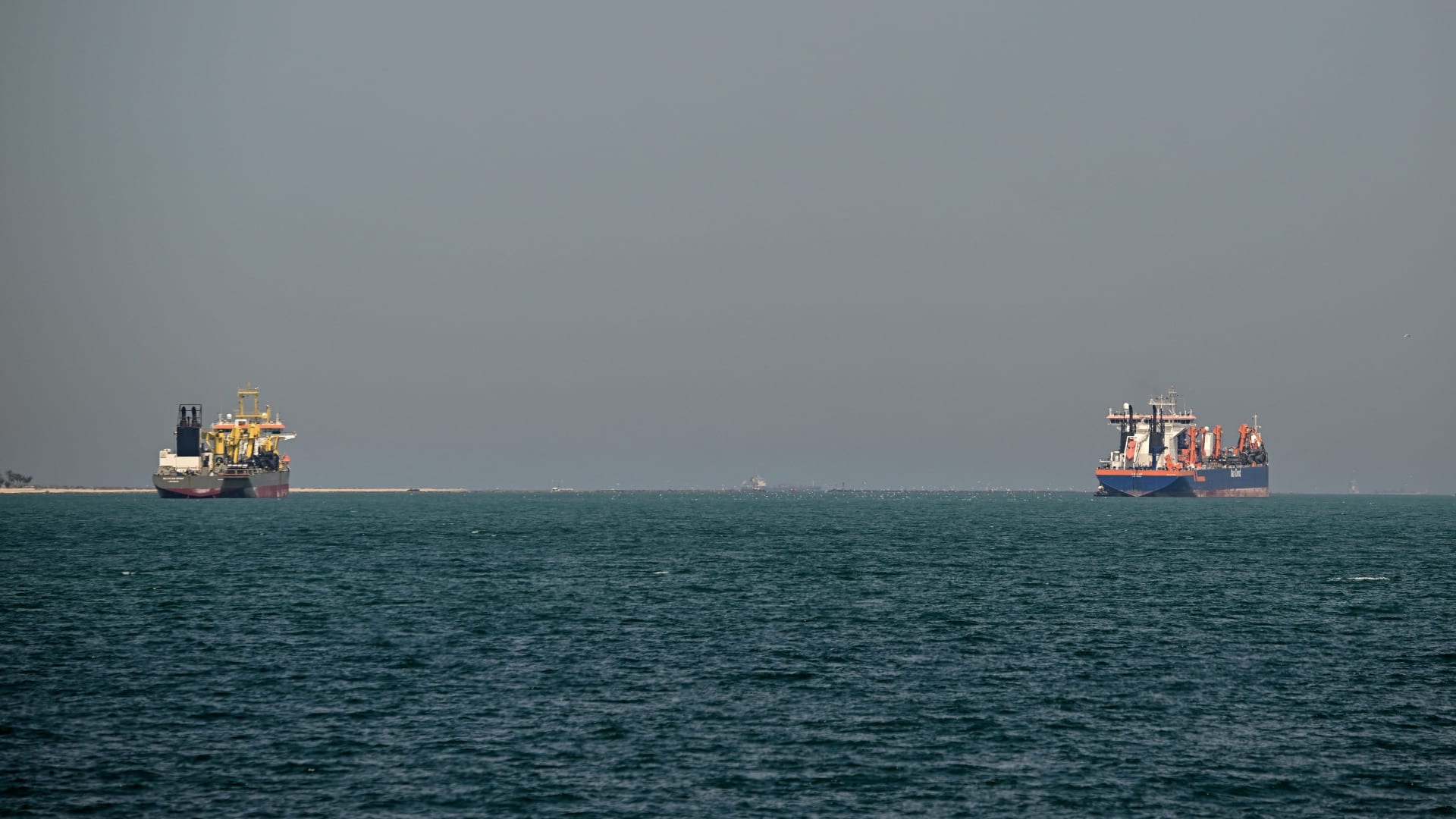
Iran announces its readiness to reopen the Strait of Hormuz under American conditions, while the Chinese envoy continues diplomatic visits to enhance peace in the region.
Translated by Qiyas from الوسط — Original source
Iran announced on Monday its readiness to reopen the Strait of Hormuz within two days, conditional on U.S. approval of its demands, as Iranian Foreign Minister Abbas Araghchi confirmed that communications with Washington continue through intermediaries amid efforts to reach an agreement between the two sides.
On his part, Iranian Foreign Ministry spokesperson Esmail Baghaei said that negotiations with the United States are based on a seven-step Iranian proposal, noting that there is an opportunity to implement it in the coming days. Reuters quoted an official as saying that Iranian negotiators left Doha on Sunday without encountering difficulties in the negotiation file.
Meanwhile, U.S. President Donald Trump renewed his threats of resuming military strikes against Iran, warning that he might have to launch a “devastating strike” against Tehran at an unspecified time. Speaking at a campaign rally in Iowa ahead of the midterm elections scheduled for Tuesday, Trump said he was still giving diplomacy a chance to avoid further loss of life, adding, “I want to try to save all those lives if I can, but at some point, we will have to deliver a devastating blow to them.”
China calls for dialogue to end the war
Chinese Foreign Minister Wang Yi, during a meeting in Beijing on Monday with Ali Bagheri Kani, Deputy Secretary of Iran’s Supreme National Security Council for International Affairs, stated that all parties to the conflict in the Middle East should focus on political solutions rather than resorting to weapons again. Xinhua News Agency quoted Wang as telling the Iranian official that dialogue and negotiation are the way to resolve conflicts in the Middle East. Wang added that China supports Iran in safeguarding its sovereignty and security.
According to a statement from the Chinese Foreign Ministry, Wang said the war in the Middle East “has dragged on, expanded, and widened,” and that “dialogue and negotiation are the path to a solution.” He urged the parties to demonstrate “a sense of responsibility toward their peoples and history,” “meet halfway,” and focus “rationally and realistically” on a political settlement, “rather than resorting to arms again.”
He said China would continue to work with all parties to restore peace in the region, drawing on “a series of initiatives and proposals” put forward by President Xi Jinping to ease tensions in the Middle East.
He added that China-Iran relations “have maintained steady development despite international turmoil,” noting that this “serves the fundamental interests of both peoples and meets the aspirations of countries of the Global South for solidarity and cooperation.” He continued, “China supports Iran in safeguarding its sovereignty and security,” expressing Beijing’s readiness to work with Tehran to continue developing relations between the two countries.
The Chinese statement described Wang as a member of the Political Bureau of the Central Committee of the Communist Party of China and Director of the Office of the Central Foreign Affairs Commission.
The statement noted that Bagheri Kani presented Iran’s vision of regional developments. He said Iran “will firmly safeguard its security, sovereignty, and territorial integrity, and counter hegemony and threats,” but is “also ready to communicate and negotiate with all parties,” working to achieve peace and stability in the region.
The statement added that the Iranian side praised the Chinese president’s initiatives and Beijing’s “firm stance in defending multipolarity.”
He expressed hope that China would play a “greater role” in promoting international and regional peace, and stated Tehran’s readiness to enhance cooperation with Beijing within international and multilateral frameworks. “No Compromise”
Iran’s state television reported that Baqeri Kani discussed with Wang the repercussions of the “US and Israeli aggression against Iran,” Tehran’s diplomatic initiatives to end the war, and ways to enhance “sustainable security” in the region.
Baqeri Kani described the US and Israeli attacks on Iran and the assassination of former Supreme Leader Ali Khamenei, which occurred in the first strikes of the war, as an “unforgivable crime.” He told a reporter for state television: “We consider these acts to be tantamount to war crimes, and such crimes must not be allowed to continue.”
He added: “Tehran’s position in defending its national security, sovereignty, and territorial integrity has not changed, and Iran will not make any concessions in this regard.”
Referring to what he described as US “warmongering” and “hegemony,” he said: “A war against civilization cannot end in victory, and this approach will lead to disruption of the global economy.”
Earlier, the Tasnim News Agency, affiliated with the Islamic Revolutionary Guard Corps, reported that Baqeri Kani traveled to Beijing to meet with Chinese officials and consult with Wang Yi on bilateral, regional, and international developments.
Xinhua: The Gulf Is Not a Battleground for Competition
Chinese President Xi Jinping told Omani Sultan Haitham bin Tarik earlier on Monday that the Middle East and the Gulf region should not become a battleground for competition among major powers.
The Chinese Foreign Ministry quoted Xi as saying: “The Gulf region in the Middle East must not become a arena for competition among major powers and geopolitical conflict. Peace and stability in the region require joint care and protection by all parties.”
Xi stated that China remains committed to stopping the war and hopes to contribute “wisdom and solutions” to resolving the region’s security dilemmas. He added that Beijing is ready to enhance communication and coordination with Arab countries, including Gulf Cooperation Council (GCC) states, to restore peace and achieve lasting stability and security.
In a joint 20-point statement, the two countries agreed on the need to restore normal and safe navigation in the Strait of Hormuz. They called on the United States and Iran to pursue peaceful options and return to the agreement reached in June with the aim of ending the war and resuming dialogue.
The statement expressed Muscat’s support for Chinese proposals aimed at halting the war in the Middle East, and stated that Oman looks forward to Beijing playing a greater role in establishing lasting stability in the region.
Chinese Envoy to the Region
China, which is seeking to enhance its diplomatic role in the Middle East, announced that its special envoy to the region will visit Iran, Oman, and Saudi Arabia this month.
Chinese Foreign Ministry spokesperson Mao Ning said that Special Envoy Chai Jun would make the visits between early and mid-November.
She explained that these visits are part of a series of trips by Chinese diplomats to promote peace and dialogue and work to de-escalate tensions. Mao Ning added that Liu Xianfa, China’s Special Representative for African Affairs, would visit Ethiopia, Djibouti, and Egypt during the same period, according to Reuters.
China has traditionally played a cautious diplomatic role in the Middle East, but has intensified efforts to help end the US-Israeli war against Iran. The war has disrupted navigation in the Strait of Hormuz and driven up global energy and shipping costs.
