Foreign Minister: Global Security and Stability Depend on an International System Respecting Sovereignty and Non-Interference
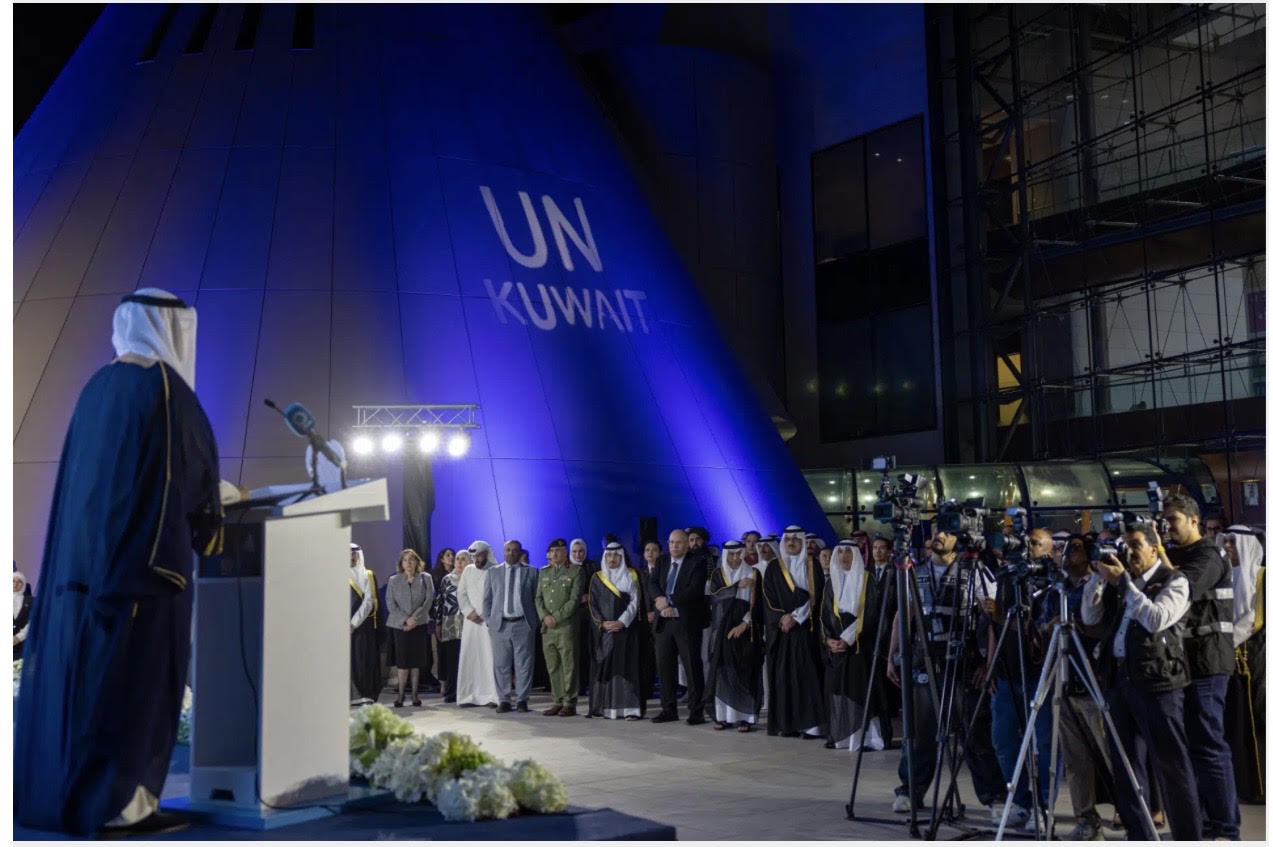
Kuwaiti Foreign Minister Jaraah Jaber Al-Ahmad Al-Sabah emphasized that global security and stability depend on an international system respecting state sovereignty, territorial integrity, and non-interference in internal affairs, stressing the role of diplomacy in safeguarding peace.
Translated by Qiyas from الوسط — Original source
Foreign Minister Sheikh Jaraah Jaber Al-Ahmad Al-Sabah affirmed that diplomacy serves as a fundamental pillar for preserving peace, preventing conflicts, bridging differences, and building trust among nations, even under the most complex and challenging circumstances. He emphasized that its effectiveness is linked to adherence to the United Nations Charter and international law, as well as to strengthening the multilateral system that provides countries with a framework for resolving disputes and safeguarding their rights and interests.
Speaking on the occasion of United Nations Day, observed annually on October 24, Sheikh Jaraah Jaber Al-Ahmad Al-Sabah noted that this year’s celebrations are held under the theme “The Power of Diplomacy,” which holds special significance amid overlapping crises, ongoing conflicts, and escalating geopolitical tensions. He stressed that diplomacy transcends being merely a tool for managing interstate relations, forming instead an essential means of preserving peace, avoiding conflicts, and enhancing international dialogue and cooperation.
He added that since its establishment in 1945, the United Nations has played a pivotal role in safeguarding international peace and security, promoting sustainable development, protecting human rights, and consolidating dialogue and cooperation among nations, noting that the Organization remains the cornerstone of collective international action.
Clarifying that diplomacy’s strength for Kuwait is not merely a theoretical concept but a fundamental pillar of its national identity and foreign policy, he pointed out that since joining the United Nations in 1963, Kuwait has consistently maintained that global security and stability depend on an international system based on respect for state sovereignty, territorial integrity, and non-interference in internal affairs.
He noted that, guided by these principles, Kuwait has pursued a balanced foreign policy centered on dialogue and mediation, working over decades to contribute to resolving regional and international crises and containing tensions. He affirmed that while some of these efforts are public and well-known, others have been conducted quietly and away from the spotlight, driven by a firm belief in diplomacy’s capacity to open doors closed by conflicts.
He highlighted that the partnership between Kuwait and the United Nations evokes an unforgettable historical stance by the international organization and its bodies, particularly the Security Council, following Iraq’s invasion of Kuwait in 1990. He explained that the international community’s decisive commitment to the principles of justice contributed to Kuwait’s liberation and the restoration of its sovereignty in 1991.
He affirmed that under the wise leadership of His Highness the Amir Sheikh Meshal Al-Ahmad Al-Jaber Al-Sabah and His Highness the Crown Prince Sheikh Sabah Khaled Al-Hamad Al-Sabah, Kuwait will remain an active and reliable partner to the United Nations, continuing to support international multilateralism, advocate for peaceful diplomatic solutions, and back humanitarian efforts, thereby contributing to realizing shared global aspirations for peace, stability, and prosperity.
The Foreign Minister concluded by emphasizing that United Nations Day is not merely an occasion to recall past achievements, but a renewed opportunity to reaffirm commitment to the principles upon which the Organization was founded, foremost among them the belief in dialogue’s ability to overcome divisions and in cooperation to address common challenges.
On the other hand, Ghada Fawaz, the United Nations Resident Coordinator and Representative of the Secretary-General in Kuwait, affirmed that diplomacy represents a strategic choice and a fundamental tool for preventing conflicts, containing crises, and building peace. She stressed that international dialogue, cooperation, and respect for international law remain indispensable pillars for achieving security and stability amid escalating global and regional conflicts and challenges.
Speaking on the occasion of the 2026 United Nations Day celebrations under the theme “The Power of Diplomacy,” Fawaz stated...
The world, 81 years after the founding of the United Nations, still urgently needs to strengthen multilateralism and prioritize dialogue over confrontation, recalling that the UN Charter was established with the pledge to spare future generations from the scourge of war, drawing on the harsh human experiences left by the world wars. Regarding the role of the State of Kuwait, Al-Taher praised its contributions to multilateral efforts, emphasizing that since joining the United Nations in 1963, Kuwait has solidified its position as an active partner in supporting mediation, humanitarian diplomacy, and the provision of development assistance.
