Kuwait: The Veto Should Not Become an Obstacle to the UN's Objectives
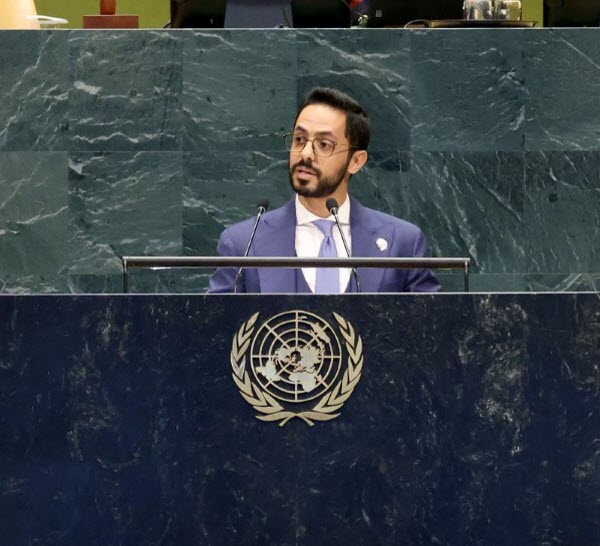
Kuwait has called for the non-misuse of the veto power in the Security Council, emphasizing the need to protect civilians and ensure the effectiveness of the international organization.
Translated by Qiyas from الوسط — Original source
The State of Kuwait, two days ago, called for not turning the veto into a tool that hinders the achievement of the United Nations’ objectives for which it was established. This call came during Kuwait’s statement delivered by First Secretary Fahd Al-Ajmi, of Kuwait’s Permanent Mission to the United Nations, before the UN General Assembly during the discussion of Agenda Item 62, titled “Use of the Veto.”
Al-Ajmi explained in his statement that although the veto is a right enshrined in the UN Charter, it should not become an obstacle preventing the realization of the purposes for which the Charter was established. He emphasized that the responsibility of the UN Security Council is to safeguard international peace and security, describing this duty as an international trust entailing obligations toward all countries and peoples.
He added that while the veto may prevent the adoption of a resolution, it cannot override a right, negate a fact, or exempt the international community from its responsibilities. He stated that Kuwait’s call aims to enhance the effectiveness of the Security Council and uphold the spirit and purposes of the Charter, stressing the need for the utmost restraint when exercising the veto, especially when civilian lives, international peace, and security are at stake.
Al-Ajmi pointed to the Security Council’s failure to adopt a draft resolution submitted by the Kingdom of Bahrain, in coordination with the Gulf Cooperation Council (GCC) countries and Jordan, concerning the protection of freedom of navigation in the Strait of Hormuz, due to the use of the veto. He noted that this followed the adoption of Security Council Resolution 2817, which condemned Iran’s unjustified and reprehensible attacks on Kuwait, GCC countries, and Jordan, and demanded their immediate cessation.
He questioned the repercussions of the Security Council’s inability to take a unified stance when international sea lanes are threatened and global energy supplies, trade, and supply chains are affected.
Regarding the Palestinian issue, Al-Ajmi highlighted the stagnation of draft resolutions before the Security Council calling for a ceasefire, protection of civilians, and delivery of humanitarian aid, due to the use of the veto, while Palestinian families in the Gaza Strip continue to suffer. He stressed that protecting civilians and respecting international law and international humanitarian law are not political choices subject to selective considerations, but binding obligations that must be respected and implemented.
He affirmed that children who lost their lives in the Gaza Strip were not parties to the Security Council’s disputes, and that civilians awaiting food and medicine are not concerned with justifications for blocking resolutions. Al-Ajmi cautioned that the General Assembly is not a substitute for the Security Council nor does it seek to diminish its powers, stating that when the Council fails to act, the international community must not fail to raise its voice.
He continued, saying that the General Assembly provides a platform where the voices of all countries, large or small, are equal, and within the powers granted to it by the Charter, it can keep critical issues present in the international conscience and push toward just and sustainable solutions.
Al-Ajmi expressed Kuwait’s appreciation to the Principality of Liechtenstein for leading the initiative on accountability for the use of the veto, noting that Kuwait was among the founding members of its core group, driven by the belief in the importance of enhancing transparency, accountability, and preserving the credibility of the United Nations.
He concluded his statement by emphasizing the importance of the United Nations being an organization that protects rights rather than merely documenting violations, and a platform where states create peace rather than merely witness missed opportunities to achieve it.
