Al-Shal: Kuwaiti economy to contract by 16.7% in IMF 2026 forecast
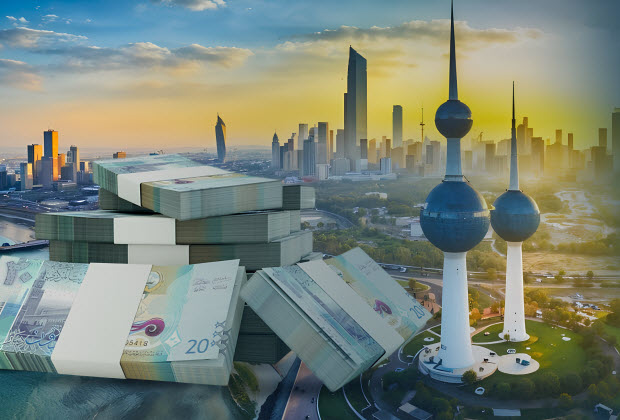
Al-Shal report reveals Gulf economies shrinking due to war.
Translated by Qiyas from الوسط — Original source
The International Monetary Fund (IMF) has downgraded its forecasts for the performance of Gulf Cooperation Council (GCC) economies in 2026, according to its October report, compared to April estimates. The outlook for the unified Gulf economy shifted from an expected growth of approximately 1.8% to a contraction of around 5%, amid the repercussions of the regional war and rising levels of uncertainty.
The weekly "Asharq Al-Awsat" report, which covered the IMF’s forecasts for GCC economies, noted that the number of Gulf economies expected to contract rose to five in the October report, up from three in the April estimates, while only one economy remained within the positive growth range.
According to the report, Kuwait led the Gulf economies in terms of expected contraction, with its 2026 economic performance forecast revised from a contraction of 0.6% in April to 16.7% in October. Qatar’s contraction forecast also rose, from 8.6% to 15.6%, while Bahrain’s contraction estimate increased from 0.5% to 11.3%.
The report highlighted that limited energy export routes via the Strait of Hormuz represent a key factor affecting Kuwait and Qatar. It attributed part of the downward revision in Bahrain’s forecasts to the potential impact of the war on the hospitality sector, which had been active prior to the outbreak of hostilities.
Regarding the rest of the GCC economies, growth forecasts for the UAE shifted from 3.1% in April to a contraction of approximately 3.9% in October, due to potential repercussions on the oil and hospitality sectors. Similarly, Saudi Arabia’s forecast moved from a growth rate of 3.1% to a contraction of around 3.3%.
In contrast, the Omani economy defied the general trend, as the IMF raised its growth forecast from 3.5% in April to 4.1% in October. The report attributed this to Oman’s geographic location outside the Strait of Hormuz, alongside higher oil prices.
Looking ahead to 2027, the report cited the IMF’s expectation that GCC economies will return to growth, with Qatar projected to record the highest rate at 18.8%, followed by Kuwait at approximately 17.1%, Bahrain at 13.9%, Saudi Arabia at 7.9%, the UAE at 7.7%, and Oman at 2.2%.
Asharq Al-Awsat observed that the significant divergence between April and October estimates reflects heightened uncertainty and the difficulty of building stable economic forecasts amid regional developments. Consequently, the expected growth rates for 2027 remain contingent on the underlying assumptions, the trajectory of regional developments, and their repercussions on energy, trade, and tourism sectors.
The report concluded by noting that GCC economies are facing economic repercussions despite not being direct parties to the war, emphasizing the importance of leveraging their diplomatic relations and influence to support efforts to de-escalate tensions and contain the conflict’s spread.
