Dashti to 'Al-Wasat': Jleeb Al-Shuyoukh is one of the most difficult challenges facing 'Farwaniya Municipality'
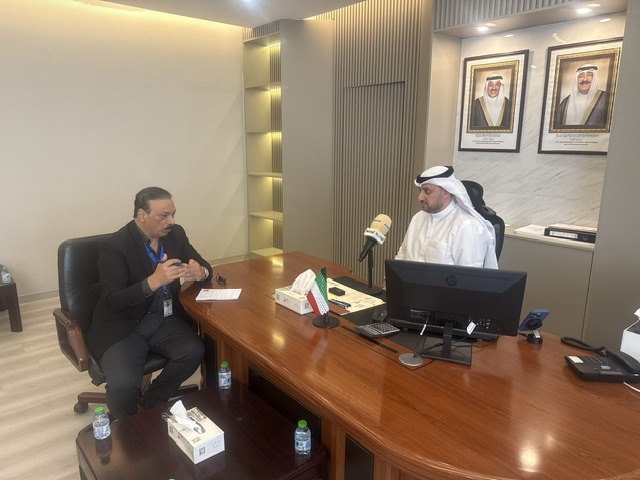
Farwaniya Municipality Director Ahmed Dashti details the 'Kuwait Without Violations' campaign and the municipality's achievements in combating infractions and housing bachelors.
Translated by Alqyas from Al-Wasat — Original source
- An electronic program for recording violations is linked to the cadastral maps of plots. The “Kuwait Without Encroachments” campaign aims to remove encroachments that obstruct public services, pose traffic hazards, and mar the city’s aesthetic appearance. Inspections covered 5,289 premises, resulting in 1,613 violation notices, 103 warnings, 311 accepted settlement orders, and the removal of 351 illegal advertisements. Additionally, 2,475 warnings, 1,013 commitments, 2,049 cleanliness violations, 164 obstructions violations, 41 violations of Law No. 9/1987, 156 violations related to street vendors, and 17,741 posters were addressed, with 2,749 abandoned vehicles removed. Al-Wasat met with the Director of the Farwaniya Municipality Branch, Engineer Ahmed Dashti, who, as usual, opened up and answered many questions of interest to citizens of the Farwaniya Governorate. The discussion began with an issue occupying public opinion in the State of Kuwait: demolitions and encroachments on state lands. He stated that Kuwait Municipality has launched a campaign to remove encroachments under the slogan “Kuwait is More Beautiful Without Encroachments.”
The municipality had initially prepared a comprehensive awareness campaign using posters carrying messages urging citizens to cooperate with municipal teams and voluntarily respond to the removal of all forms of encroachments on state-owned properties in private and model residential areas. The municipality called on those responsible for encroachments on state lands to promptly remove all such violations, particularly the installation of unauthorized green fences around house setbacks, the construction of diwaniyas on sidewalks—which endangers pedestrians and increases the risk of traffic accidents—and the erection of diwaniyas in public squares, which also puts passersby at risk.
Dashti added that the campaign also focused on raising awareness about removing obstructions in passageways that disrupt public services and hinder maintenance work on electrical transformers, as well as the construction of adjacent structures that prevent relevant authorities’ teams from performing their duties related to these transformers.
The encroachment removal campaign, launched by the Municipality’s Director General in the first quarter of 2026, included a work plan to inspect private residential areas in Farwaniya, followed by issuing warnings and granting appropriate deadlines for citizens to remove the violations. An electronic program was then developed to identify violation locations, linked to cadastral maps, enabling municipal officials and removal teams to monitor and address violations on a case-by-case basis.
The campaign will continue periodically to ensure such encroachments do not recur, especially given the cooperation observed from some citizens in removing violations and complying with issued agricultural permits, which has contributed to improving the aesthetic appearance of the governorate as a whole.
What are the objectives of the “Kuwait is More Beautiful Without Encroachments” removal campaign?
Engineer Ahmed Dashti stated: “The campaign aims to remove obstructions that hinder public services, cause traffic hazards, and degrade the urban landscape of areas. Key targeted violations include:
- Installation of unauthorized green fences around house setbacks.
- Construction of non-compliant diwaniyas on sidewalks or in public squares.
- Obstruction of passageways that disrupt maintenance operations or electrical transformer access.
- Non-compliant awnings, walls, wire barriers, and informal feed markets in desert areas and farms.
Work Mechanism:
- Issuing prior warnings and legal deadlines to property owners and violators to rectify their status and voluntarily remove violations.
- Deployment of supervisory teams and field machinery to decisively remove encroachments if there is no compliance after the deadline expires.
Regarding the number of violations addressed, Dashti said: “A total of 4,613 encroachments were recorded, 6,686 warnings were issued, and 700 violations were removed. This statistic covered five areas in Farwaniya Governorate. Work began in three areas and will expand to eight areas, covering a total of 12,015 violations.
Regarding shop violations, 5,289 shops were inspected, 1,613 violations were documented, 103 warnings were issued, 311 settlement orders were accepted, and 351 non-compliant advertisements were removed, totaling 3,689 cases.
Regarding the number of permits processed by the Engineering Permits Department of Farwaniya Municipality from January 1, 2026, to September 30, 2026, Dashti stated: “The Engineering Permits Department issued 1,039 construction permits and 3,894 shop permits. Additionally, 6,655 cases are under review in preparation for issuing permits to applicants who have fulfilled all requirements, bringing the total number of permits to 11,539.
Regarding the statistics of the complaints program on hotline 139 from January 1, 2026, to September 30, 2026, Dashti said: “We received 157 complaints and handled 3,000 unified correspondence items during this period.
Regarding the statistics of the Sanitation and Road Works Department from January 1, 2026, to September 30, 2026, Dashti stated: “Violations included issuing 2,475 warnings and taking 1,013 [enforcement actions].”
A total of 2,049 cleanliness violations, 164 road occupation violations, and 41 violations of Law No. 9/87 were recorded. Additionally, 156 violations involving street vendors were issued, 17,741 items were confiscated, and 2,749 abandoned vehicles were removed. Furthermore, 1,708 vehicles were released, 102 new licenses were issued, 43,330 tons of construction waste were removed, and 24,827 tons of scrap and used furniture were collected. Revenues during this period amounted to 496,353 Kuwaiti dinars.
Regarding the phenomenon of bachelor housing, Engineer Ahmed Dashti stated that bachelor housing in private and model residential areas remains one of the most significant challenges facing the municipality. In compliance with the directives of the supreme leadership to combat this negative phenomenon, the Kuwait Municipality has assigned a permanent team to monitor violations related to bachelor housing, particularly in areas such as Jleeb Al-Shuyoukh, Khaitaan, Al-Firdaws, and Farwaniya. Eviction warnings are issued to prevent the need for legal measures.
Some property owners have cooperated in evicting bachelors. In other cases, the branch has contacted the relevant committee to coordinate with the Ministry of Interior to investigate and verify properties involved in violations. Subsequently, the Ministry of Electricity was contacted to disconnect the power supply to these non-compliant properties. Therefore, citizens are urged to comply with the decree of Law No. 125 of 1992 concerning the prohibition of housing non-families in private and model residential areas.
On the computerization of transactions, Engineer Dashti noted that, in order to keep pace with technological development in all aspects of life and to facilitate transaction procedures for citizens and visitors, the Kuwait Municipality has developed electronic technology for most municipal transactions. Examples include, but are not limited to, the following branches: 1. Engineering licenses of all types; 2. Shop licenses; 3. Advertising licenses; 4. Description certificates; 5. Electricity connection receipts; 6. Completion of supervision; 7. Safety licenses; 8. Butchery licenses; 9. Electronic correspondence; 10. Complaints (139). Many other procedures have also been digitized, meaning that citizen visits are now required only to the minimum extent. Notification and warning alerts are now easily sent via a user-friendly application, which helps shorten the documentary cycle of transactions. Citizens can also submit complaints through the Municipality’s application (139), after which the municipality forwards the complaint to the relevant department to take necessary action.
Jleeb Al-Shuyoukh area: As previously mentioned regarding the bachelor housing phenomenon, the Jleeb Al-Shuyoukh area represents one of the most difficult challenges at present. However, following the directives of the supreme leadership, a recent joint security campaign in the Jleeb Al-Shuyoukh area resulted in the issuance of numerous violation reports, including building violations and bachelor housing violations. Immediate measures were taken to disconnect the power supply to non-compliant properties.
In parallel, the Ministry of Public Works issued technical inspection reports for buildings at risk of collapse. To ensure public safety and protect lives, property owners of these buildings were given a deadline to obtain demolition permits and demolish the at-risk structures themselves. If the municipality’s decisions regarding eviction and demolition are not implemented, the municipality will supervise the demolition of these at-risk buildings to safeguard lives and ensure citizen safety.
