Kuwaiti Charity Work Extends Bridges of Giving to Those in Need Worldwide
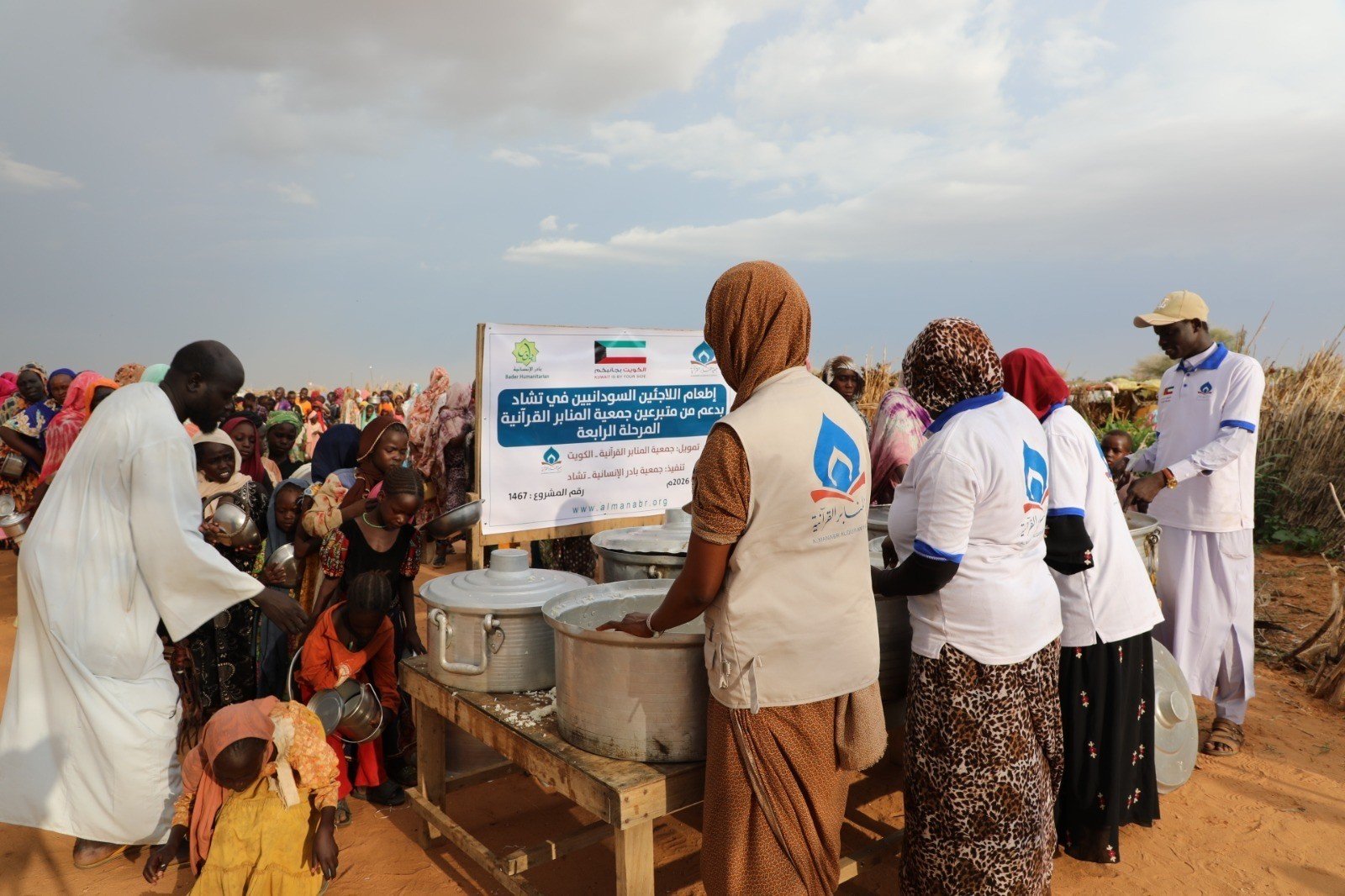
Kuwaiti charitable institutions continue to implement relief and development projects in Yemen, Gaza, Jordan, Djibouti, and other countries.
Translated by Qiyas from الوسط — Original source
Kuwaiti charitable institutions and associations continue to implement relief and development projects in several countries, covering education, health, food, water, and orphan care, as part of efforts to support peoples affected by conflicts and difficult living conditions, and to promote the transition from emergency aid to sustainable development projects. These initiatives are distributed across Yemen, the Gaza Strip, Jordan, Djibouti, Sudan, Somalia, India, Bangladesh, and several African countries, through programs carried out by Kuwaiti charities with the support of donors, reflecting the breadth and diversity of Kuwaiti humanitarian work.
A school accommodating 2,200 students in Yemen
In Yemen, the Insan Charity Association opened the “Insan 2” school in the Al-Matar district of Marib Governorate, with a capacity of 2,200 students, aiming to provide additional educational opportunities and alleviate pressure on existing schools in the governorate. Sheikh Dr. Othman Al-Khamis, Chairman of the Association’s Board of Directors, told the Kuwait News Agency (KUNA) that the project embodies the fraternal and human ties between Kuwait and Yemen, and highlights the commitment of Kuwait’s benefactors to supporting educational projects that contribute to human development and enable generations to continue their studies despite challenges.
Al-Khamis explained that the school comprises 12 fully equipped classrooms with educational facilities, operating on a two-shift system (morning and evening) to accommodate the target number of students and provide a suitable environment for academic achievement. He added that investing in education is one of the most important pathways for sustainable humanitarian work, given its role in protecting children’s futures and developing their capabilities, noting that the project reflects the Association’s orientation toward implementing long-term initiatives that go beyond providing immediate aid. He praised the efforts of donors and partners, led by the “Kafeel” Foundation, which implemented the project, in transforming charitable initiatives into tangible educational achievements.
More than 70,000 beneficiaries in Gaza
In the Gaza Strip, Al-Salam Association for Humanitarian and Charitable Work continues to implement the “Iftaam” (Feeding) project, which has provided food and drinking water assistance to more than 70,000 beneficiaries, as part of efforts to alleviate the living burdens on affected families.
Hamad Al-Awn, the Association’s General Manager, told KUNA that the project, which launched on September 25, focuses on providing food and water as among the most critical basic needs amid the dire humanitarian conditions faced by the Strip’s residents. He explained that field teams have distributed 4,000 food baskets and 10,000 ready-to-eat meals since the project’s launch, alongside providing drinking water through 70 tankers benefiting approximately 40,000 people, bringing the total number of beneficiaries of relief efforts to over 70,000.
Al-Awn emphasized the Association’s commitment to continuing aid distribution and expanding its reach to the most affected families, noting the readiness to launch the annual winter campaign in late October to provide food, winter clothing, and heating supplies to needy families in several countries. He appreciated the support of donors in Kuwait, affirming that their contributions form a cornerstone for the continuity and expansion of humanitarian projects.
Orphan sponsorships and aid in Jordan
In Jordan, Al-Najah Charity Association implemented projects for orphan care and assistance to needy families, including sponsoring 1,299 orphans, comprising Jordanian children and children of Syrian refugees, along with food and winter aid and educational and social programs.
Ehab Al-Dabous, Director of Zakat Al-Fuhail within the Association, told KUNA that orphan care extends beyond financial support to include a comprehensive system of educational, psychological, and social care.
This initiative enhances children’s opportunities for learning, growth, and coping with life’s challenges. He added that the projects included providing school supplies, backpacks, stationery, and Eid clothing, as well as implementing psychosocial support programs and recreational activities that contribute to strengthening children’s integration into their communities. He pointed out the distribution of food aid and blankets to 200 families each, along with providing winter clothing and heating means for 100 orphans, to help beneficiaries cope with living costs and climatic fluctuations. He noted that coordination with the Ministries of Social Affairs and Foreign Affairs facilitated the implementation of projects and the delivery of aid to eligible recipients, emphasizing the importance of integrating official and charitable efforts to enhance the effectiveness and sustainability of humanitarian programs.
Food, clothing, and healthcare in Djibouti
In Djibouti, Al-Rahma Global Relief Association implemented relief projects targeting Yemeni families facing difficult humanitarian conditions. These projects included providing food, clothing, healthcare, and drinking water within camps and targeted areas.
Waleed Al-Suwailim, head of the association’s delegation to Djibouti and director of the Relief and Rapid Response Unit, told KUNA that the field visit aimed to assess the conditions of families and identify their most urgent needs, ensuring that aid is directed toward priority areas. He explained that the association distributed 1,000 food baskets, 1,000 sets of clothing for children and adults, and 1,500 cans of milk for children. It also dispatched a medical caravan that benefited 500 people and installed three water coolers inside a camp housing more than 5,000 people. He added that the diversity of projects—spanning food, clothing, treatment, and water—reflects the association’s commitment to providing a comprehensive response that addresses various aspects of need, while praising the generosity of donors in Kuwait and their role in supporting affected families.
Wells, mosques, and relief projects in several countries
In another extension of humanitarian initiatives, Al-Manaber Al-Quraniya Association implemented projects in several countries, including the opening of 25 water wells in India and Bangladesh, and three mosques in Africa, alongside water supply initiatives in Somalia, assistance to Sudanese refugee families, and support for displaced Yemeni families.
Dr. Mohammed Al-Amran, the association’s general manager, told KUNA that the projects combine meeting basic living needs with serving the Holy Quran and building mosques, within a strategy aimed at creating a sustainable impact on beneficiaries’ lives. He added that the wells opened over the past two months in India and Bangladesh provide sources of safe drinking water, while more than 300 worshippers benefit from the three mosques opened in Africa.
The initiatives also included a water supply project that benefited hundreds of children in Somalia. He clarified that the association’s efforts included distributing food baskets and meals to the most vulnerable Sudanese refugee families, and launching an urgent campaign to support displaced Yemeni families, providing tents, bedding, blankets, food baskets, and drinking water, in cooperation with accredited Yemeni charitable organizations. Al-Omaran emphasized that these initiatives aim to combine emergency relief with sustainable projects that provide the essentials for dignified living, mitigating the impacts of displacement, poverty, and resource scarcity. He praised the support of donors, which helps convert donations into projects that benefit the needy in various countries. These initiatives highlight the diverse scope of Kuwaiti charitable work, ranging from providing food, water, and healthcare to supporting education, caring for orphans, and establishing infrastructure projects, thereby helping beneficiary communities cope with crises and improve their living conditions. They also reflect the varied efforts of Kuwaiti charitable institutions and associations, supported by donors and collaboration among relevant authorities, in delivering aid to those in need abroad and enhancing programs that combine responses to urgent needs with building more sustainable foundations for recovery and stability.
