Minister of Development: Protecting the Marine Environment and Ensuring Resource Sustainability Are Key Pillars for Sustainable Development
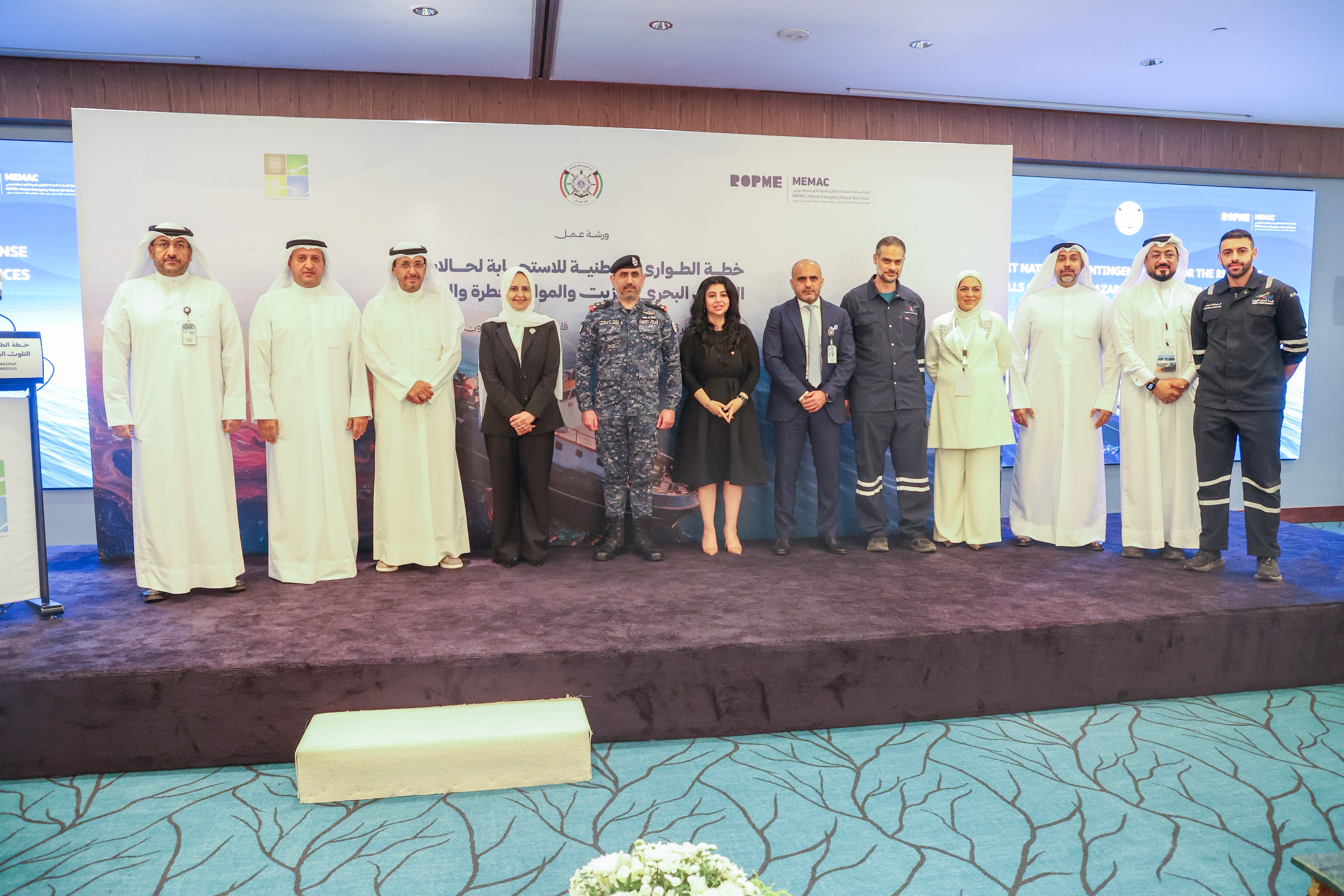
The Minister of Development emphasized the importance of protecting the marine environment as a pillar for sustainable development during a workshop hosted by the Public Authority for Environmental Affairs.
Translated by Qiyas from الوسط — Original source
State Minister for Development and Sustainability, Dr. Reem Al-Faleh, stated on Wednesday that protecting the marine environment and ensuring the sustainability of its resources are two fundamental pillars in the State of Kuwait’s efforts to achieve sustainable development.
Dr. Al-Faleh emphasized, in her speech during the workshop organized by the Public Authority for Applied Education and Training (PAAET) on the “National Plan for Emergencies and Response to Oil and Harmful and Hazardous Substances Marine Pollution,” the importance of developing the plan to enhance national preparedness and preserve natural resources. She clarified that the Authority is working on developing and expanding the plan to include harmful and hazardous substances alongside oil pollution, thereby strengthening the capacity to handle various marine pollution incidents within an integrated national system for preparedness, coordination, and intervention. This system contributes to containing incidents and mitigating their environmental and economic repercussions.
She stressed that the effectiveness of the plan depends on the speed of incident reporting, the clarity of roles and responsibilities of relevant authorities, the readiness of teams and equipment, the efficiency of field coordination, and data exchange, all of which contribute to enhancing the integration of efforts and raising the efficiency of responses to protect the marine environment and the state’s vital interests. She noted that prior preparedness for pollution incidents and improving response efficiency support the state’s efforts to achieve environmental sustainability by protecting the marine environment, preserving its natural resources, and safeguarding them for future generations.
She underscored the importance of continuing training and joint exercises, assessing preparedness levels, and periodically updating response plans, emphasizing the necessity of translating the workshop’s outcomes into practical steps that contribute to developing national capacities and enhancing the efficiency of handling marine pollution incidents, thereby consolidating sustainability in efforts to protect the marine environment and manage its resources.
For his part, Commander Rear Admiral Sheikh Mubarak Ali Al-Yousef Al-Sabah, Director General of the General Directorate of Coast Guard, affirmed in a similar speech that protecting the marine environment is a shared environmental and national responsibility and an integral part of the national security system, requiring concerted efforts and role integration among various relevant authorities. He stated that marine pollution incidents involving oils and hazardous materials are challenges that require prior preparedness and the ability to respond quickly and in an organized manner, as well as readiness to mobilize the necessary capabilities and resources to mitigate their impacts and protect lives, property, and natural wealth.
He added that the National Plan serves as a unified framework that organizes the responsibilities of participating authorities and defines reporting, coordination, and response mechanisms, ensuring the swift implementation of necessary measures and efficient management of operations when incidents occur. He explained that the strength of the plan lies in each authority’s commitment to its role and the ability to operate within a single national system unified by clear procedures and a common goal.
He noted that the General Directorate of Coast Guard chairs the plan based on its duties and jurisdiction as the maritime authority, emphasizing cooperation and coordination with all government entities and related sectors to enhance preparedness and develop response capabilities, thereby contributing to the protection of the marine environment and safeguarding the country’s vital interests.
The workshop, organized by the Public Authority for Applied Education and Training (PAAET), began yesterday and concluded today, with the participation of several relevant authorities.
