Al-Omar: AI Essential to Enhance Competitiveness and Improve Service Quality
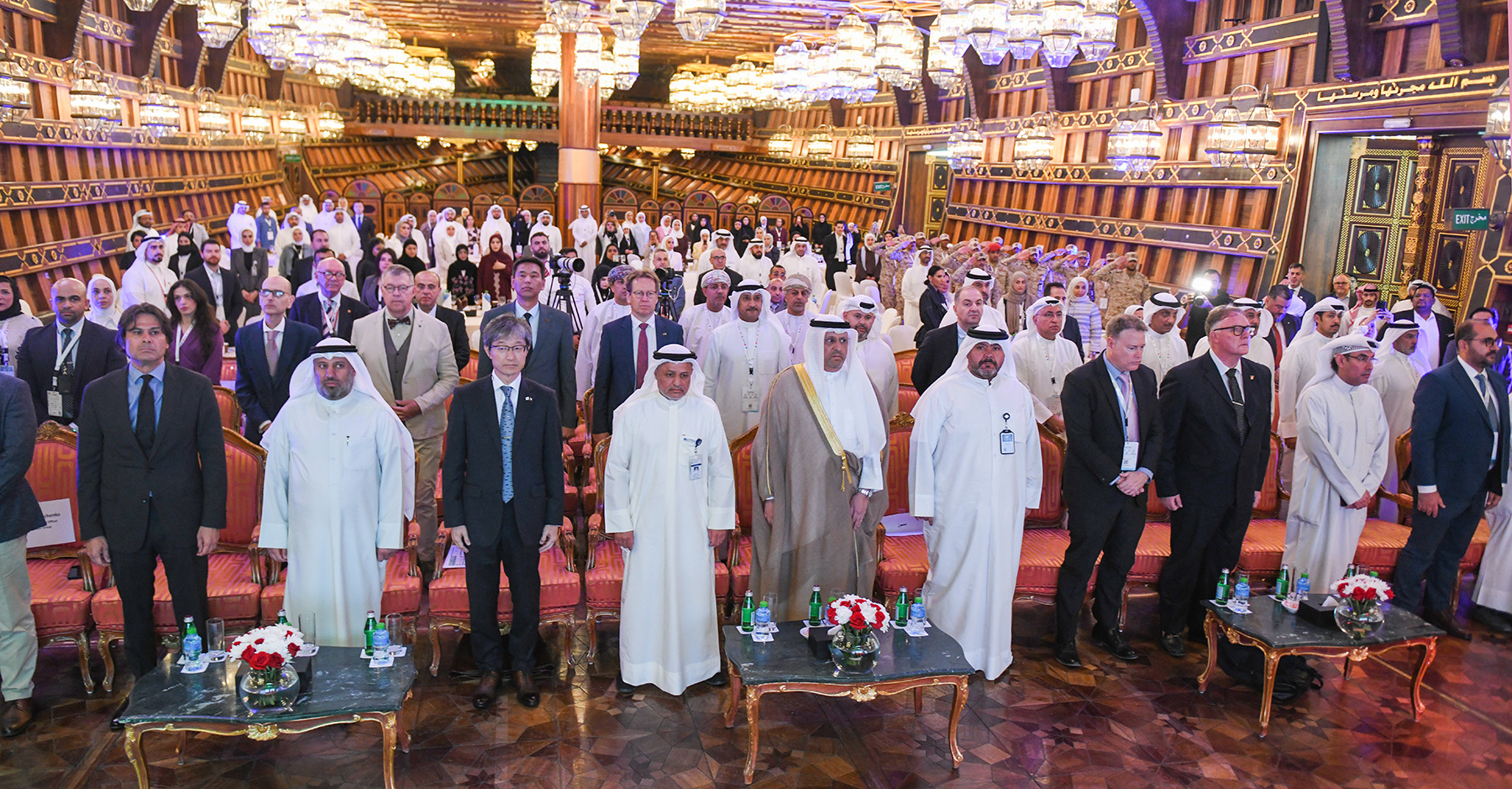
Opening of the Gulf Digital Week in Kuwait with Japanese participation
Translated by Qiyas from الوسط — Original source
Kuwait’s Minister of State for Communications and Information Technology and Acting Minister of Media and Culture, Omar Al-Omar, affirmed on Wednesday that artificial intelligence is no longer a technological luxury but a necessity to enhance competitiveness, improve the quality of services, and increase the accuracy of decision-making.
This statement was made by Minister Al-Omar during his speech at the opening of the Gulf Week for Digitalization, which brings together the International Forum on Artificial Intelligence and Digitalization under the theme “Crisis Management, Innovation, and the Future of Institutions,” and the Gulf Conference on Archiving, Document, and Records Management.
Al-Omar stated that artificial intelligence has become a reality reshaping economies, government work, and labor markets, emphasizing the importance of keeping pace with digital transformation and participating in shaping its trajectory by adopting technology consciously, deploying it responsibly, and preparing the necessary infrastructure, regulatory frameworks, and skilled human resources.
He noted that the ministry and its affiliated entities are working to integrate digital initiatives within a comprehensive system serving citizens, residents, and the business sector.
He mentioned that the Central Agency for Information Technology is leading national initiatives in this regard, most notably accelerating the transition to cloud computing and establishing a platform that connects government systems and unifies the management of application programming interfaces (APIs), thereby enhancing service efficiency, strengthening information security, and supporting data exchange.
He clarified that, according to the ministry’s vision, artificial intelligence is a tool to empower humans, not replace them, as it contributes to simplifying procedures, supporting decision-making, and opening avenues for creativity and entrepreneurship for youth. He pointed out that investment in this technology must be accompanied by parallel investment in qualifying Kuwaiti talent.
He highlighted that the State of Kuwait has established strategic partnerships with major global technology companies, including Microsoft, to create an AI-enabled cloud region and an innovation center, alongside programs to qualify thousands of national cadres. He emphasized the importance of these partnerships in transferring and localizing knowledge, as well as generating added value for the national economy.
Regarding document and records management, Al-Omar explained that what distinguishes this event is the convergence of artificial intelligence with document and records management, given that documents represent the memory of institutions and the state, and reliable data form the foundation of intelligent systems.
He said the digitization of archives project comes within this context, in collaboration with Iron Mountain, to facilitate access to information while preserving its security and confidentiality, support the shift toward a paperless government, and lay the groundwork for making sound decisions in the future.
He added that the project makes archives an effective pillar in serving government work and the digital transformation journey, expressing his hope that the sessions of the Gulf Week for Digitalization, with the participation of a select group of experts from the Gulf and the world, will yield practical recommendations that enhance Gulf integration in the fields of digitalization and artificial intelligence, and transform exchanged knowledge into tangible impact.
For his part, Dr. Khaled Al-Zamil, Chairman of the Board of Directors of the Public Authority for Communications and Information Technology, emphasized in his speech the importance of leveraging artificial intelligence and digital transformation technologies to develop services and improve institutional performance quality, particularly in the health sector, which possesses a large base of data and information.
Al-Zamil said that introducing artificial intelligence into the work environment offers vast potential for analyzing information, supporting employees, and improving planning, which positively reflects on the quality of services provided to beneficiaries.
He clarified that realizing the actual benefits of these technologies requires identifying the problems institutions seek to address and the targeted outcomes of using artificial intelligence, rather than merely adopting modern technologies without
Clear objectives. He pointed out that the health sector is among the important areas that can benefit from artificial intelligence applications, given the volume and diversity of data available in it, and the opportunities it provides for improving services and supporting decision-making. He emphasized the importance of data quality and accuracy as fundamental pillars for the success of AI applications, alongside developing and training staff to handle modern technologies and leverage them in performing their duties. He stressed the necessity of respecting information privacy, protecting data, and establishing the required regulatory frameworks and governance mechanisms.
He highlighted the importance of leveraging digital transformation to enhance institutions’ capacity to manage crises, improve planning, and respond to challenges, as well as to exchange expertise and cooperate in developing technical applications. He affirmed that the success of this transformation is linked to institutions’ ability to utilize technology in ways that contribute to improving services and raising operational efficiency.
For his part, the Japanese Ambassador to Kuwait, Kenichiro Mukai, reaffirmed his country’s commitment to strengthening cooperation with Kuwait in the field of artificial intelligence and building a safe and reliable ecosystem for this technology, thereby contributing to supporting development and achieving a more prosperous future for both countries. Mukai stated that AI is driving widespread transformations in the economy and society, in addition to its role in healthcare, agriculture, education, and infrastructure, emphasizing the importance of ensuring that all countries benefit from these technologies.
He clarified that Japan adopts a balanced approach to AI development, focused on accelerating innovation, enhancing social development, and mitigating risks through good governance and the development of technical and regulatory infrastructure. He affirmed that developing specialized human capital in AI represents a fundamental element in building a sustainable ecosystem for this technology, expressing Japan’s aspiration to continue joint efforts with Kuwait in developing AI pathways that enhance development and prosperity.
The two-day forum witnessed broad participation from government entities, local, Gulf, and international institutions and companies specializing in artificial intelligence, digital transformation, archiving, and records management. Its activities included panel discussions featuring expert speakers addressing regional and international AI policies, the latest technologies, and digital solutions. The forum also featured an accompanying exhibition where participating entities showcased their latest technologies, services, and innovative solutions in the fields of digitalization and AI, while participating entities were honored in recognition of their contributions to the forum’s activities.
