'Charitable Work and National Unity'.. New publication documents Kuwait's humanitarian legacy and strengthens social cohesion
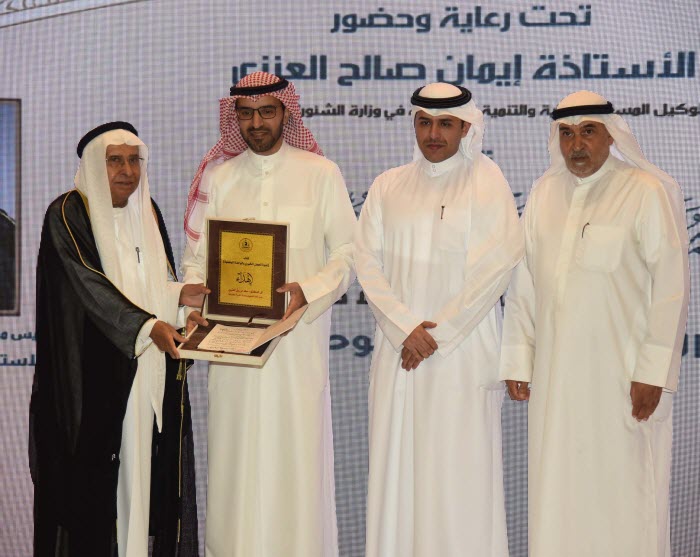
Launch of the book 'Charitable Work and National Unity' in Kuwait with the participation of officials and charitable associations.
Translated by Qiyas from الوسط — Original source
- Al-Muhayel: Charitable associations are a key partner in strengthening national unity and social cohesion
- Al-Baghl: Charitable work is a humanitarian mission and a cornerstone for consolidating national unity
- Al-Otaibi: Kuwaiti charitable work is a model of national cohesion and integrated efforts to serve society
- Al-Kharafi: Documenting charitable work preserves Kuwait’s humanitarian legacy and passes it on to future generations
Officials and charitable figures emphasized the crucial role played by charitable associations and endowments in the State of Kuwait in enhancing national unity and reinforcing values of solidarity and social cohesion. They stressed the necessity of documenting Kuwait’s experience in charitable and humanitarian work and transmitting it to future generations, thereby reflecting the authenticity of Kuwaiti society and its history of generosity.
This came during the launch and donation ceremony of the book “Charitable Work and National Unity,” organized by Sayyida Nafisa Charitable Endowment the day before yesterday evening, in the Ibrahim Taher Al-Baghl Events Hall in the Rumaythah area. The event was attended by several officials and representatives of charitable associations and endowments, in an initiative aimed at highlighting the close relationship between humanitarian work and national identity, and documenting Kuwaiti charitable efforts.
Speaking on the sidelines of the event, Abdulmohsen Al-Muhayel, Director of the Department of Charitable Associations and Endowments at the Ministry of Social Affairs, stated that charitable associations and endowments serve as a fundamental partner in strengthening national unity and social cohesion through their cooperation and collaboration across various fields of charitable work, in accordance with the laws and decrees regulating this sector.
Al-Muhayel praised the initiative of Ibrahim Taher Al-Baghl and his patronage of the celebration, commending his contributions to charity and benevolence. He emphasized that publishing a book documenting charitable activities represents an important step in preserving the efforts undertaken by charitable associations and endowments in Kuwait and highlighting their social and humanitarian role.
He added that the Ministry of Social Affairs is keen to support activities, events, and seminars that contribute to the development of charitable work and enhance its mission. He noted that the ministry, represented by the Department of Charitable Associations and Endowments, is prepared for upcoming charitable seasons, particularly the preparations for welcoming the holy month of Ramadan, which requires readiness, coordination, and cooperation among relevant authorities.
He stressed the importance of enhancing integration among associations and endowments, and coordinating their efforts within the framework of the laws regulating them, to ensure the achievement of charitable objectives and consolidate their humanitarian and social impact.
For his part, Ibrahim Taher Al-Baghl, Chairman of the Board of Directors of Sayyida Nafisa Charitable Endowment, affirmed in a speech delivered on his behalf by Vice Chairman Murtada Al-Jadai, that charitable work is not merely about providing aid and generosity, but rather a noble humanitarian mission and an authentic national value, serving as one of the pillars that contribute to strengthening social cohesion and consolidating national unity.
He said that Kuwait’s journey has always been, and remains, an exemplary model in charitable and humanitarian work, thanks to the guidance of its wise leadership, the generosity of its people, and the initiatives of its charitable and voluntary institutions, whose helping hands have reached those in need both within the country and abroad, driven by principles of mercy, solidarity, tolerance, and human coexistence.
He clarified that the relationship between charitable work and national unity is close, as both enhance the spirit of shared responsibility and instill values of love, cooperation, and patriotism. He pointed out that the combined efforts of individuals, civil society institutions, and public and private sectors make generosity a bridge for communication and solidarity, forming the basis for stability.
He added that the security challenges and exceptional circumstances witnessed in the region highlight the importance of charitable and humanitarian work in strengthening social cohesion and standing by families and vulnerable groups.
The most vulnerable, emphasizing that the unity, mutual support, and cooperation among Kuwaiti institutions serve as fundamental pillars in confronting challenges and safeguarding stability. Al-Baghlai noted that the publication of the book responds to the requirements of the current stage, documenting the role of the charitable sector in national and humanitarian work, supporting government efforts, and highlighting the Kuwaiti charitable experience in building a cohesive society, in addition to transmitting the values of volunteering, initiative, and national service to future generations.
He appreciated the support provided by the Minister of Social Affairs, Labor, and Social Development, Dr. Amthal Al-Huwail, for the work of orphanages and charitable associations. He also expressed his gratitude to the Undersecretary of the Ministry, the Assistant Undersecretary for Social Care and Development, and the staff across various sectors of the ministry, commending the efforts of all those who contributed to preparing and completing the book, as well as those working in the fields of charitable, humanitarian, and volunteer work.
For his part, Saad Al-Otaibi, President of the Kuwait Federation of Charitable Associations and Orphanages, affirmed that Kuwaiti charitable work embodies national unity and social solidarity. He pointed out that Kuwait proudly presents to the world its humanitarian legacy and its journey of giving, without expecting gratitude or reward, driven by the values instilled by its people across generations. Al-Otaibi praised government patronage and support for charitable work, provided by the Ministry of Social Affairs, the Ministry of Information, the Ministry of Foreign Affairs, alongside various other state ministries and government institutions, as well as contributions from the private sector, businessmen, and businesswomen.
He cited examples of cooperation between charitable associations and orphanages in implementing joint initiatives, including an event held during the holy month of Ramadan about two years ago, which involved several charitable entities to honor and bring joy to 600 orphans within Kuwait. He clarified that the initiative involved Al-Awasir Charity, Sayyida Nafisa Charity, Al-Kanani Charity, Dashti and Khalifa Charity, and Ibrahim Taher Al-Baghlai Charity, along with other entities, reflecting the capacity of charitable institutions to unite their efforts to serve deserving groups and reinforce values of mutual support and compassion. He stressed that these practical examples prove that national unity is not limited to slogans, but is embodied in joint initiatives that bring together societal institutions around shared humanitarian and national objectives.
For his part, Dr. Abdulmohsin Al-Jarallah Al-Kharafi, Chairman of the Board of Directors of the Kuwait Al-Al wa Al-Sahab Charity, emphasized the importance of documenting charitable and humanitarian initiatives and highlighting their experiences, thereby preserving Kuwait’s legacy of giving and enabling future generations to learn about the efforts made by Kuwaitis and their charitable institutions. He noted that choosing the name “Sayyida Nafisa” for the charity carries humanitarian and social significance, given its association with a status held in high esteem and affection, thereby enhancing meanings of closeness and solidarity among members of society. He affirmed that the relationship between charitable work and national unity should transcend theoretical discourse to become actual practice and tangible initiatives, considering the book a documentation of the seminar’s proceedings and its message highlighting the role of charitable work in strengthening national cohesion.
Al-Kharafi commended the efforts of Sayyida Nafisa Charity and Ibrahim Taher Al-Baghlai Charity in organizing the initiative and publishing the book, appreciating the media and documentary attention that accompanied the event and contributed to highlighting its objectives and outcomes. He drew attention to the importance of encouraging charitable associations and orphanages to document their activities and experiences, and to showcase their humanitarian initiatives, thereby enabling society to become aware of aspects of charitable work that may not be widely known, and preserving these experiences in the national memory.
