Chamber of Commerce: Promising Opportunities to Enhance Economic Partnership with Oman
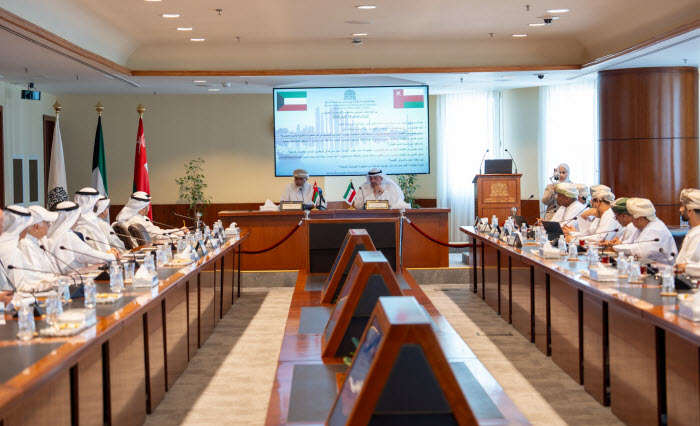
Officials from the Kuwait and Oman Chambers of Commerce emphasized the importance of economic integration and expanding joint investments in logistics and energy sectors.
Translated by Qiyas from الوسط — Original source
Emad Al-Zaid, Deputy Managing Director of the Kuwait Chamber of Commerce and Industry, affirmed that the integration between the “New Kuwait 2035” and “Oman 2040” visions represents a strategic opportunity to expand economic cooperation between the two countries, particularly in logistics, industry, energy, modern technologies, and the digital economy.
Speaking at a meeting hosted by the Chamber yesterday for an Omani economic delegation, Al-Zaid stated that Kuwaiti investments in the Sultanate of Oman grew by 4.6% during the first quarter of 2026, reaching approximately $3.76 billion, thereby reinforcing Kuwait’s position among the Sultanate’s leading investment partners.
He added that Kuwait-Oman relations are rooted in historical ties and a shared vision for sustainable development, noting that the economic potential available in both countries allows for expanding trade exchanges and joint investments in the coming years, given that the current level of cooperation remains below its potential.
He emphasized the importance of enhancing the role of the private sector in building partnerships and joint projects, particularly in ports, free economic zones, supply chains, and logistics services, reaffirming the Chamber’s commitment to supporting initiatives that expand cooperation between Kuwaiti and Omani companies.
Al-Zaid clarified that shifts in international trade and challenges facing supply chains necessitate diversifying trade transport routes and enhancing their resilience, alongside investing in infrastructure and economic gateways to improve the efficiency of goods flow and boost the competitiveness of Gulf economies.
He pointed out that the Sultanate of Oman has developed its logistics system by leveraging its geographical location and investments in ports, infrastructure, and economic zones, which supports its role as a regional hub linking Gulf, Asian, and African markets.
For his part, Badr bin Saif Al-Awafi, Economic Advisor at the Oman Chamber of Commerce and Industry, emphasized the importance of converting trade and investment opportunities into actual, sustainable projects, thereby enhancing economic integration between the private sectors of both countries and keeping pace with the advanced level of political relations.
Al-Awafi stated that the meeting provides an opportunity for Kuwaiti and Omani companies to explore cooperation opportunities in trade, transport, logistics, and supply chains, highlighting the Sultanate’s assets, which include ports, economic and free zones, and transport, shipping, storage, distribution, and re-export services.
He added that these assets offer Kuwaiti companies opportunities to enter the Omani market and expand the reach of their products, while benefiting from the capacities of ports such as Sohar, Salalah, and Duqm in handling goods and re-exporting them to regional markets.
He confirmed the readiness of Omani ports to serve Kuwaiti companies in import, export, and re-export operations, calling for direct partnerships between Kuwaiti exporters and Omani importers and distributors to improve efficiency, reduce costs, and enhance adherence to delivery schedules.
Al-Awafi stressed the importance of leveraging the Gulf Cooperation Council (GCC) Economic Agreement to develop long-term partnerships, urging business leaders to utilize the meeting for direct communication, identifying potential partners, and building commercial and investment relationships that serve mutual interests.
The meeting included presentations on logistics options amid regional developments, the fundamentals of special economic zones and free zones in the Sultanate, as well as the services of the “Asyad Group” in linking regional and global markets, and the role of Sohar Port and the Free Zone in enhancing trade and logistical connectivity.
