"Environment" launches university challenge initiative for recycling e-waste
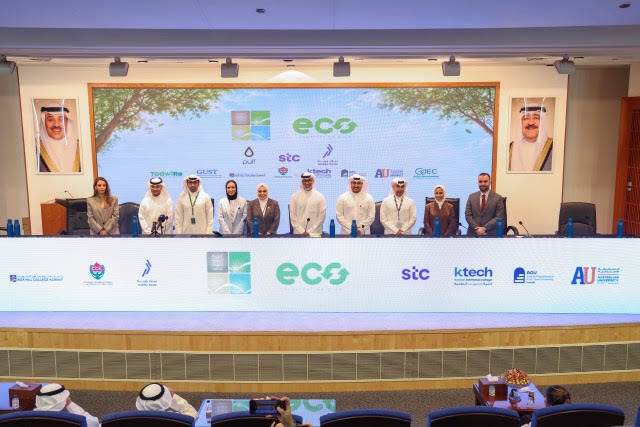
The Public Authority for Environment launched the University Challenge initiative for recycling electronic waste in collaboration with multiple entities to enhance sustainability.
Translated by Qiyas from الوسط — Original source
In a purposeful national community initiative, the Public Authority for Environment, in collaboration with the “Eco” Incubator for Environmental Projects, launched the “Challenge of Private Universities for E-Waste Recycling,” aimed at encouraging the recycling of electronic waste.
Speaking on behalf of the Acting Director General of the Public Authority for Environment, Nouf Ali Bahbahani, Sheikhah Al-Ibrahim, the Authority’s spokesperson and Director of Public Relations, stated that the initiative is directed at students of private universities, reflecting the importance of engaging youth and students in environmental issues and enhancing their role in adopting and disseminating sustainable practices within their university and community environments.
She emphasized that the Environment Authority attaches great importance to the management of waste in all its forms, including electronic waste, given the environmental challenges it poses, which require handling based on sound scientific and regulatory foundations. This approach aims to mitigate the impact of such waste on the environment and public health, while enhancing the recovery of reusable and recyclable materials.
She added that this effort aligns with the National Strategy for Integrated Waste Management, which seeks to develop a more efficient and sustainable waste management system in the State of Kuwait by reducing waste generation, promoting reuse and recycling, improving resource efficiency, and minimizing the quantities sent to landfill sites.
Regarding prizes for winners, the founder of the Eco Incubator for Environmental Projects stated that the initiative will run for three months. Containers will be distributed across all participating universities, and workshops will be organized in cooperation with the Public Authority for Environment. At the end of the initiative, an environmental report will be published, and prizes will be awarded to the top three winners.
Ahmed Nasser Al-Nuwaibet, Director of Public Relations and Social Media at Kuwait Telecom Company (stc), affirmed that “stc is proficient in both technical and digital fields, which is why we are present at one of the most important initiatives and ideas.” He considered that “e-waste recycling has become part of digital development.”
On her part, Maali Al-Rashid, Head of the Human Resources and General Services Group at Warba Bank, stated that “Warba Bank’s support for this challenge is not merely superficial; it stems from its firm commitment and our responsibility as a leading national banking sector to embrace environmental sustainability.” She added, “We believe that true investment is an investment in the future of our environment and its protection. Therefore, Warba Bank strives to leverage its capabilities to support projects and solutions that mitigate the environmental impact of waste. We have chosen to embrace this initiative because it is not just about serious figures, but primarily contributes to instilling and entrenching the values of sustainability in the hearts of our student sons and daughters.”
Mashari Ayman Boudi, Chairman of the Board of Trustees of the Kuwait Technical College (KTEC), expressed his happiness at participating in this initiative alongside this group of private universities. He said, “We do not only strive to ensure academic achievement for our students; we are also concerned that they keep pace with global developments, as well as with Kuwait Vision 2035 and its focus on sustainability.” He added, “Our duty today is not only to contribute to society, but also for our students to connect with what will happen in the future, so they can help complete the realization of Kuwait Vision.”
Osman Ayman Boudi, Chairman of the Board of Trustees of the Canadian College in Kuwait (CCK), said, “We thank the Public Authority for Environment and the Eco Incubator. This is the role of the private sector in conveying the message that these are the initiatives we seek to continue, and we hope to see our student children learn such values.”
On her part, the Vice President of...
Dr. Afnan Al-Khalidi, Vice President for Academic Affairs and Scientific Research at the Arab Open University, stated that “the university is proud to be part of the electronic device recycling initiative, which brings students together around an issue that impacts the environment and the future.” She noted that “these initiatives, in addition to their value in raising awareness among university students, contribute to improving the global ranking of Kuwaiti universities in the QS ranking and other international institutions.”
For his part, Muath Al-Yahya, Chairman of the Board of Trustees of Box Hill College Kuwait, expressed his appreciation for this initiative, which fosters healthy competition among colleges to promote a culture of recycling. He emphasized that “the goal of the initiative is not merely to collect and recycle electronic waste, but to instill this culture in the next generation, which is the most important message of this initiative.” He added that “the role of universities is to build a conscious, promising, and open-minded generation.”
Meanwhile, Sirin Saad Al-Din, Director of Strategy at the Gulf University for Science and Technology (GUST), said, “We at GUST are pleased to participate in this important national initiative, which brings together various sectors and educational institutions to support recycling efforts in Kuwait.”
Addressing waste management, Associate Professor Jan Al-Ashqar, Director of the Project-Based Learning Center and a faculty member in the Petroleum Engineering Department at the Australian College of Kuwait, stated that “discussing sustainability leads us to think about appropriate solutions for environmental problems and recycling.” He added, “The greatest challenge is how to translate this knowledge into behavior and how to turn that behavior into a real impact on society,” noting that “the Australian College continuously works on these issues with its students.”
