Targeting Saudi airports: War crimes violating international humanitarian law
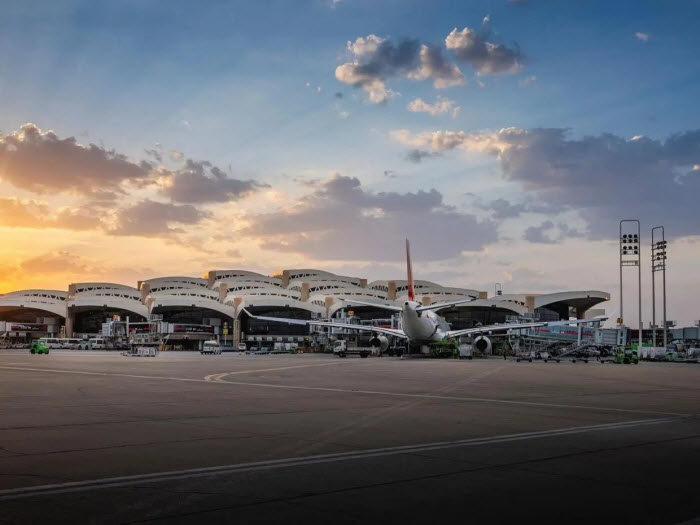
The Coalition for the Support of Legitimacy in Yemen announced that it had detected and tracked threats from drones and cruise missiles directed at Saudi Arabia, confirming that the response to the threats is underway. This comes as Houthi militias continue their attacks on civilian targets in Saudi Arabia. Al-Maliki stated that a projectile hit Terminal 4 at King Khalid International Airport, while air defenses intercepted another cruise missile in the vicinity of the airport.
The recent attacks launched by the Houthi militia, which targeted civilian airports in Saudi Arabia, particularly the attack on King Khalid International Airport in Riyadh that resulted in casualties and injuries among civilians, have reignited international concerns and warnings regarding the protection of critical infrastructure. Amidst armed conflicts, international humanitarian law emerges as a legal and ethical bulwark to protect civilian infrastructure, including airports and vital assets, which the law classifies as “civilian objects” that are strictly prohibited from being targeted.
The framework for protecting civilian facilities is based on established international pillars, most notably the Geneva Conventions and the First Additional Protocol of 1977. Article 48 of these instruments enshrines the principle of strict distinction between civilian objects and military objectives, while Article 52 clearly prohibits directing attacks against airports and non-military vital facilities. Additionally, Article 51 criminalizes indiscriminate attacks that affect civilians and their property without distinction.
The Rome Statute of the International Criminal Court goes further in criminalizing such acts, stating in Article 8 that intentionally directing attacks against civilian objects or bombarding unprotected buildings constitutes a “war crime” for which perpetrators must be held internationally accountable. Similarly, the 1954 Hague Convention for the Protection of Cultural Property in the Event of Armed Conflict obligates parties to the conflict to prohibit any hostile or destructive acts targeting civilian and vital property and facilities.
Despite this broad immunity, international law provides a very narrow exception under which such facilities may become legitimate military targets. This applies exclusively when two cumulative conditions are met: the facility must make an effective contribution to military action, such as using civilian airports or power stations for actual military operations like transporting equipment or launching warplanes; and its total or partial destruction must offer a definite military advantage.
Even if this exception applies, the attacking party remains bound by the absolute obligation to adhere to the principle of proportionality and to take all feasible precautions to avoid excessive loss of civilian life, underscoring that the protection of civilian facilities remains the legal norm, which can only be deviated from in the narrowest of circumstances.
