Red Crescent: Readiness and Prevention Are Key Pillars to Mitigate Disaster Risks
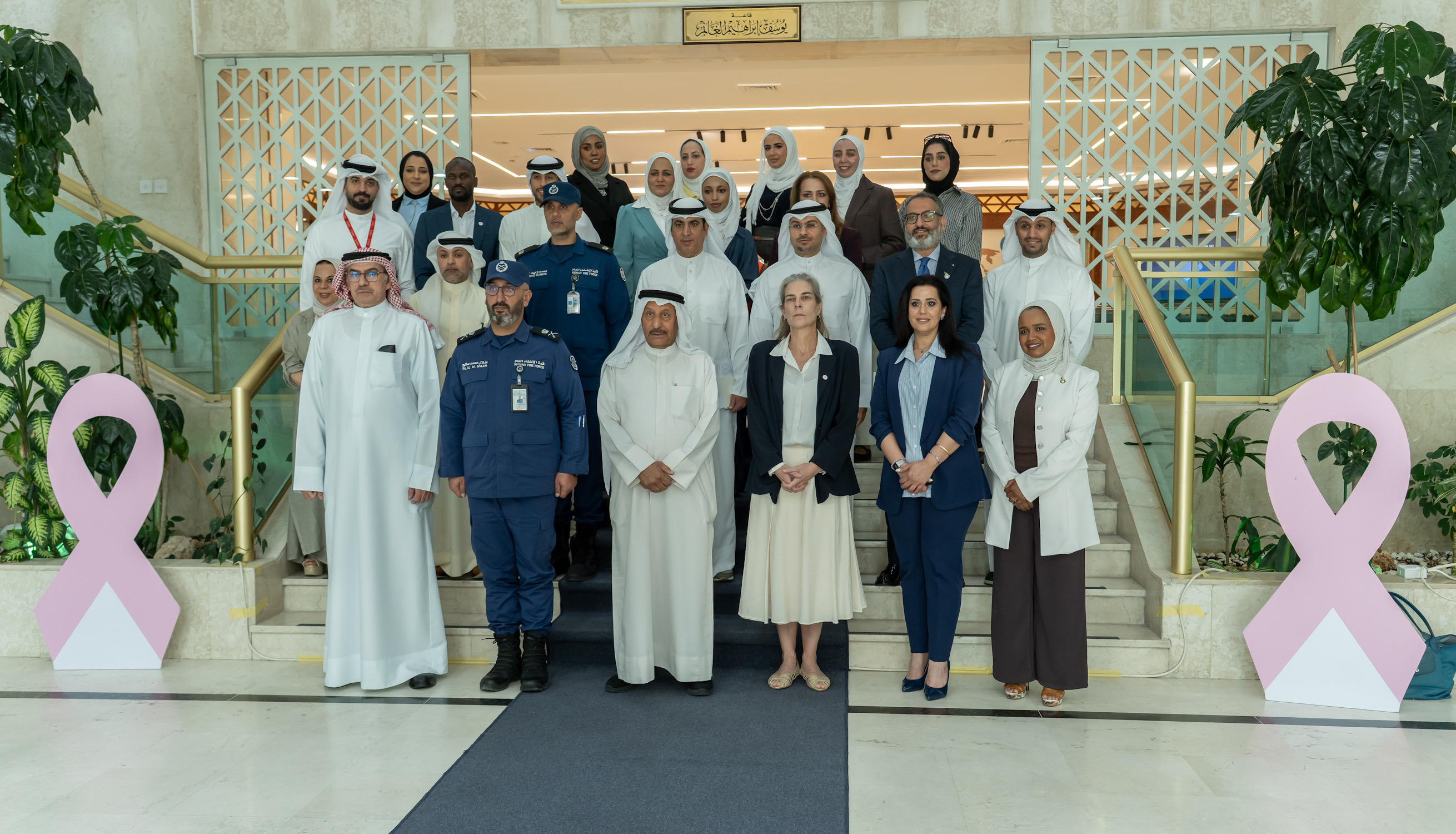
Red Crescent president emphasizes the importance of advance planning and training to mitigate the effects of disasters.
Translated by Qiyas from الوسط — Original source
The chairman of the board of directors of the Kuwait Red Crescent Society, Khaled Al-Mughams, affirmed that enhancing national readiness and consolidating a culture of prevention constitute the foundation for protecting lives and mitigating the impacts of disasters. He stressed the importance of advance planning, training, and raising public awareness to strengthen community resilience and recovery capacities.
This statement came during a celebration organized by the Society on Sunday, marking the International Day for Disaster Risk Reduction, observed annually on October 13 under the theme “Resilience Starts at Home.” The event was held in the presence of the Regional Delegation of the International Committee of the Red Cross (ICRC) to the Gulf Cooperation Council (GCC) countries and the General Fire Force.
Speaking to the Kuwait News Agency (KUNA), Al-Mughams stated that the Society is working to develop awareness, training, and first aid programs, leveraging modern technologies such as virtual reality, while enhancing the capabilities of teams and volunteers and strengthening coordination with relevant authorities to ensure rapid emergency response.
He clarified that the Society’s Disaster Operations Center is responsible for monitoring events, assessing risks, coordinating responses, and linking field teams and volunteers with concerned entities, thereby supporting swift decision-making and the effectiveness of humanitarian interventions.
For her part, the head of the ICRC Regional Delegation, Anne Montavon, emphasized the importance of strengthening the capacities of families and local communities as the first line of defense during emergencies. She noted that communities affected by conflicts face additional challenges due to the decline in basic services and livelihoods, which complicates preparedness for and recovery from climate and environmental shocks. She underscored the necessity of developing early warning systems, protecting critical infrastructure and services, investing in local capacities, and supporting volunteers, while commending the cooperation with the Kuwait Red Crescent Society and the General Fire Force in the fields of preparedness and response.
For his part, Major General Talal Al-Roumi, head of the General Fire Force, stated that Kuwait is committed to developing its disaster risk management system through proactive planning and coordinating the efforts of state institutions to protect lives and property. He pointed out that Kuwait’s hosting of the Sixth Arab Regional Forum on Disaster Risk Reduction in February 2025, and the resulting “Kuwait Declaration on Disaster Risk Reduction” and action plan to accelerate the implementation of the Sendai Framework for Disaster Risk Reduction 2015–2030, reflect a trend toward enhancing regional and international cooperation in this field.
He added that the General Fire Force is coordinating national efforts to prepare risk matrices, analyze potential threats, assess their impacts, and define priorities and responsibilities. He affirmed the continuation of cooperation with the United Nations Office for Disaster Risk Reduction (UNDRR) and the development of risk assessment and early warning tools to support the continuity of essential services and enhance the community’s capacity to confront crises.
