Launch of the third workshop on heart and metabolic diseases today.. under the patronage and participation of the Kuwait Heart Association
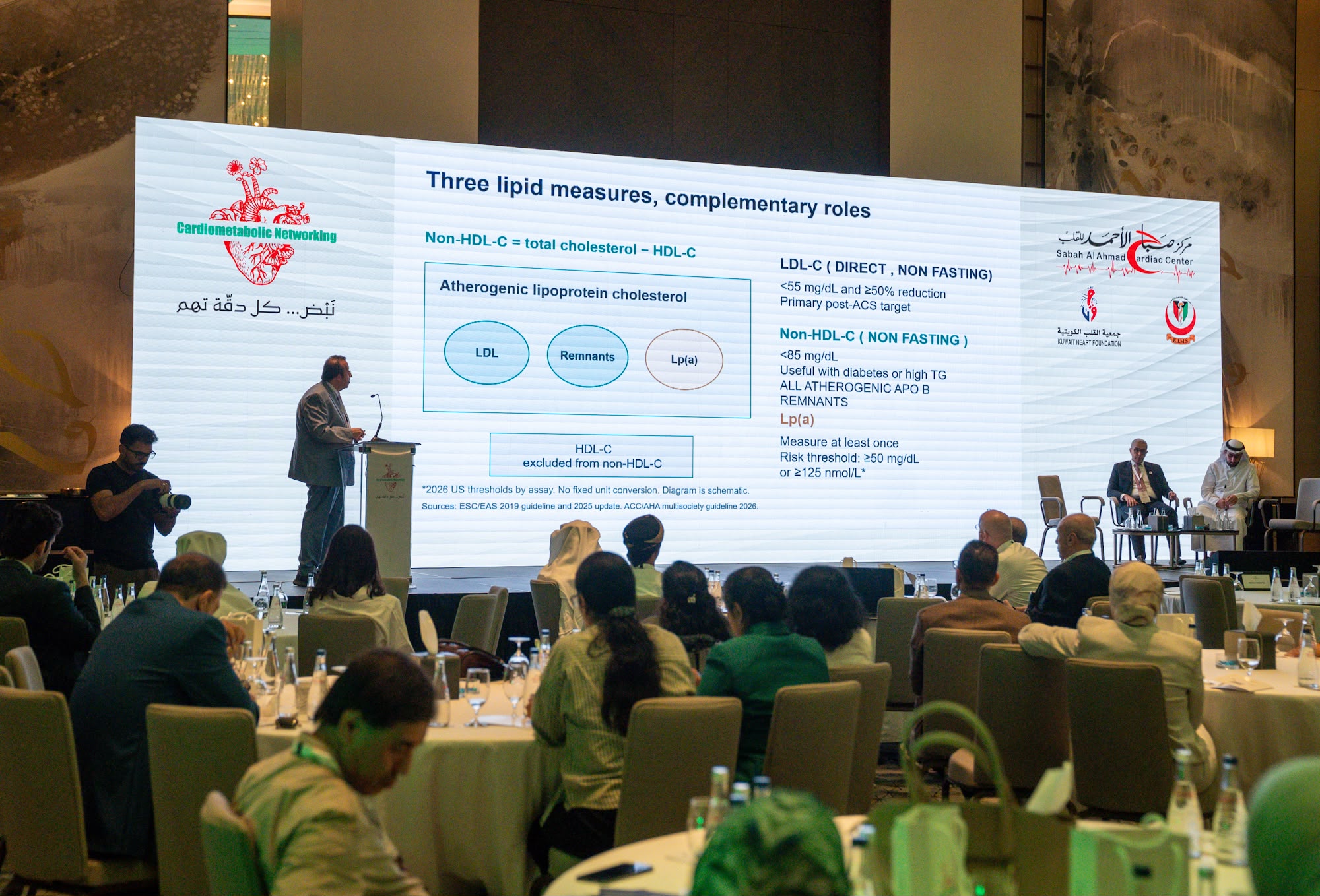
The Kuwait Heart and Metabolic Diseases Workshop has launched with the participation of the Kuwait Heart Association to discuss the treatment of high cholesterol, nutrition, and physical rehabilitation.
Translated by Qiyas from الوسط — Original source
The third edition of the Cardiometabolic Symposium kicked off today, under the patronage and participation of the Kuwait Heart Association, with the attendance of a distinguished group of physicians and specialists. The event aims to discuss the latest developments in the treatment of high cholesterol, therapeutic nutrition, and physical rehabilitation for heart patients, particularly following coronary artery bypass grafting (CABG) and catheter-based interventions.
Dr. Khaled Al-Mulla, Chairman of the Conference, Director of the Sabah Al-Ahmad Heart Center, and member of the Kuwait Heart Association, emphasized that the conference represents an opportunity to enhance cooperation and exchange knowledge and expertise among specialists, thereby contributing to the development of prevention strategies for cardiovascular and metabolic diseases and improving care for patients in Kuwait and the Gulf region.
Al-Mulla stated that the Kuwait Heart Association’s patronage and participation in the conference align with its commitment to supporting scientific activities and strengthening communication among medical staff, while encouraging the exchange of experiences and practices that enhance the quality of care provided to patients.
He clarified that cardiovascular diseases, diabetes, obesity, and hypertension pose significant health challenges that require close collaboration among physicians, researchers, policymakers, and relevant stakeholders, especially in light of rapid changes in lifestyle patterns, the growing elderly population, and rising rates of diabetes and obesity.
He added that the one-day conference discusses recent advances in prevention, diagnosis, digital health, precision medicine, and multidisciplinary care, while providing opportunities for professional networking and building partnerships that facilitate the translation of scientific knowledge into clinical practice.
Al-Mulla urged participants to engage with speakers, ask questions, and benefit from networking sessions, reaffirming that the exchange of ideas and expertise contributes to the development of healthcare services and opens new avenues for collaboration.
For his part, Dr. Ahmed Al-Sarraf, General Coordinator of the Conference, Head of the Lipid Disorders Unit at Sabah Al-Ahmad Heart Center, Consultant in Biochemistry and Lipid Disorders, and member of the Kuwait Heart Association, emphasized that the workshop focuses on the importance of integrated, multidisciplinary care in supporting patient recovery and reducing the likelihood of complications recurrence after coronary artery bypass surgery and catheter-based interventions.
Al-Sarraf explained that coronary artery bypass grafting (CABG) improves blood flow to the heart muscle but does not eliminate atherosclerosis. Therefore, controlling cholesterol and other risk factors, adhering to treatment, and maintaining regular follow-up are essential components of post-operative care.
He noted that the workshop discusses cholesterol treatment goals, including lowering low-density lipoprotein (LDL) cholesterol to below 55 mg/dL for very high-risk patients, based on individual risk assessment. It also covers the role of statins and adjunctive therapies, such as ezetimibe and PCSK9 inhibitors, when necessary to achieve treatment targets.
He added that therapeutic nutrition is a key pillar of the workshop, with a focus on the Mediterranean diet, which includes vegetables, whole grains, legumes, fish, olive oil, and nuts, while limiting saturated fats, avoiding trans fats, and reducing refined sugars.
Al-Sarraf highlighted that the workshop also addresses the importance of cardiac rehabilitation programs and their role in helping patients gradually return to physical activity under medical supervision, tailored to each patient’s condition and recovery stage. This approach supports the restoration of functional capacity and improves quality of life.
He stressed that combining appropriate pharmacological treatment, healthy nutrition, and structured physical activity forms the foundation of sustainable care, emphasizing the importance of patient education and involvement in their treatment plan to maintain positive outcomes.
Treatment and reducing future risks. Dr. Khaled Al-Mulla and Dr. Ahmed Al-Sarraf highlighted that the significance of these discussions is underscored by World Health Organization estimates, which indicate that cardiovascular diseases caused approximately 19.8 million deaths globally in 2022, accounting for 32% of all deaths, with heart attacks and strokes representing about 85% of these fatalities. They added that scientific evidence confirms the importance of controlling LDL cholesterol; a meta-analysis published in The Lancet, involving around 170,000 participants across 26 randomized trials, showed that lowering LDL cholesterol levels by approximately 39 mg/dL through treatment reduces the relative risk of major adverse cardiovascular events by about 22%, thereby reinforcing the importance of adherence to treatment and continuous follow-up to minimize complications. Al-Mulla expressed his gratitude to the organizers, sponsors, speakers, and all participants, commending their efforts in enriching scientific discussions and supporting the development of care services for patients with cardiovascular and metabolic diseases.
