Taiwan: Potential Spark for US-China Clash
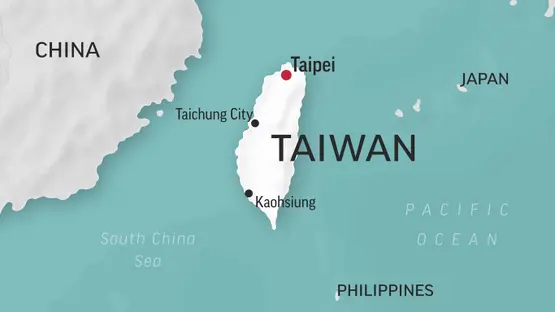
Taiwan is no longer merely a historical flashpoint between China and the United States; it has evolved into one of the most sensitive fault lines in the international system, as national security considerations intersect with technology, trade, and global supply chains. Beijing insists that Taiwan is part of its territory and remains committed to the goal of reunifying the island with China, while Washington maintains a policy of supporting Taiwan’s self-defense capabilities without establishing formal diplomatic relations. In turn, Taiwan is determined to preserve the status quo and refuses to submit to Beijing.
In recent years, Chinese military pressure around the island has become a near-permanent feature of the security landscape, with increasing activity by Chinese aircraft and ships in Taiwan’s vicinity. Recent data indicate a rise in Chinese maritime activity around the island since June 2026, while Taiwan has gradually expanded its military drills to include scenarios involving blockades, attacks, and disruptions to communications.
Taiwan’s danger lies first in its geographic location. The island sits at the heart of what is known as the “First Island Chain,” which stretches along the Chinese coast, making control of it of direct military importance to Beijing, Washington, and their allies in East Asia.
Taiwan also occupies a pivotal position in the semiconductor industry, particularly in advanced chips used in smartphones, artificial intelligence, data centers, automobiles, and military systems. Consequently, any major disruption in the production or export of Taiwanese chips can rapidly ripple from East Asia to factories and markets worldwide.
The U.S. Council on Foreign Relations argues that the AI race between the United States and China has heightened Taiwan’s significance, as the Taiwanese chip supply chain has become directly linked to America’s ability to develop advanced AI technologies. Here, the island transforms from a mere geopolitical issue into a component of the technological struggle that will determine the balance of economic and military power in the coming decades.
The outbreak of a crisis in the Taiwan Strait does not necessarily begin with a full-scale invasion. There is a range of less direct scenarios, ranging from intensified maneuvers and maritime and air pressure to imposing restrictions on the movement of ships and aircraft, or establishing a naval and air blockade.
Taiwan’s military exercises in 2026 focused more heavily on confronting blockade and attack scenarios, while China continued to intensify its maritime and military activity around the island. This makes the risk of miscalculation or military incidents a key factor in crisis calculations; a clash between ships or aircraft could trigger a chain of reciprocal actions, even if neither side had previously decided to engage in a full-scale war.
Currently, estimates by U.S. officials suggest that China is unlikely to launch a large-scale invasion before 2028, despite President Xi Jinping’s directive to the military to be prepared by 2027. These estimates link part of their assessment to factors related to China’s military readiness and the upcoming Taiwanese elections.
