Real Estate Financing and Private Developers: New Tools to Accelerate Housing Care
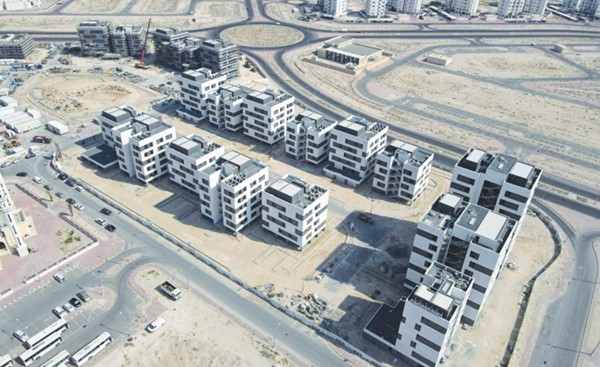
Cabinet approves a decree on real estate financing and strengthens the role of the private sector
Translated by Qiyas from الوسط — Original source
Kuwait’s housing care system is entering a new phase with a package of legislative and executive reforms aimed at diversifying financing tools, expanding the role of the private sector, and accelerating the implementation of residential cities and projects, thereby supporting the state’s capacity to meet growing housing demand in the coming years.
The draft decree-law on real estate financing for housing care beneficiaries, approved by the Council of Ministers on September 22 last year, represents the latest legislative tool in this process. It aims to provide additional financing options for purchasing residential units from real estate developers or for constructing government plots allocated by the Public Authority for Housing Welfare.
Minister of State for Municipal Affairs and Minister of State for Housing, Abdul Latif Al-Musharraf, stated that the draft law consists of 15 articles. It defines the scope, conditions, and regulations of real estate financing, while its provisions govern subsidized and non-subsidized financing and repayment mechanisms, allowing for a combination of both types of financing in accordance with the controls and procedures set by the Central Bank of Kuwait.
The new legislation reinforces the state’s direction toward expanding the tools available to housing care beneficiaries, alongside a transition to a model that relies more heavily on the participation of real estate developers and the private sector in project implementation.
The Real Estate Developer Law constitutes one of the main pillars of this direction, following the entry into force of Decree-Law No. 89 of 2025 in August 2025. This law allows for diverse corporate forms and capital structures for companies established by the Public Authority for Housing Welfare, tailored to the nature of each project and its feasibility studies. The law aims to enhance private sector participation in housing projects, offer diverse housing products suited to the needs of beneficiary families, and empower the Authority to set controls, standards, and technical specifications for buildings, suburbs, and neighborhoods according to the specifics of each project.
As an initial step in the practical implementation of the program, relevant authorities offered three investment opportunities in the cities of Al-Mutlaa, Saad Al-Abdullah, and Jabir Al-Ahmad, comprising approximately 5,000 residential units.
At the end of August last year, the Public Authority for Housing Welfare announced the qualification of 22 consortia comprising 41 Kuwaiti and international companies to participate in the next phase of tendering procedures for the three housing projects, paving the way for more advanced stages in implementing the real estate developer model.
In parallel with legislative reforms, the Government Coordination Committee for Monitoring the Implementation of Services Related to Housing Projects is working to unify government efforts and accelerate the provision of services and infrastructure for residential cities and suburbs. The committee comprises eight government entities, including the Ministries of Finance, Public Works, Electricity, Water, and Renewable Energy, and Transport, as well as the Kuwait Municipality, the Public Authority for Agriculture and Fisheries Resources, and the Kuwait Credit Bank.
The committee is responsible for coordinating among relevant entities, developing joint plans for the provision, operation, and maintenance of services related to housing projects, and addressing obstacles that may affect implementation schedules.
The development of the housing care system extends to international cooperation, as the Ministerial Committee continues to follow up on agreements and memoranda of understanding signed between Kuwait and China, which include cooperation in the field of housing development. The cooperation memorandum aims to expand partnerships in developing housing projects and leverage available expertise and capabilities to develop integrated cities, thereby supporting the accelerated provision of housing care for citizens.
State plans target the construction of approximately 170,000 residential units over the next ten years, within a strategy focused on developing more flexible and efficient models, leveraging global expertise, and considering the nature of Kuwaiti society and the needs of Kuwaiti families.
The new direction is not limited to increasing the number of residential units but extends to developing a more sustainable urban model by adopting green building and infrastructure principles, utilizing smart technology, improving land and facility management, and enhancing project implementation efficiency through an increased role for the private sector.
Thus, the housing care system is moving toward integrating **real estate financing, private developers, government coordination, and sustainable urban planning**, in an effort to build a more flexible model for providing housing and improving the efficiency of future project implementation.
