Charitable Authority launches 'Masar' in Amman and signs an agreement to implement it on the ground
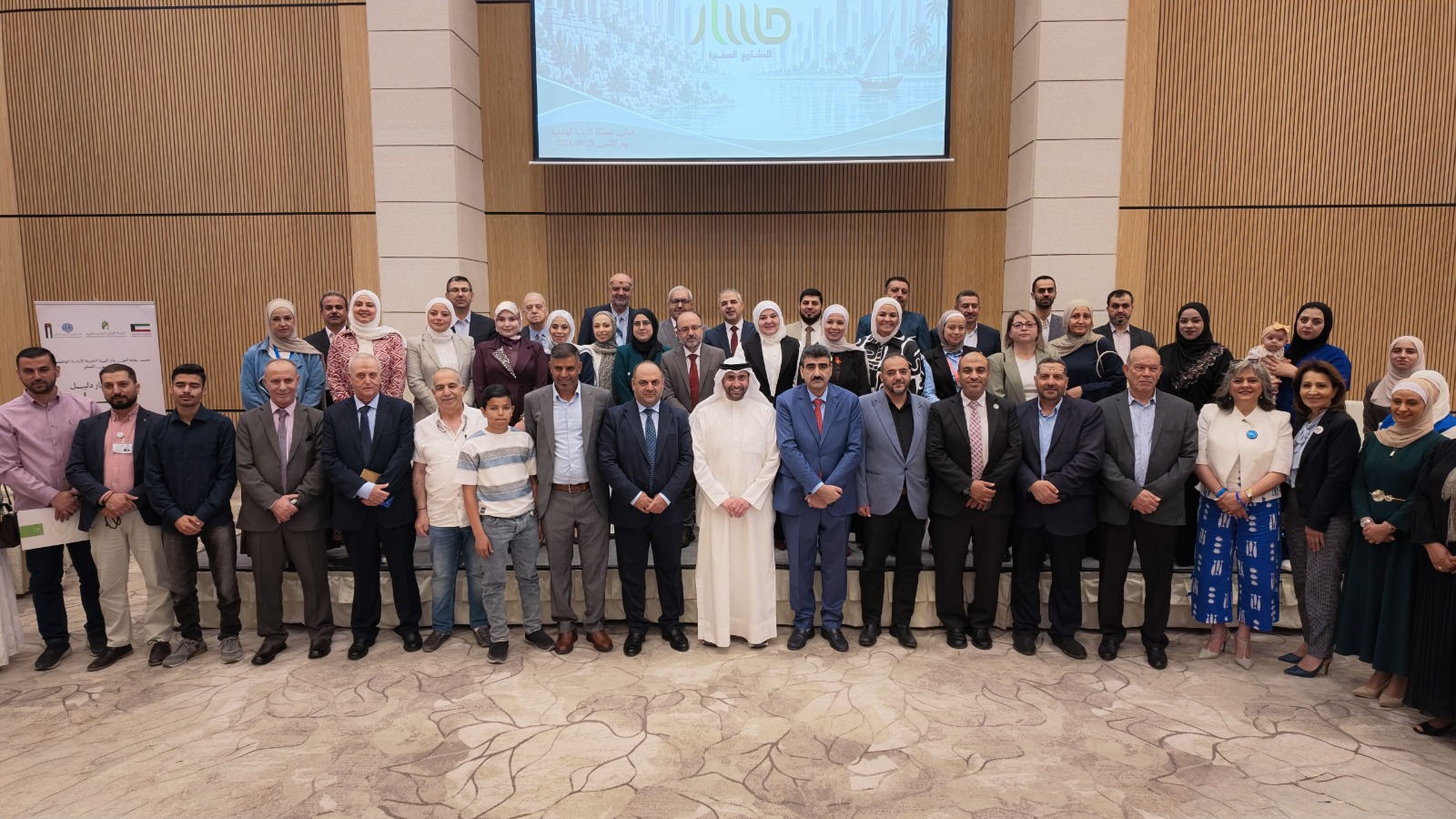
The International Islamic Charitable Organization (IICO) launched in the Jordanian capital, Amman, the two “Masar” guides for small businesses: the Trainer’s Guide and the Trainee’s Guide, and signed a cooperation agreement to implement the program on the ground and build the capacities of small and micro-enterprise owners, thereby enhancing their skills in planning, management, and marketing, and increasing the sustainability and growth prospects of their projects.
The launch took place during a ceremony sponsored by the Jordanian Hashemite Charity Organization (JHCO), attended by its Secretary-General, Dr. Hussein Al-Shabli, and representatives of the Islamic Development Bank, along with partners from Palestine, Yemen, Lebanon, and Turkey, as well as a select group of experts and specialists in economic empowerment and entrepreneurship.
Mr. Ibrahim Khaled Al-Badr, Deputy General Manager of Projects at IICO, stated that the launch of the “Masar” guides and the signing of the implementation agreement mark a transition from the organization’s accumulated expertise in financing and supporting projects to building a unified training methodology that links financing with knowledge, qualification, practical application, and impact measurement.
Al-Badr added that the program is based on an institutional conviction that financing, however important, is not sufficient on its own to ensure the success and continuity of a project unless it is accompanied by capacity building for beneficiaries, skills development, and providing them with tools to help them understand the market, manage their resources, make decisions, and handle challenges that may face their projects.
He noted that the program relies on two integrated guides; the first is dedicated to trainers and provides a scientific and practical framework that helps standardize the training methodology and the quality of its outputs, while the second, the trainee’s guide, accompanies the business owner step-by-step through applicable tools, exercises, and models that can be directly implemented in their project.
He pointed out that the on-the-ground implementation of the program in the Hashemite Kingdom of Jordan aims to build the capacities of approximately 2,000 participants, including small and micro-enterprise owners, entrepreneurs, and beneficiaries of financing and productive grant programs, through 80 training courses covering various governorates of the kingdom.
Al-Badr expressed the organization’s pride in its partnership with the Jordanian Hashemite Charity Organization, commending its role in hosting the initiative and supporting its transition to field implementation, and emphasizing that this partnership reflects the importance of complementing expertise among humanitarian and development institutions, thereby contributing to expanding the reach to beneficiaries and maximizing the impact of targeted programs.
He also welcomed the participation of the Islamic Development Bank and partner institutions from Palestine, Yemen, Lebanon, and Turkey, considering that this presence gives “Masar” an Arab and international dimension, and opens avenues for exchanging experiences, adapting the methodology, and applying it in other countries and communities.
Al-Badr concluded his statement by emphasizing that the organization’s ambition is not limited to the dissemination of “Masar” as a training guide, but extends to establishing it as a reliable, applicable, measurable, and developable methodology that contributes to creating projects more capable of continuity and growth, and helps those in need transition from receiving support to production and self-reliance, thereby preserving their dignity and achieving sustainable developmental impact.
