Al-Faleh: Sustainability Has Become Part of State Readiness and Risk Management
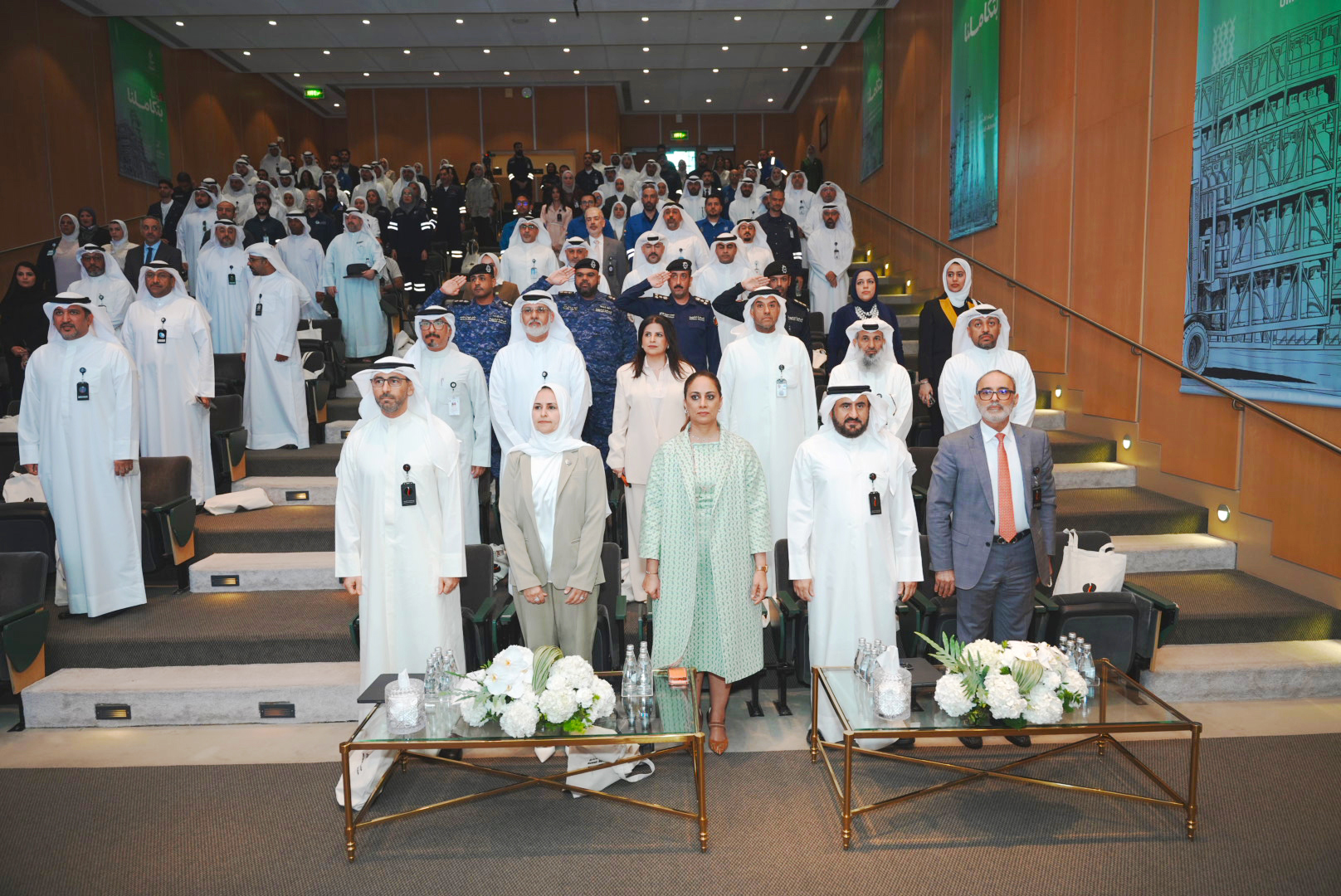
Minister of State for Development and Sustainability Reem Al-Faleh announced the preparation of the National Environmental Risk Register, emphasizing that sustainability has become part of the state's readiness, during a workshop organized by the Kuwait Petroleum Corporation.
Translated by Qiyas from الوسط — Original source
The State Ministry for Development and Sustainability announced the preparation of the National Environmental Risks Register, which identifies eight major risks and their response pathways, as part of efforts to enhance the country’s national readiness to address potential environmental threats.
Dr. Reem Al-Faleh, Minister of State for Development and Sustainability, stated that recent regional developments have redefined the concept of sustainability, which is no longer limited to environmental and resource protection but has become a fundamental element of the state’s readiness and capacity to manage risks and ensure the continuity of vital sectors under all circumstances.
This statement was made by Al-Faleh during a workshop organized by the Kuwait Petroleum Corporation (KPC), under the patronage of Oil Minister Tariq Al-Roumi, held at the Kuwait National Petroleum Company (KNPC) theater. The workshop focused on crisis management, the integration of the hydrocarbon and waste transportation system, and mechanisms for responding to oil spills.
Al-Faleh clarified that the Cabinet has tasked the ministry, in coordination with relevant government entities, to monitor the level of national readiness regarding environmental risks. She noted that the preparation of the National Register aims to establish a clear vision of risks, define responsibilities, and assess preparedness levels to handle these risks before crises occur.
She praised the accumulated expertise of KPC and its subsidiaries in safety, waste management, handling hazardous materials, spill response, and incident management, considering this expertise a national asset that can be leveraged to develop the state’s environmental risk management system.
Al-Faleh emphasized that the workshop’s importance lies in exchanging best practices related to waste management, tracking and monitoring transport vehicles, and responding to marine spills and crises. She pointed out that the true value of its outcomes is measured by the extent to which they translate into practical procedures that enhance response efficiency and protect the environment and vital infrastructure.
For his part, Sheikh Nawaf Al-Saud Al-Sabah, CEO of KPC, affirmed that environmental sustainability is an integral part of the oil sector’s responsibility, highlighting the corporation’s support for the state’s efforts to address pollution risks, particularly those associated with oil operations.
He explained that enhancing the speed of reporting environmental incidents, continuously updating emergency plans, and leveraging modern technologies for monitoring, tracking, and surveillance are key pillars in building a more effective system for responding to risks and protecting people, the environment, and vital infrastructure.
Abdullah Al-Ayyar, Deputy Managing Director for Sustainability at KPC, stated that the workshop is based on lessons learned from previous experiences in the oil sector and aims to develop systems and operational procedures, while reinforcing a culture of readiness and coordination among relevant entities amid current geopolitical conditions.
The workshop covered several topics, including KPC’s approach to crisis management, KNPC’s experience in combating oil spills and managing waste, and Kuwait Oil Company’s (KOC) readiness to respond to marine oil spills. It also discussed the use of GPS systems for tracking vehicles and electronic measurement of fuel levels during transportation, as well as mechanisms for monitoring and tracking the speed of vehicles designated for waste transport in the northern and western areas of KOC.
The workshop saw participation from representatives of various government entities involved in managing environmental risks, featuring discussion sessions that allowed for the exchange of expertise and the discussion of mechanisms to develop cooperation and response to environmental incidents.
