Minors Affairs Honors Charitable Body at Justice Minister's Presence for Role in 'Bader Wa Yana' Success
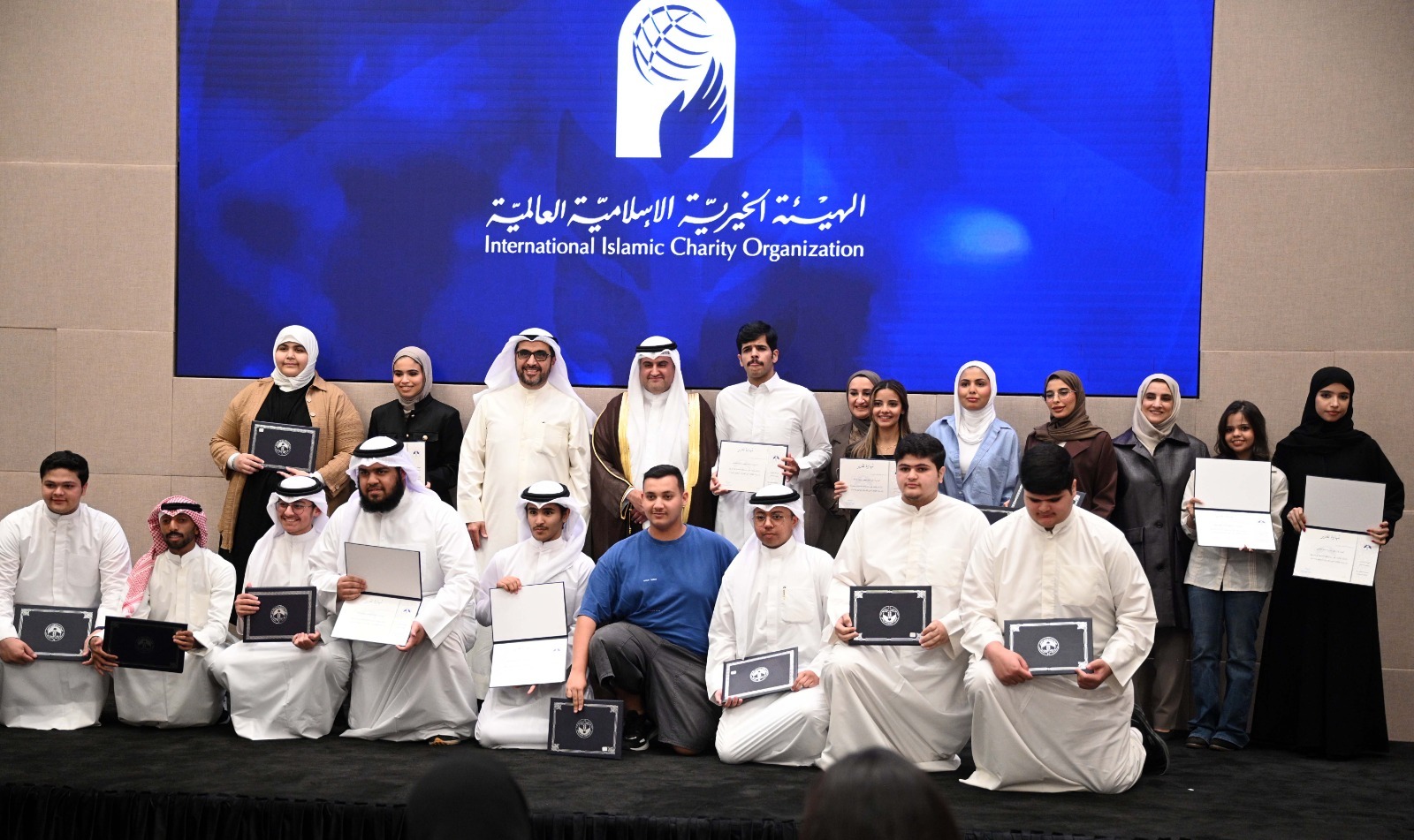
Bader Saud Al-Sumait receives an award of appreciation for the body's role in the Bader Wa Yana project.
Translated by Qiyas from الوسط — Original source
The Director General of the Islamic World Relief Organization, Eng. Badr Saud Al-Sumait, affirmed that investing in the potential of youth and providing them with practical opportunities constitute a fundamental pillar in building human capital and enhancing their participation in community development and shaping their future.
This statement came during an interview with Al-Sumait on the sidelines of the Islamic World Relief Organization’s awards ceremony, where he received an award plaque on behalf of the organization in recognition of its role in supporting and ensuring the success of the “Bader Wa Yana” project. The event marked the finale of the project’s fourth season, hosted by the Public Authority for Child Welfare at its headquarters. The ceremony was held under the patronage and attendance of His Excellency Minister of Justice and Chairman of the Board of Directors of the Public Authority for Child Welfare, Advisor Nasser Youssef Al-Sumait, with participation from sponsoring and supporting entities and participating students.
Al-Sumait expressed the organization’s pride in this recognition, emphasizing that it reflects the value of the institutional partnership between the Islamic World Relief Organization and the Public Authority for Child Welfare, as well as their shared commitment to delivering high-quality programs that contribute to developing youth capabilities and equipping them with experiences that enhance their readiness for upcoming academic and professional stages.
He stated, “We are proud of our partnership with the Public Authority for Child Welfare, and we view the ‘Bader Wa Yana’ project as a practical model of integration between state institutions and charitable organizations in building human capital and transforming social responsibility into programs with tangible and sustainable impact.”
He clarified that the Islamic World Relief Organization participated in the project for the second consecutive year, hosting 22 male and female students from the children of the “Qusour” (wards) in a two-month training program, consisting of four training hours daily. Through this experience, they gained comprehensive exposure to the institutional work environment, allowing them to closely explore fields of charitable and humanitarian work, develop their professional and personal skills, and discover their capabilities and interests.
He added that the program went beyond theoretical training, enabling students to engage in practical tasks, interact with work teams, and acquire communication, initiative, teamwork, and responsibility-taking skills, thereby helping them form a clearer vision of their future academic and professional paths.
Al-Sumait noted that the partnership between the two entities extends beyond the “Bader Wa Yana” project, pointing to a cooperation agreement aimed at enhancing humanitarian and developmental efforts to serve people with disabilities and special needs categories. This collaboration provided high-quality rehabilitation programs benefiting approximately 600 individuals, including orphans, people with special needs, the elderly, recovering addicts, and released inmates from correctional facilities. These efforts were implemented and supervised under the “Human Building” volunteer initiative, operating under the umbrella of the Islamic World Relief Organization.
He further mentioned that the partnership extended to supporting developmental projects outside Kuwait. Through this cooperation, a comprehensive project was implemented in Rudaki City, Tajikistan, which included the construction of a school serving approximately 560 students, the establishment of a medical center benefiting around 20,000 visitors, and the drilling of an artesian well to provide potable water for the local population. This initiative exemplifies the concept of integrated development that addresses basic human needs and opens up better prospects for life.
Al-Sumait commended the efforts of the Public Authority for Child Welfare in managing and developing the project, praising the contributions of sponsoring and supporting entities and program organizers, as well as the commitment, engagement, and serious desire to learn and gain experience demonstrated by the participating students.
