Nicaragua's Ambassador Urges Kuwaiti Investors to Diversify Investment Destinations Beyond European Markets
- Notable contributions by the Kuwait Fund for Arab Economic Development in the health sector
- Gulf citizens can enter Nicaragua without a prior visa
Ambassador of the Republic of Nicaragua to Kuwait, Mohammed Farara Lashkar, affirmed the depth and steadfastness of Nicaraguan-Kuwaiti relations, noting that they are based on historical friendship, mutual respect, and fruitful developmental cooperation. He emphasized his country’s aspiration to expand cooperation with Kuwait in several sectors, foremost among them health, education, transport, tourism, and investment.
Lashkar praised the wisdom of the Kuwaiti leadership and its balanced approach to handling regional crises, affirming that Kuwait serves as a model of stability, diplomacy, and self-restraint. He stressed that dialogue remains the only path to achieving security and peace and resolving crises.
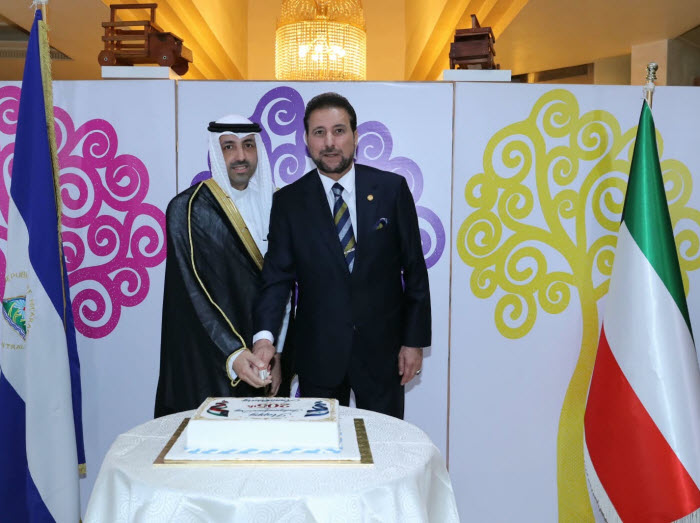
These remarks came during statements to journalists on the sidelines of the Nicaraguan Embassy’s celebration of the 205th anniversary of the country’s independence, attended by Counselor Ahmed Al-Bakhait of Protocol Affairs, a number of ambassadors, diplomatic corps members, representatives of Kuwaiti entities, and friends of Nicaragua.
**Sturdy Relations**
The ambassador stated that relations between Nicaragua and Kuwait are “strong and entrenched,” clarifying that diplomatic relations between the two countries were established in 1990, followed by the opening of the Nicaraguan embassy in Kuwait, which became the first embassy of his country in the Gulf region and the Arab world.
He noted that the embassy in Kuwait covers a number of countries in the region, including the Gulf Cooperation Council (GCC) states, as well as Jordan, Lebanon, and Libya, while Nicaragua maintains another embassy in Algeria.
He confirmed that bilateral relations have seen cooperation in several fields over the past years, particularly in development, expressing his hope to enhance this cooperation and transform the distinguished political relations between the two countries into broader practical partnerships that serve the interests of both peoples.
**Developmental Cooperation**
Lashkar pointed out that developmental cooperation between Kuwait and Nicaragua has spanned many years, particularly in the health sector, commending the role played by the Kuwait Fund for Arab Economic Development in supporting developmental projects in his country.
He explained that the Kuwait Fund’s contributions contributed to the construction and opening of the largest hospital in Nicaragua, in an area with a population of approximately 700,000, considering the project a significant addition to the health sector and the medical services provided to citizens. He noted that the hospital project’s value is $120 million, with the Kuwait Fund’s contribution accounting for about 33% of the total value.
**Education and Health**
He added that the two countries signed other agreements in the fields of education, health, and transport, clarifying that these sectors represent the main pillars of current developmental cooperation.
He indicated that work has begun on ready-to-execute projects, while studies for other projects have been prepared with a view to presenting them to relevant authorities. He explained that representatives from the Kuwait Fund visited project sites and target sectors, gaining direct insight into the needs and associated studies.
**Tourism and Investment Opportunities**
Regarding tourism, the ambassador affirmed that Nicaragua boasts significant tourism assets due to its geographical location, natural resources, and access to the Pacific Ocean and the Caribbean Sea.
He stated that his country receives approximately two million tourists annually, considering this figure still limited compared to the scale of tourism assets and resources it possesses. He noted that most visitors come from Latin American countries, particularly those in Central America.
He expressed his hope to increase the number of Arab and Gulf tourists, clarifying that Arab tourism to Latin America remains generally limited.
He pointed out that the lack of direct flights represents one of the most prominent challenges to stimulating tourism, although there are multiple options to reach Nicaragua via Mexico, Brazil, Turkey, and some Central American countries.
He called on Kuwaiti and Gulf citizens to discover Latin American countries, saying the region “needs everything and possesses everything,” referring to the diversity of tourism, investment opportunities, and natural resources.
**Visa Requirements**
Lashkar clarified that citizens of GCC countries can enter Nicaragua without a prior visa, noting that his country offers a package of facilitations and investment incentives in several sectors.
He explained that the agriculture, livestock, and tourism sectors enjoy tax exemptions and facilitations, along with land-related privileges, in addition to a banking system that allows investors to manage their businesses and transfer profits and funds in accordance with prevailing laws.
He added that investors in the tourism sector can benefit from exemptions and incentives lasting up to 20 years, which enhances the prospects for establishing tourism and hotel projects and attracting foreign capital.
Regarding the embassy’s efforts to attract Kuwaiti investments, he said the embassy held several meetings with Kuwaiti businessmen and investors, and some of them visited Nicaragua and returned with positive impressions. However, translating this interest into actual investment projects requires more time and awareness of available opportunities.
He called on investors to diversify their investment destinations and not limit them to European markets, considering that some markets may face political and legal risks affecting investments, whereas Nicaragua offers opportunities, incentives, and guarantees in sectors requiring new investments.
**Regional Developments**
Regarding regional developments, the ambassador expressed his hope that the region would enjoy lasting peace, and voiced his regret over what he described as wrong policies that contributed to exacerbating crises and tensions.
He referred to developments related to the Strait of Hormuz, clarifying that the strait was open to global trade traffic normally before crises and escalation policies led to its closure. He considered that reopening it does not address the root causes of the problem, and that achieving peace requires addressing the causes that led to the tensions.
He praised the wisdom of the Kuwaiti leadership, affirming that Kuwait was among the countries most affected by the repercussions of regional crises, but managed, thanks to the wisdom of its leadership, to handle various circumstances with patience, stability, self-restraint, and diplomacy.
**The Palestinian Issue**
On the Palestinian issue, the ambassador affirmed that relations between Nicaragua and Palestine are not limited to statements and political positions, but described them as “relations of blood and historical solidarity.”
He explained that a number of fighters and combatants from Nicaragua participated in the Palestinian struggle and resistance, with some martyred during the years 1968, 1969, and 1970, noting that relations between the two sides are based on a long history of cooperation and solidarity.
**Peace and Development**
Returning to the occasion of the celebration, the ambassador said that September 15 represents a cherished national occasion in his country’s history, during which the values of freedom, sovereignty, and independence are celebrated, and the journey of the Nicaraguan people and their aspirations for peace, development, and prosperity are remembered.
He added that holding this occasion in friendly Kuwait represents a renewed opportunity to reaffirm the bonds of friendship, mutual respect, and cooperation uniting the two countries and peoples, affirming his country’s commitment to continuing to enhance bilateral relations and expand cooperation areas in sectors of mutual interest.
He expressed his appreciation for the Government and people of Kuwait for the warmth and hospitality extended to his country, thanking the presence of diplomatic corps members, representatives of Kuwaiti entities, and friends of Nicaragua, and their participation in this occasion.
**Nicaraguan Community in Kuwait**
Regarding the Nicaraguan community in Kuwait, the ambassador clarified that it is a small community, numbering approximately ten individuals.
He affirmed his optimism about the future of bilateral relations, particularly in developmental, investment, and tourism fields, noting that the opportunities available between the two countries are significant, but leveraging them requires more direct communication and reciprocal visits between businessmen and relevant authorities in Kuwait and Nicaragua.
