Washington Tightens Naval Blockade on Iran
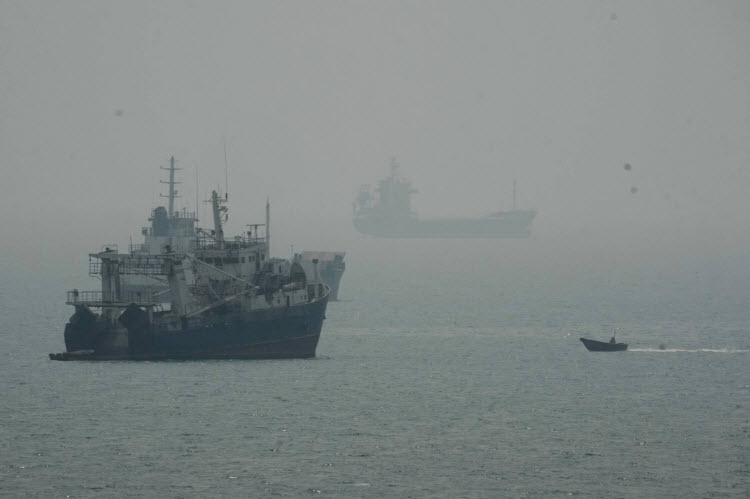
U.S. Central Command announced that approximately 100 commercial vessels altered their courses over the past 60 days as part of the U.S. naval blockade imposed on Iran. Washington has also tightened regulations on ship movements in the Strait of Hormuz, establishing specific time windows for oil tankers to transit under the cover of U.S. air defense.
U.S. Central Command stated that any vessel attempting to cross the blockade zone without authorization from U.S. forces would be in violation, emphasizing that its troops remain focused on executing the mission and monitoring commercial navigation in the region.
These measures come as shipping through the Strait of Hormuz, one of the world’s most critical energy trade waterways, remains severely disrupted by the war and escalating threats between Washington and Tehran. In an effort to secure limited commercial shipping, the United States has set new schedules allowing oil tankers to cross the Strait of Hormuz under U.S. air protection, following an increase in Iranian attacks on commercial vessels, particularly during nighttime hours.
Ships have been instructed to begin their voyages at specific times, including 9:00 a.m., marking a shift from previous arrangements that allowed broader transit windows during the night. According to the Financial Times, a message from the U.S. side to one ship noted that transiting during darkness “has not proven to be the safest time,” given the threats facing commercial vessels.
Maritime affairs analysts argue that restricting U.S. protection to specific time windows allows Washington to use its military resources more efficiently, rather than providing continuous air coverage for extended periods. Joshua Talies, a researcher specializing in maritime affairs, stated that requiring ships to transit within specific time windows is an effective way to reduce the high cost of continuous U.S. defense in the southern part of the strait, noting that operating a sophisticated U.S. military aircraft can cost between $25,000 and $75,000 per hour.
Since May, the United States has provided air defense coverage for ships navigating a route along the Omani coast on the southern side of the Strait of Hormuz, in an attempt to maintain the flow of some oil exports through this strategic passage. Shipowners wishing to transit were required to apply to the U.S. Navy’s Naval Coordination Center (NCAGS), which determines sailing routes, issues transit permits within specific time windows, and provides U.S. air protection during those periods.
These measures reflect an attempt to balance the tightening of the blockade on Iran with allowing limited and safe passage for commercial vessels, particularly oil tankers.
In response, Iran announced this week its intention to establish what it described as a “restricted zone” in the Strait of Hormuz, a move that would further restrict navigation in the waterway. Mohsen Rezaei, head of Iran’s Supreme National Security Council, stated that the zone would extend from the U.S. naval blockade line toward the Strait of Hormuz and then into the Persian Gulf, warning that any vessel entering it would be subject to “sanctions,” without specifying the nature of these measures.
Iran’s move comes as Tehran seeks to use the strait as leverage against the U.S. blockade, while Washington attempts to keep navigation under its surveillance and prevent Iran-linked ships from benefiting from this vital passage.
