52nd Arab Labour Conference opens in Kuwait with participation from Kuwait
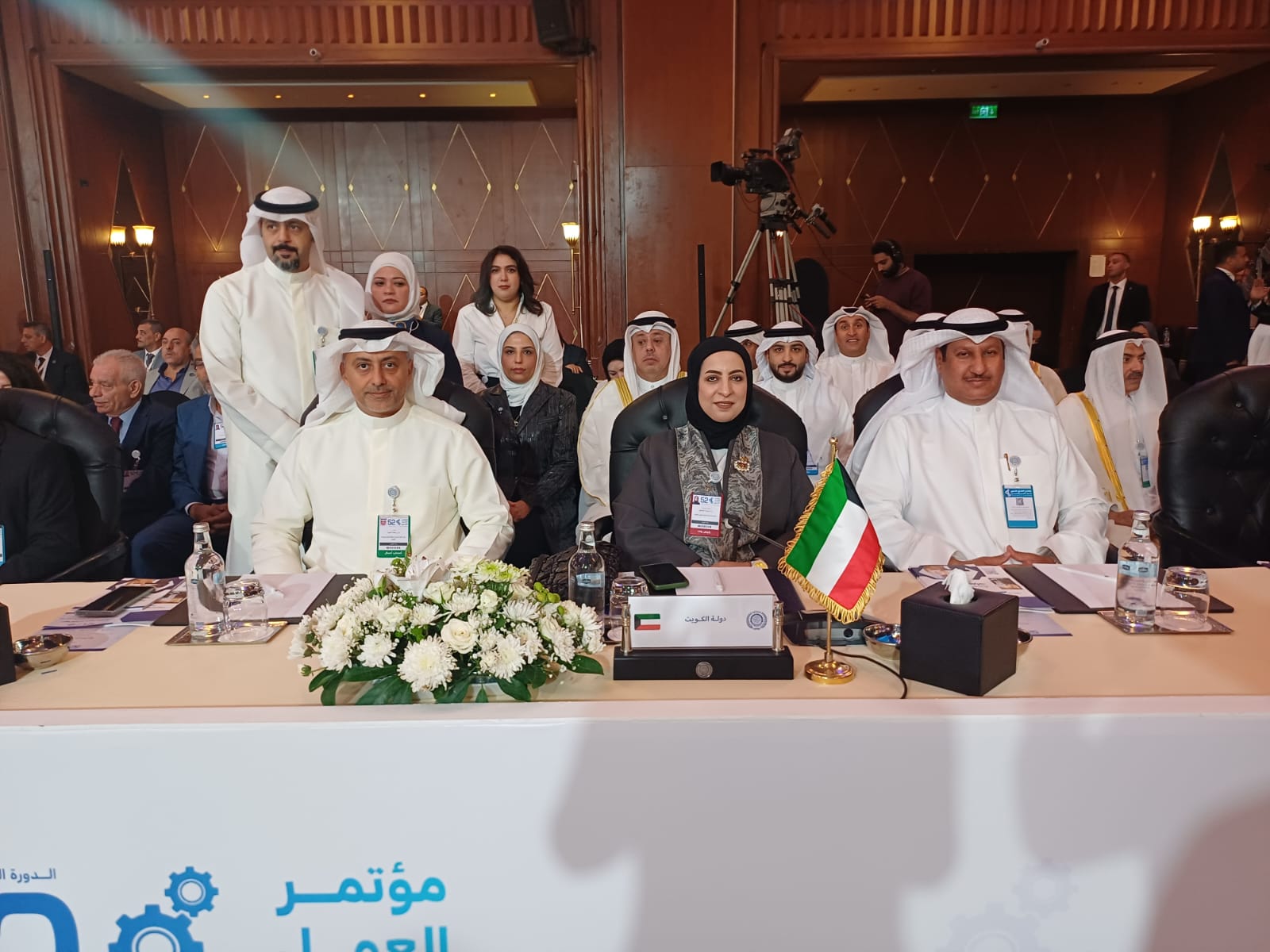
The 52nd session of the Arab Labour Conference has commenced in Kuwait with broad participation to discuss labor issues and regional challenges.
Translated by Qiyas from الوسط — Original source
The 52nd session of the Arab Labour Conference, organized by the Arab Labour Organization, kicked off today, Sunday, with the participation of labour ministers, heads of delegations, and representatives of employers and workers from 21 Arab countries, including Kuwait, alongside representatives of Arab, regional, and international organizations and unions.
The Kuwaiti delegation to the conference is headed by Rabab Al-Asimi, Director General of the Public Authority for Manpower, and includes Faiq Al-Azmi, President of the General Federation of Kuwaiti Workers, and Firas Al-Awda, Deputy Director General of the Kuwait Chamber of Commerce and Industry, along with officials from the three entities.
In his address during the opening session, Egyptian Minister of Labour Hassan Radad, who chairs the board of directors of the Arab Labour Organization, stated that the previous two board sessions featured in-depth discussions on several key issues, including reports on financial and administrative matters, the Financial Supervision Authority’s reports, and the findings of expert legal committees on trade union freedoms and women’s employment issues.
Radad added that the board also discussed resolutions from the 116th and 117th sessions of the Economic and Social Council concerning the Arab Labour Organization, including the inclusion of two topics proposed by the organization for the upcoming Arab Summit: the Arab Entrepreneurship Strategy and a declaration of principles on enhancing economic diversification and transitioning toward promising economies.
He noted that the board reviewed a report on the repercussions of the unjust Iranian war on the Arab region and its impact on the Arab Labour Organization, in accordance with a board resolution regarding this report.
The organization has prepared numerous in-depth studies and specialized seminars on this topic, addressing the role of social dialogue in mitigating the effects of the regional war on the Arab region, as well as occupational safety and health.
These studies and seminars also covered psychological and social support for workers in vital sectors during crises, institutional responses to the repercussions of the regional war, the impact of disrupted regional supply chains on Arab economies, and the effects of the ongoing regional war on Arab labour markets.
Radad emphasized that the Palestinian issue remains a top priority. The board of directors of the Arab Labour Organization thoroughly discussed the tragic conditions faced by Palestinian workers and people in occupied territories, strongly condemning the blatant violations by the occupation. It firmly opposed attempts to displace the Palestinian people from their land and reaffirmed support for their resilience, the necessity of rebuilding Gaza, and providing decent livelihoods for its people.
For his part, Jordanian Minister of Labour Nidal Al-Qatamine, who chairs the conference, said in his speech that today’s meeting underscores Arab countries’ belief that dialogue, cooperation, and integration among the three production parties are the best ways to confront the challenges facing the region.
Al-Qatamine added that the Arab Labour Conference represents a manifestation of constructive dialogue among the three production parties, enabling the achievement of actionable visions and recommendations that place the working human being at the heart of development, balancing the requirements of growth with workers’ rights and employers’ interests.
He noted that the conference agenda includes two important technical topics: the first is climate change and its impact on the work environment, and its economic and social repercussions on workers and production parties; the second is startups and their opportunities amid digital transformation, considering them as a lever for diversifying income sources, tackling youth unemployment, and creating innovation-based jobs that support sustainable economic growth.
The conference, which runs until September 20, will discuss several key files related to the future of work and development in the Arab region, including sustainable economic growth and comprehensive, equitable social development. It will also examine climate change and its effects on the work environment, ways to enhance occupational safety and health, and the capacity to adapt to climate risks, as well as startups and their promising opportunities under digital transformation, which opens new horizons for entrepreneurship and job creation.
The conference will also address skills development and alignment with labour market needs, promoting employment and tackling unemployment, thereby supporting the formulation of Arab labour policies better equipped to keep pace with economic, technological, and social transformations.
