Trump 'Not Regretful' of Iran War; Bazbakhan Acknowledges 'Critical Phase'
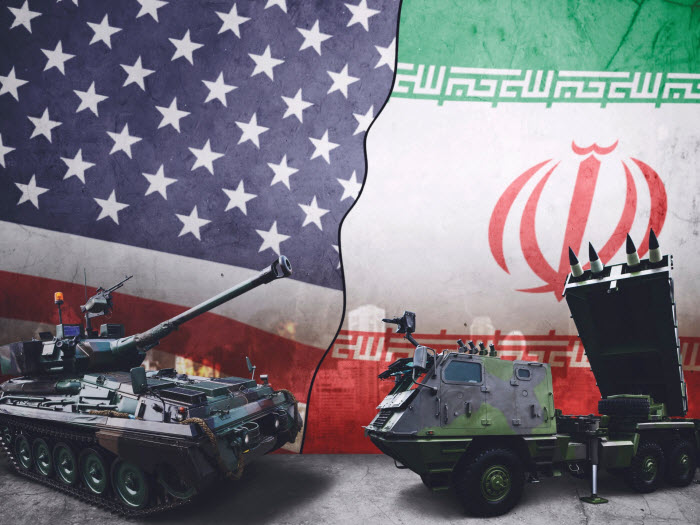
The repercussions of the war on Iran continue amid escalating pressure on the country, as its president, Masoud Pezeshkian, acknowledged that the pressures imposed on his nation have reached a “critical and dangerous stage.” Speaking at the BRICS summit in India, Pezeshkian stated that he does not support the continuation of the war, but emphasized at the same time the necessity of Iran’s resilience to avoid being forced to negotiate from a position of weakness.
In parallel, Tehran is intensifying its diplomatic efforts to contain the escalation. Its Foreign Minister, Abbas Araghchi, discussed with Pakistani Army Chief Asim Munir the possibility of resuming negotiations. Additionally, Tehran has held contacts with South Korea regarding the situation in the Middle East and the security of the Strait of Hormuz. Iran announced it would hold talks with Arab and Gulf states in Oman to discuss the security of the strategic strait.
The Financial Times reported that the United States has requested oil tankers transiting the Strait of Hormuz to sail only at specific times to ensure military protection for them, following Iran’s escalation of attacks on ships sailing at night. Since May, Washington has provided air protection for vessels wishing to sail through a route running parallel to the coast of the Sultanate of Oman on the southern side of the strait.
Citing emails sent by the U.S. Maritime Coordination Center to maritime advisors, the newspaper noted that the period during which ships are protected has been reduced to two specific time slots per day since early September.
Navigation in the Strait of Hormzu has faced severe disruption since the outbreak of war on February 28, while clashes and attacks on ships have reduced traffic through one of the world’s most critical energy supply maritime corridors.
