Libyan Unity Government under pressure from escalating sectoral protests
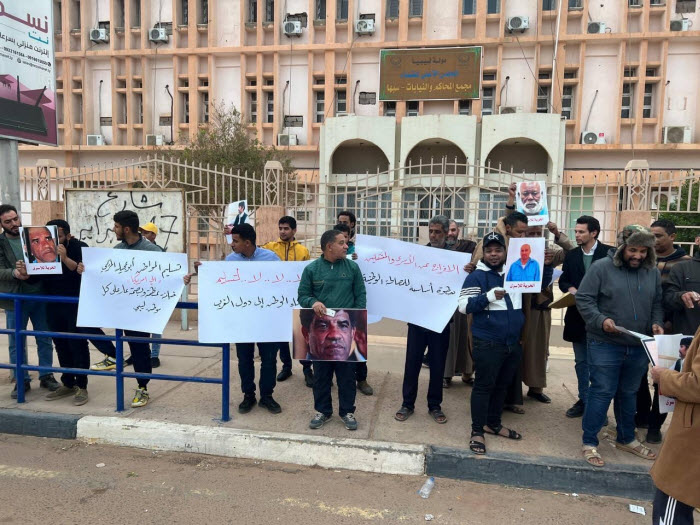
The Libyan interim “unity” government is facing mounting pressure amid protest movements led by doctors, teachers, and retirees demanding improved financial conditions and the settlement of outstanding dues, as debate intensifies over the fairness of salary increases, particularly following raises approved for military personnel in both eastern and western Libya.
Amid government silence, the National Council for Freedoms and Human Rights in Libya has documented the expansion of sectoral protests demanding wage justice, especially within the education and health sectors. The council, a human rights organization based in Tripoli, warned in a statement that “delaying the resolution of the salary crisis could broaden the scope of sit-ins and demands, extending to other government sectors.”
This warning comes as demands have taken on a more escalated tone. The Union of the Health Sector Movement in Libya has called for a general strike in health institutions to demand the settlement of wages and financial disparities owed to doctors for years, alongside the provision of health insurance for workers in the sector.
Dr. Suleiman Al-Sumadi, founder of the movement, emphasized the “legitimacy of the demands,” hinting at legal escalation against the Ministry of Health. He told Asharq Al-Awsat that the strike would exclude emergency and chronic cases and would not violate medical regulations, noting that health institutions in eastern, western, and southern Libya have responded.
The doctors’ demands reflect the financial pressures facing health sector workers. Dr. Aya Ka’abar, a dentist, stated on Facebook that a doctor’s salary does not exceed approximately $200, arguing that it is insufficient to meet basic needs amid rising living costs and inflation.
Former Health Minister Rida Al-Awkli expressed surprise that thousands of doctors, medical professionals, and health and technical staff continue to work for years without receiving their salaries, under difficult professional and living conditions, while the state simultaneously explores the possibility of recruiting doctors and nursing staff from abroad.
The protest movement had previously released documents it claimed related to the recruitment of Syrian doctors and medical staff with monthly salaries exceeding $2,500. However, the Ministry of Health denied this, affirming that no final contracts have been signed and that the matter is still under review regarding needs and options.
