Kuwait's oil exports recover to 1 million barrels per day
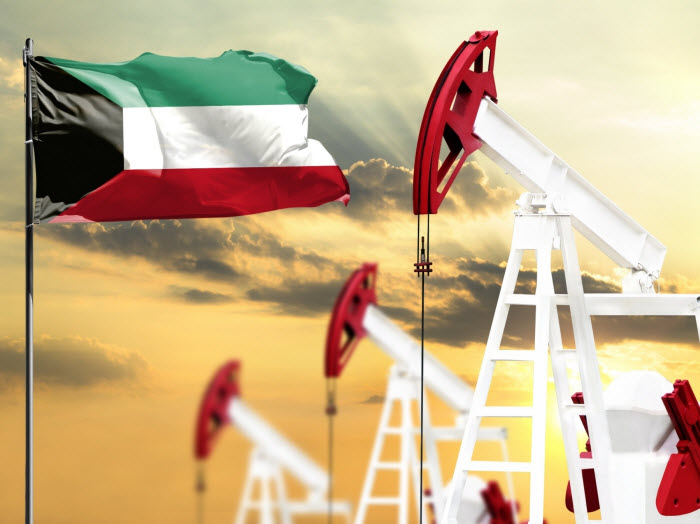
Global benchmark Brent crude prices rose during the current month but remained below the $100-per-barrel threshold despite the recent escalation in tensions between the United States and Iran, which disrupted oil export flows through the Gulf region, the Strait of Hormuz, and the Red Sea.
Energy sector experts attribute the persistence of prices below $100 to the availability of alternative supplies, large market stockpiles, and a decline in global demand, particularly for oil used in the transportation and petrochemical sectors.
According to data from Argus, crude oil shipments from Middle Eastern producers currently stand at approximately 11 million barrels per day, compared to around 18 million barrels per day prior to the outbreak of hostilities with Iran.
Claudio Galimberti, senior expert at Rystad Energy, stated that flows through the Strait of Hormuz ranged between 8 and 9 million barrels per day in the week preceding the resumption of fighting on August 30, before later dropping to less than 2 million barrels per day. Current average daily flows are estimated between 4 and 5 million barrels.
He noted that these levels place the "fair" price for Brent crude at around $95 per barrel, while industry estimates for daily exports through the strait range between 6 and 8 million barrels.
Kpler data showed no large oil tankers exiting the Strait of Hormuz since September 2, whereas exports through the strait during the temporary agreement between the United States and Iran in July reached levels nearing 16 million barrels per day.
Gulf producers have shifted to alternative routes to mitigate the impact of navigation disruptions, including transshipping cargo from ship to ship outside the Strait of Hormuz, which has helped alleviate part of the supply shortfall.
In this context, Saudi Aramco resumed loading operations at the Ras Tanura port within the Gulf in August, while its exports from Yanbu on the Red Sea remained under pressure due to maritime disruptions. Yanbu’s exports fell to 1.429 million barrels per day in August, down from an average of 3.9 million barrels per day during the previous three months. Meanwhile, exports from Egypt’s Sidi Kerir port rose to 2.139 million barrels per day, more than doubling compared to June.
Iraqi exports, from OPEC’s second-largest producer, recovered to approximately 2.34 million barrels per day in August, while UAE shipments remained stable at around 2.9 million barrels per day in July and August.
Regarding Kuwait, crude oil exports recovered to approximately 1 million barrels per day in July and August, indicating a partial restoration of flow levels despite disruptions to shipping routes in the region.
On the supply side, countries and producers outside OPEC are increasing output. Rystad Energy expects combined production from the United States, Canada, and Guyana to rise by approximately 1.4 million barrels per day this year, partially offsetting the supply shortfall caused by disruptions in the Middle East.
Russian crude oil exports remained stable at around 5.5 million barrels per day in July and August, down from 6.4 million barrels per day in June. Meanwhile, Russia lowered its 2026 oil production forecast to its lowest level in 17 years, which may impact its exports in the coming period.
