The Russian-Ukrainian War: A Continuous Drain
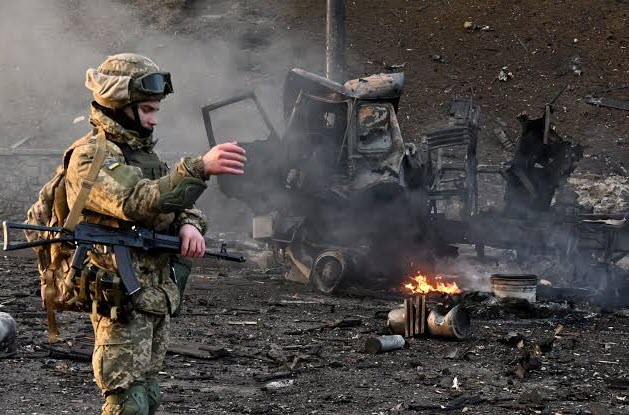
The Russia-Ukraine war has entered its fifth year, approximately, since the start of the full-scale Russian invasion in February 2022, as battles continue within the framework of a protracted war of attrition characterized by slow changes along the contact lines and increasing reliance on drones and long-range missiles. Ground operations are primarily concentrated in the east and south, while reciprocal strikes targeting military sites, energy facilities, warehouses, and industrial infrastructure persist, alongside continued heavy civilian casualties.
Russian advances remain limited and slow, despite ongoing pressure on several axes in Donetsk. Estimates from the Institute for the Study of War indicate that the Russian campaign during the spring and summer of 2026 did not achieve a broad operational breakthrough that would alter the course of the war, while Russian forces continue their attempts to advance toward strategic areas, particularly the Pokrovsk and Kostyantynivka axes. Moscow claims to have achieved field gains in several settlements, including Vodianiske, and announced control over 19 settlements in parts of Dnipropetrovsk and Zaporizhzhia during the summer campaign. However, these claims, like most field control data released by both sides of the war, are difficult to verify independently.
In contrast, Kyiv announced the recapture of approximately 745 square kilometers and 26 settlements since the beginning of the year toward Olexandrivka, within areas including Dnipropetrovsk, Donetsk, and Zaporizhzhia. Reports also mentioned limited Ukrainian progress on some axes, including the Slovyansk direction. Data from the Ukrainian General Staff indicate that the intensity of clashes continues, with between approximately 189 and 239 engagements recorded on some recent days. The Russian military is increasingly relying on attack drones and guided aerial bombs, while Ukrainian forces use artillery and drones to target Russian troops and supplies.
Russian losses announced by Kyiv have exceeded 1.47 million military personnel killed or wounded since the start of the invasion, according to its data. This figure remains an estimate from one side of the conflict and cannot be considered a verified independent tally.
The past months have seen a notable escalation in long-range attacks, with a growing portion of the battle shifting to the geographic depth of both Russia and Ukraine. Ukrainian forces launched wide waves of drone attacks on Russian territory, including major strikes targeting the Moscow region. Russian authorities announced on various occasions the interception of hundreds of drones in a single night or over several consecutive nights.
Ukrainian attacks also targeted facilities linked to the energy, industrial, and defense sectors, including oil refineries in Ufa and Leningrad, and industrial and military facilities in various Russian regions. Some attacks caused fires and temporary disruptions to certain facilities, while Russian regions face pressures related to fuel supplies.
In response, Russia continued to launch missile and air attacks on Ukrainian cities and regions, including Kharkiv, Kherson, Zhytomyr, Kyiv, and Odesa. Ukrainian authorities state that some strikes hit residential areas and civilian infrastructure, while Moscow typically asserts that its operations target military sites or infrastructure linked to the war effort.
In the days preceding August 19, one attack resulted in the deaths of 17 people and injuries to 54 others, according to Ukrainian reports. Attacks in Kherson and Zhytomyr were also reported to have caused casualties.
Available data indicate that July 2026 saw the highest monthly civilian casualty toll in Ukraine since the start of the invasion, reflecting the expanding scope of the air war and the continued exposure of cities and civilian infrastructure to shelling.
