The Stone Muzaylits in Saudi Arabia: Archaeological Landmarks Depicting the Features of Ancient Societies' Lives
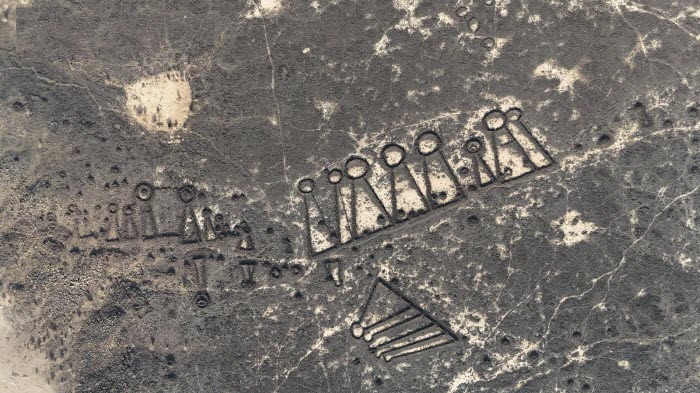
Stone cairns are widespread in Al-Ula, Khaybar, and Tayma in the Kingdom of Saudi Arabia, serving as some of the most prominent archaeological evidence revealing aspects of the history of human settlement in northwestern Arabia. They are densely distributed across volcanic lava fields, along valleys, and near oases and water sources, having been constructed using local stone. These structures generally consist of a main burial chamber connected to stone extensions resembling a tail. Their shapes and sizes vary according to multiple architectural patterns, and archaeological studies indicate that a large number of them date back to the Bronze Age. Their diversity and overlapping nature suggest that construction techniques evolved over successive periods.
According to documentation by the Royal Commission for AlUla through its research and archaeological projects, a significant number of these tombs are linked to long routes known as “funerary roads,” which extended between oases, pastures, and water sources. These routes reflect the mobility and connectivity patterns among ancient settlements within a network spanning approximately 530 kilometers.
Results from studies supervised by the Commission, in collaboration with specialized scientific teams, indicate that these monuments reflect aspects of social and economic interconnectivity among communities in northwestern Arabia during the Bronze Age, offering a broader picture of their lifestyles, settlement patterns, and mobility. The high density of tombs near oases and water sources underscores the importance of these sites in the lives of the local population at that time. Researchers suggest that the funerary roads were associated with the seasonal movement of herders and their flocks between oases and pastures, as well as playing a role in enhancing communication among settlements.
