Naturalized citizens have no right to vote or run for office
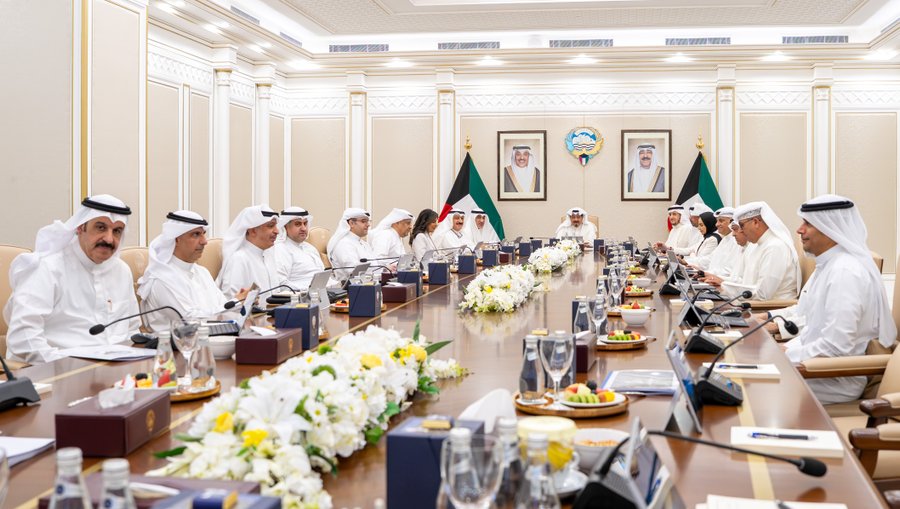
- Approval of the draft decree-law regulating the judiciary.. Establishment of “Economic Circuits” to keep pace with modern global legislation The Council of Ministers approved the draft decree-law for the issuance of a
Translated by Qiyas from الوسط — Original source
- Approval of the draft decree-law regulating the judiciary.. Establishment of “Economic Circuits” to keep pace with modern global legislation
The Council of Ministers approved the draft decree-law for the issuance of a law establishing Economic Circuits, aimed at keeping pace with modern global and regional legislation and harnessing advanced technological systems to serve justice.
This came during the meeting held by the Council of Ministers yesterday, presided over by His Highness Sheikh Ahmad Abdullah Al-Ahmad Al-Sabah, Prime Minister.
The matter requires the issuance of a law establishing Economic Circuits, which is a procedural law aimed at achieving the required balance between the right to defense on one hand and the swift resolution of cases brought before courts on the other. This is achieved through three interrelated objectives the law seeks to realize:
1. Designating an economic circuit and a judge assigned to work in it. This designation extends to the expert appointed to conduct expertise work in disputes heard before it, down to the execution judge who puts its rulings into effect.
2. Simplifying litigation procedures by reducing certain procedural deadlines and working on preparing the lawsuit, notifying the parties of its filing, and allowing them to review memoranda and documents before referring the case to the competent circuit. Furthermore, it involves activating the remote litigation system while ensuring the principle of confrontation between parties and not infringing upon the right to defense.
3. Legislative flexibility, by striving to avoid the rigidity of legislative texts, which is considered one of the greatest flaws of legislation.
The Council of Ministers forwarded the draft decree-law to His Highness the Amir of Kuwait, Sheikh Meshal Al-Ahmad Al-Jaber Al-Sabah, may God protect and guard him.
**Citizenship Law**
The Council of Ministers approved the draft decree-law amending certain provisions of Emiri Decree-Law No. 15 of 1959 concerning Kuwaiti Citizenship.
Article One of the aforementioned draft decree-law stipulates that “the following texts shall replace the text of Clause 4 of Article 14 and the text of Article 19 of Emiri Decree-Law No. 15 of 1959 mentioned above:
Article 14: Clause 4 – If a person intentionally adds to his file or the file of another person any individual who is not his son or descendant, and this is proven through an investigation conducted by the Supreme Committee for Kuwaiti Citizenship verification or through a final court judgment, the citizenship of any of his sons or descendants may be revoked in this case, provided his knowledge of this is established.
Article 19: The Minister of Interior shall issue a certificate of Kuwaiti citizenship to every Kuwaiti after verifying its establishment in accordance with the provisions of this law. This certificate shall be issued in electronic form, and the Minister shall issue a decision regarding the technical and operational controls and conditions for issuing, preserving, and using the electronic certificate, as well as the procedures for verifying its authenticity, revoking it, or suspending its validity.”
Furthermore, Article Two of the draft decree-law stipulates that “a new paragraph shall be added to the text of Article 7 of Emiri Decree-Law No. 15 of 1959 mentioned above, reading as follows:
Article 7: New Paragraph – A person who has acquired Kuwaiti citizenship through naturalization shall not have the right to vote, run for office, or be appointed to any parliamentary body.”
Article Three of the draft decree-law stipulates that “the electronic certificate mentioned in this decree-law shall carry the same evidentiary value and legal effects as the paper citizenship certificate, and shall replace the paper certificate in the application of laws, decrees, and regulations in force.”
The Council of Ministers forwarded the draft decree-law to His Highness the Amir of Kuwait, Sheikh Meshal Al-Ahmad Al-Jaber Al-Sabah, may God protect and guard him.
The Council of Ministers also approved the draft decree-law concerning the regulation of the judiciary, which comes within the framework of efforts to develop the judicial system, enhance judicial efficiency, and consolidate guarantees of judicial independence and integrity. This is achieved by updating the rules governing the affairs of the judicial authority and the Public Prosecution, and establishing a more integrated organization for justice institutions through several interrelated main axes.
The first axis is represented by the aforementioned draft decree-law to develop the organization of the judicial authority’s affairs by updating the rules governing the selection, appointment, and promotion of its members, and developing the competencies of the Supreme Council of the Judiciary and the rules governing its work.
The second axis involves strengthening the oversight and accountability system and litigation guarantees by developing rules for judicial inspection, accountability, and discipline, enhancing litigants’ rights, and developing the rulings governing the work of the Public Prosecution, its competencies, and its role in overseeing detention facilities.
The third axis focuses on developing judicial work and enhancing the stability of legal principles by establishing a comprehensive mechanism to unify judicial precedents of the Court of Cassation, thereby ensuring the stability of legal principles and consistency of judicial rulings. It also involves regulating trials and judicial procedures conducted using electronic means in a manner that responds to legislative and technical developments and elevates the efficiency of the justice system.
**Martyr’s Park**
The Council of Ministers also reviewed a visual presentation provided by the Deputy of the Diwan of the Amir, Sheikh Abdulaziz Meshal Mubarak Abdullah Al-Sabah, and the committee responsible for the management and supervision of the third phase of the Martyr’s Park project. The review aimed to assess the latest stages regarding the operation and opening of the project, which is scheduled to open to visitors on Thursday, October 1.
During the visual presentation, Sheikh Abdulaziz Al-Sabah stated that on this occasion, a carnival will be held featuring entertainment activities for visitors, including musical bands, light shows, and family and children’s entertainment segments. He explained that the vision for the park is to be a model and integrated park encompassing various sports and recreational facilities.
He noted that the total area of the project site is 243,605 square meters, while the total built-up area is 203,162 square meters. The green area covers 190,661 square meters, and the investment area amounts to 16,232 square meters. He clarified that the project components include:
- The Sur Theater Building, which includes the Roman theater, outdoor cinema, multi-purpose hall, women’s health club, cafes, and commercial shops.
- The Sports Building, which includes the upper garden, a skating hall, a snow games hall, an electric car racing track, and a flying ride.
- External facilities, consisting of a mosque, open-air theater, outdoor playgrounds, a running track, and fountains.
- Parking lots, accommodating 2,388 vehicles.
For his part, the Council of Ministers praised the efforts undertaken by the leaders, officials, and employees of the Diwan of the Amir and the committee responsible for the management and supervision of the third phase of the Martyr’s Park project. They highlighted the opening of this recreational and cultural project, which will serve as a tourist landmark attracting visitors from within and outside the State of Kuwait.
