Abdel-Aati meets Al-Badawi and reaffirms Egypt's support for the security of Gulf states
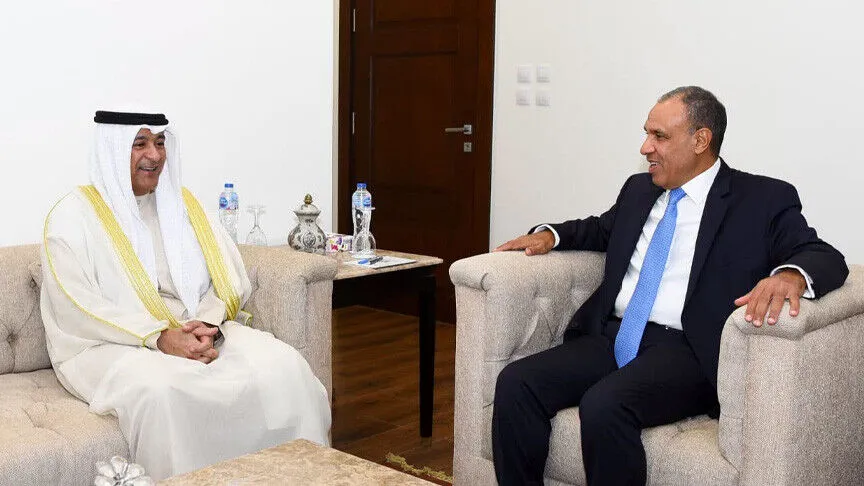
Egyptian Foreign Minister Badr Abdel Ati reiterated his country’s support for the security and stability of the Gulf Cooperation Council (GCC) member states. This came during a meeting between Abdel Ati and GCC Secretary
Translated by Qiyas from الوسط — Original source
Egyptian Foreign Minister Badr Abdel Ati reiterated his country’s support for the security and stability of the Gulf Cooperation Council (GCC) member states. This came during a meeting between Abdel Ati and GCC Secretary-General Jasem Al-Budaiwi in the Egyptian city of Alamein on Tuesday, according to a statement from the Egyptian Foreign Ministry on Wednesday.
Abdel Ati praised the “notable leap” witnessed in institutional relations between Egypt and the GCC since the signing of the Memorandum of Understanding on Political Consultation in February 2022 and the adoption of the Joint Action Plan for the period 2024–2028. He welcomed the holding of the first edition of the Egyptian-Gulf Trade and Investment Forum in Cairo in November 2025. He emphasized the importance of “building on the momentum achieved by the forum,” particularly in the fields of renewable energy, petrochemicals, the digital economy, artificial intelligence, and pharmaceutical manufacturing.
Abdel Ati reaffirmed “Egypt’s steadfast support for the security and stability of the sister GCC states.” He considered that “the security of GCC states is an integral part of Egypt’s national security.” He stressed “Egypt’s full support for the measures they take to protect their security, stability, and the well-being of their peoples.”
The GCC comprises six countries: Saudi Arabia, the United Arab Emirates, Kuwait, Qatar, the Sultanate of Oman, and Bahrain. It was established on May 25, 1981, with its headquarters in Riyadh.
For his part, Al-Budaiwi appreciated “the pivotal role Egypt plays in supporting security and stability in the region, and the continuous efforts it makes to de-escalate tensions, resolve crises, and enhance joint Arab action,” according to the statement. He expressed the GCC’s keenness to “continue developing its relations with Egypt and strengthen consultation and coordination with it on various issues of common interest.”
Gulf states bore a significant share of the repercussions of the aggression launched by the United States and Israel against Iran on February 28, which resulted in 3,000 deaths, according to Tehran, which retaliated with attacks that killed Americans and Israelis. Iran also launched attacks on what it said were U.S. military facilities and equipment in GCC countries, but some of these strikes caused civilian casualties and damaged civilian infrastructure, leading these countries to condemn the actions and repeatedly call for their cessation.
To end the current state of war, Washington and Tehran are engaged in stalled negotiations, with the strategic Hormuz Strait for energy and trade supplies currently being the most prominent issue on the agenda.
