Iran and the 'Hormuz' gamble: From a chance for settlement to the risk of isolation
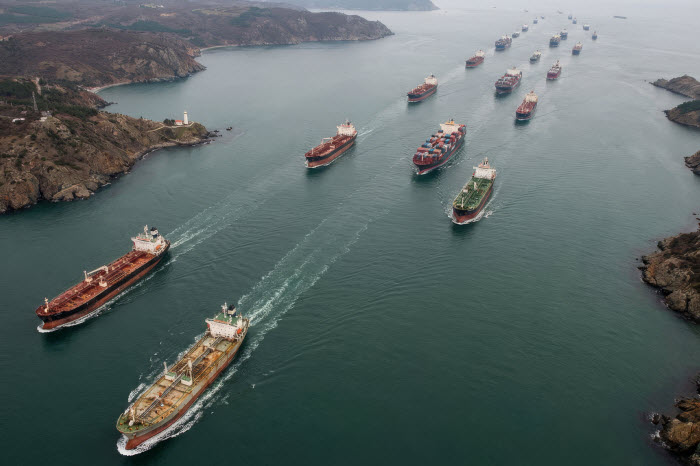
The IRGC announced control over Hormuz as a war zone, while the Foreign Minister denied negotiations with the United States.
Translated by Alqyas from Al-Wasat — Original source
Iran’s Islamic Revolutionary Guard Corps (IRGC) announced that Tehran would not reopen the strategic Strait of Hormuz unless the United States accepted all its demands. IRGC spokesperson Hossein Makki said, “Our current strategy is to control this strait until the enemy accepts all our conditions,” adding that “the strait has now effectively become a battlefield for us, not just a waterway.”
For his part, Iranian Foreign Minister Abbas Araghchi stated that his country is not conducting any negotiations with the United States at present, and that Tehran will not initiate any talks as long as Washington violates the interim agreement reached in June.
The memorandum of understanding signed by Washington and Tehran in Versailles in mid-June appeared to offer Iran a rare opportunity to exit the war, restore part of its economic ties, and secure a position in the emerging regional balance following the severe blows it had suffered. However, Iran’s leadership viewed the regime’s survival and its ability to disrupt navigation in the Strait of Hormuz as evidence that it possessed a card capable of extracting concessions it had failed to achieve on the battlefield. Rather than using the strait as a pathway toward a settlement, Iran transformed it into a tool for imposing Iranian security dominance over the Gulf and pushing U.S. forces away from it.
This gamble did not topple the regime, but it began producing the opposite of what Tehran intended: a new regional defensive alliance, a more hardline U.S. stance on freedom of navigation, and a readiness to confine any future negotiations to limited files, without granting Iran a major deal that would restore its international standing.
The collapse of the Versailles memorandum was not solely the result of Iranian intransigence; the document bundled together issues that are difficult to resolve simultaneously: a ceasefire, the reopening of the Strait of Hormuz, the lifting of the blockade and sanctions, the future of the nuclear program, reconstruction, and settlements regarding Lebanon. Moreover, some of its provisions were drafted in language that allowed each side to offer different interpretations.
Richard Nevo, former deputy to the U.S. Special Envoy for Iran, in an analysis for the Washington Institute for Near East Policy, argued that the memorandum was ambiguous in defining Iran’s nuclear commitments, while the concessions on sanctions were clearer and more generous. He compared it to the 2015 Joint Comprehensive Plan of Action, which limited its objectives to freezing parts of the nuclear program in exchange for specific, temporary relief, leaving the broadest issues for later negotiations.
However, Tehran exacerbated the document’s flaws when the IRGC attempted to transform its ambiguity into a permanent right to manage the strait. Thus, the memorandum shifted from a framework for halting the war to a contest over who would determine the rules of access to the Gulf, causing the opportunity for its gradual implementation to be lost before new alignments against Iran could fully coalesce.
