Finger-biting between Washington and Tehran: Hormuz at the Heart of the Clash of Wills
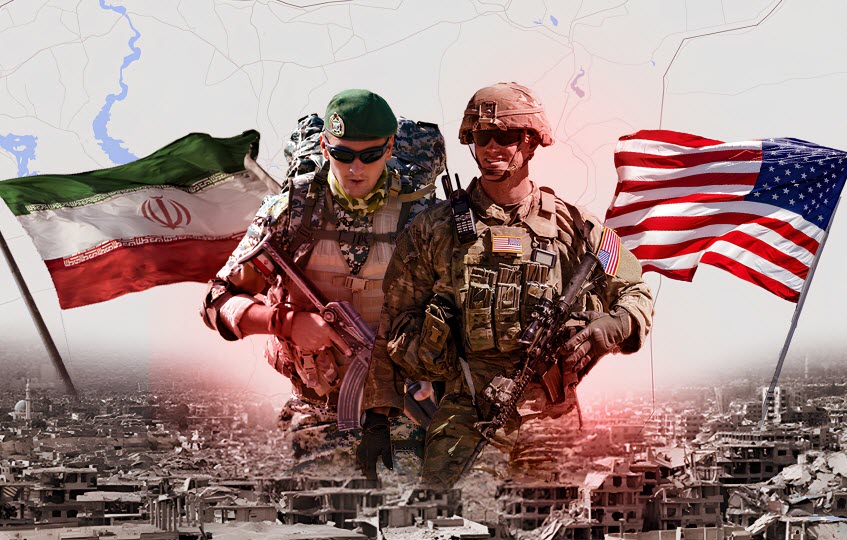
The conflict between the United States and Iran is no longer merely an open military confrontation; it has evolved into a protracted test of wills, resilience, and the management of pressure tools. The standoff has enter
Translated by Qiyas from الوسط — Original source
The conflict between the United States and Iran is no longer merely an open military confrontation; it has evolved into a protracted test of wills, resilience, and the management of pressure tools. The standoff has entered a new phase in which military and diplomatic dimensions intertwine, leaving the Arab Gulf facing a highly sensitive political and security imperative that could reshape the regional balance of power.
At the heart of this confrontation stands the Strait of Hormuz, emerging as one of Iran’s most significant leverage cards, as navigation through the waterway has become a central element of the political bargaining between Tehran and its adversaries. While Washington insists on freedom of navigation and rejects any arrangements that grant Iran authority over shipping movements, Tehran seeks to entrench its conditions before any full return to the previous status quo. This makes the strait a direct symbol of the struggle for influence and sovereignty in the Gulf.
Alongside the military escalation, the Sultanate of Oman is pursuing a complex diplomatic track aimed at finding an exit from the strait crisis and paving the way for broader understanding. Washington has reported progress in communications between Oman and Iran, with expectations of reaching an agreement that would allow commercial navigation to resume without obstacles, provided that the United States lifts its sanctions on Iranian ports if the agreed commitments are fulfilled.
For the U.S. administration, the Hormuz crisis does not appear to be merely a navigational file that can be separated from the broader confrontation with Iran. Washington’s acceptance of any arrangement that grants Tehran direct influence over shipping movements could be interpreted as a retreat from one of the key objectives of U.S. pressure. Conversely, rejecting a settlement would prolong a confrontation whose political and military costs are increasingly mounting.
Recent analyses and reports indicate that the administration of President Donald Trump faces difficult choices after months of war, given that some of the objectives Washington announced at the outset of the confrontation have not been achieved. This places the administration in a highly complex equation: how to maintain an image of strength and deterrence without sliding into a longer and more costly war?
From this perspective, the return of diplomacy to the forefront appears closer to an attempt to manage the conflict than to an announcement of its end. Washington seeks to preserve its pressure tools, while Tehran aims to prevent military pressure from translating into a U.S. political gain. Meanwhile, Oman is trying to carve out a middle ground that allows for a de-escalation without either side feeling that it has made a major strategic concession.
Iran treats the Strait of Hormuz as one of its most prominent cards of power in the face of U.S. pressures. By linking freedom of navigation to the broader confrontation, Tehran seeks to convey a message that any security or political arrangements in the Gulf cannot be imposed unilaterally.
