Bashaqyan: We support the implementation of the memorandum of understanding with the United States and are committed to its provisions
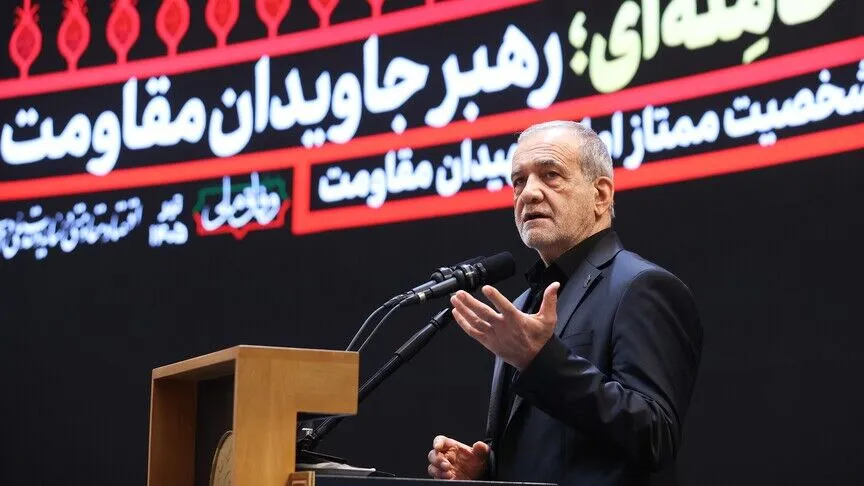
Iranian President Masoud Pezeshkian stressed that his country supports the implementation of the memorandum of understanding reached with the United States on June 14, affirming Tehran’s commitment to all its provisions. In the final part of an interview published by Iranian media on Friday, Pezeshkian said his country would “defend with all its might” the memorandum of understanding. He added, “If our rights can be secured through diplomacy, why should we follow the path Israel wants?” Pezeshkian noted that Iran is ready for diplomacy just as it is ready for war, emphasizing that it will not surrender under pressure. He denied any disagreement between the government and Iranian armed forces regarding the memorandum. The Iranian president pointed out that the decision was taken by the Supreme National Security Council and received the approval of all security and military bodies. The Supreme National Security Council is the highest official decision-making body in Iran in the fields of defense, security, and foreign policy, chaired by the president and comprising senior military, political, and judicial leaders. Pezeshkian affirmed that there is “full harmony” between the government and the military establishment. Regarding military escalation, he said Iran does not intend to target neighboring countries, but will respond to any attack launched from the territory of any state. Pezeshkian accused Israel of seeking to inflame conflicts in the region. He stressed that his country does not seek expansion and regards neighboring countries as “brotherly states,” working to prevent attempts at incitement between them and Gulf states. Previously, on June 14, Iran and the United States, with Pakistani mediation, reached an agreement whose first phase involved reopening the Strait of Hormuz in exchange for the release of frozen Iranian assets, with Tehran pledging not to impose fees on ships transiting the strait for 60 days. However, the United States did not release the Iranian assets after the memorandum of understanding was signed, and established an alternative route for ships to transit through Omani territorial waters. Tehran considered these steps a violation of the agreement, restricted navigation in the strait, and targeted several ships it claimed had attempted to transit without permission. Despite the memorandum of understanding, US-Iran tensions escalated into military confrontations beginning on July 8 and lasting nearly two weeks, before Iran resumed negotiations with Oman to determine safe passages for ships transiting the Strait of Hormuz.
