Minister of Health Discusses with Mayo Clinic US Delegation the Enhancement of Joint Cooperation
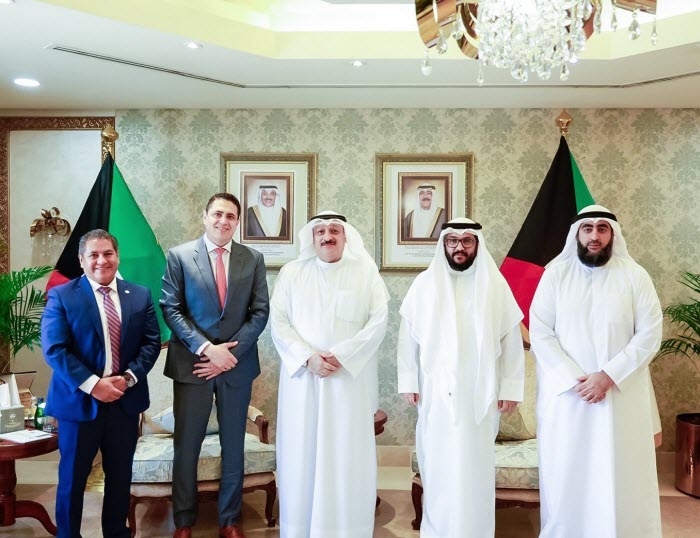
Health Minister Dr. Ahmed Al-Awadi held talks yesterday with a delegation from the US Mayo Clinic to discuss ways to enhance joint cooperation in the fields of medical education, professional development, and healthcare.
According to a statement issued by the Ministry of Health, Minister Al-Awadi emphasized the ministry’s commitment to continuing to strengthen ties with leading international health institutions and leveraging these partnerships to support the ministry’s priorities in developing national competencies, expanding opportunities for continuous education and professional development, elevating the quality of healthcare services, and benefiting from global expertise to enhance the quality of healthcare across various specialties.
The statement added that the two sides discussed areas of joint cooperation, foremost among which is providing opportunities for health ministry personnel to participate in a series of educational lectures. This is part of the ongoing collaboration with Mayo Clinic, which allows participants to benefit from an international scientific program featuring a select group of experts and specialists, thereby fostering knowledge and experience exchange with doctors from the Ministry of Health in the State of Kuwait.
It was clarified that this initiative extends the efforts of the External Health Services Sector to utilize its institutional relationships and international partnerships, transforming them into practical initiatives that contribute to developing national capacities by providing high-quality educational and training opportunities.
The statement noted that the Mayo Clinic delegation expressed its appreciation for the efforts undertaken by the Ministry of Health to develop the healthcare system in Kuwait.
Attending the meeting were Undersecretary of the Ministry of Health Sheikh Dr. Salman Al-Sabah, Assistant Undersecretary for External Health Services Dr. Hisham Kalander, Jose Padilla, Executive Director for the Americas at Mayo Clinic International, and Dr. Omar Ghanem, Medical Director of Mayo Clinic in the Middle East.
On a separate note, the Kuwait Center for Disease Control and Prevention, affiliated with the Ministry of Health, announced yesterday the opening of registration for the National Field Epidemiology Training Program (FETP) Basic Level, which is the first of its kind in the country. The program is designed to commence training between September and December 2026.
In a press statement, the ministry said that the program targets, in its first phase, health inspectors within the Ministry of Health working in related fields. The aim is to develop their knowledge and practical skills, enabling them to apply them directly in their workplaces, thereby contributing to enhancing the efficiency of the surveillance and response system for health events.
It added that the program relies on a training methodology that combines workshops with practical application through field tasks supervised by specialized mentors, with a focus on developing skills in epidemiological surveillance, data collection and analysis, field investigation of cases and outbreaks, and preparing evidence-based reports and recommendations.
Acting Head of the Public Health Emergencies Department, Dr. Mohammed Al-Bahbahani, stated in the statement that the program represents a strategic step in the country’s public health development journey. It lays the foundation for a sustainable national program to prepare qualified cadres capable of transforming data into information that supports decision-making, enhances early detection of health risks, and enables rapid and effective responses, aligning with international best practices and contributing to strengthening national health security.
Dr. Al-Bahbahani clarified that Ministry of Health employees who meet the admission criteria are encouraged to register within the specified period via the electronic link and complete all required administrative approvals according to the approved mechanism to take advantage of this unique opportunity, which marks a new beginning in building national capacities in the field of field epidemiology.
He noted that the program is implemented in collaboration with the WHO Regional Office for the Eastern Mediterranean, the Middle East Community Health Network, and the WHO Country Office in Kuwait, as part of the Ministry of Health’s efforts to enhance investment in developing national cadres and building sustainable capacities in public health and field epidemiology.
