Kuwait to Test Bond Markets for First Time Since October 2025
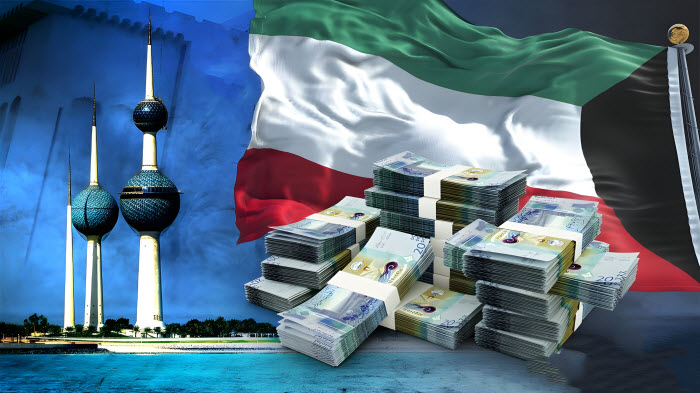
Kuwait plans to issue international bonds for the first time since October 2025 to finance the budget deficit, a move testing investor confidence.
Translated by Qiyas from الوسط — Original source
Kuwait plans to borrow from international public bond markets for the first time since October 2025, according to a source familiar with the matter who spoke to Bloomberg Middle East, in a move that will test investors’ confidence in the strength of the state’s public finances.
The source, who spoke on condition of anonymity, said Kuwait intends to issue bonds with maturities of three, five, and ten years, and that the Ministry of Finance has appointed Citigroup, Goldman Sachs, Standard Chartered, HSBC, and JPMorgan as international coordinators for the issuance.
Aliya Mubayyid, chief economist for the Middle East and North Africa at investment bank Jefferies International, predicted that several Arab countries would turn to international bond markets for borrowing starting next week, following an agreement between the United States and Iran to restore navigation through the Strait of Hormuz.
In an interview with Nour Amasha on the “Market Radar” program, Mubayyid suggested that Kuwait would be the first country to target international bond issuance to finance its budget deficit.
Mubayyid divided regional oil-exporting countries into two groups: the first includes nations that managed to continue exports during the conflict to varying degrees, such as Oman, Saudi Arabia, and the UAE, whose capacity to increase exports is “highly expandable.” The second group comprises countries like Kuwait, Bahrain, Qatar, and Iraq, which “face larger deficits in the medium term.” She added, “We expect to see a return to the markets by several countries next week, and in my view, Kuwait will be the first.”
Kuwait possesses one of the world’s largest sovereign wealth funds, which has enabled it to maintain a high credit rating since the onset of the conflict despite a sharp decline in oil exports resulting from its reliance on the Strait of Hormuz.
The drop in oil revenues led to a sevenfold increase in the budget deficit during the fiscal year ending March 31, reaching $23.4 billion.
According to data compiled by Bloomberg, Kuwait previously borrowed from the bond market through a private placement in April. The last public issuance, which typically targets a broader range of investors, dates back to October 2025.
Kuwait has the lowest government debt-to-GDP ratio among Gulf states, according to International Monetary Fund data released before the war. This is partly due to the delayed approval of borrowing legislation for several years amid disputes between the government and the National Assembly over economic policies. Notably, the Emir dissolved the parliament in 2024 and suspended the constitution for four years, a move analysts viewed as an opportunity to pass economic reforms aimed at diversifying the economy’s revenue sources.
The government issued the new borrowing regulation law approximately 10 months after dissolving the National Assembly, raising the borrowing ceiling to 30 billion dinars (approximately $97 billion) and allowing the issuance of financial instruments with maturities of up to 50 years.