During a research seminar in Britain... Are Arab aid to Yemen a guarantee for stability or support for interests and influence?!
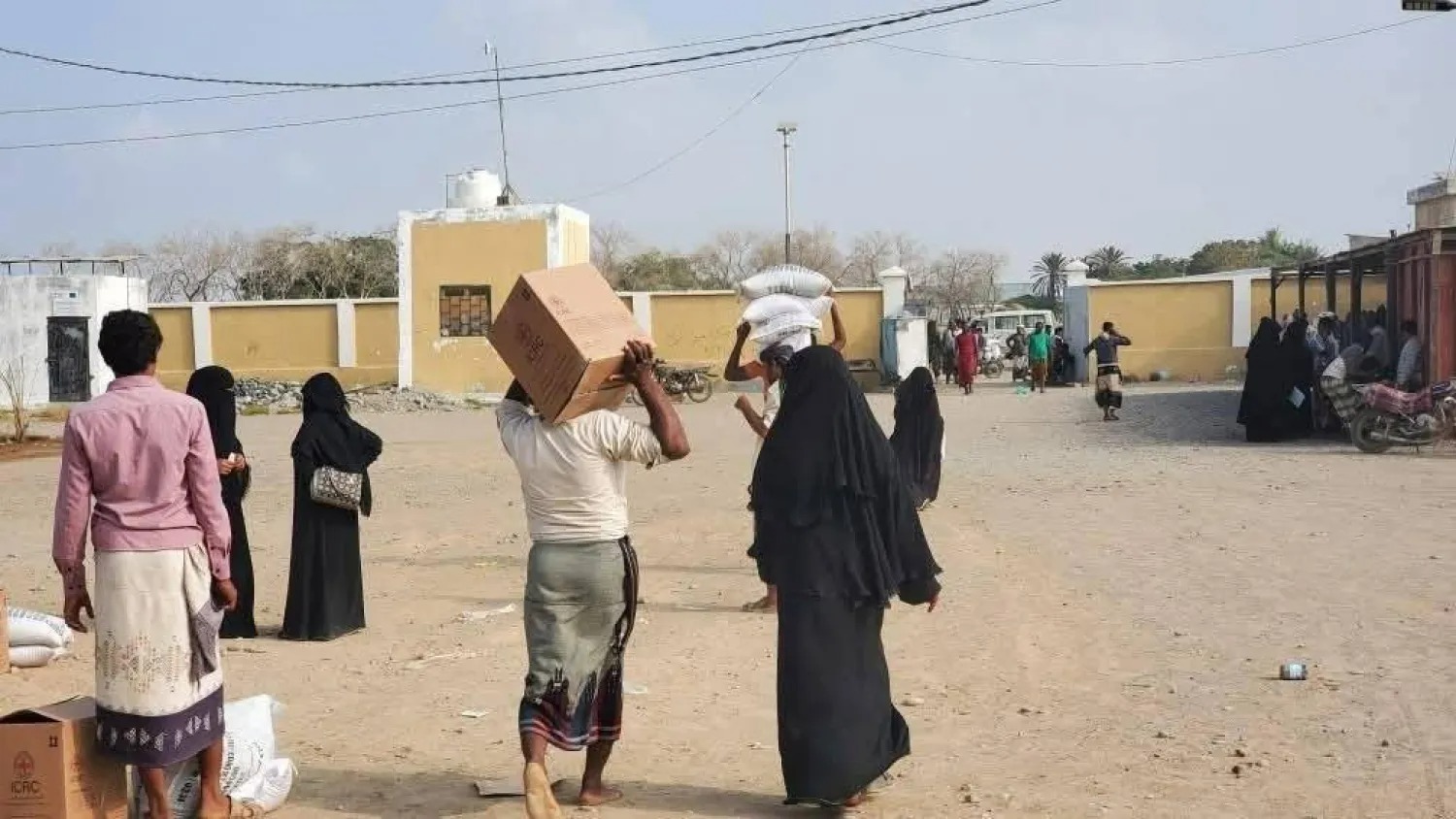
Saudi Arabia uses reconstruction initiatives to ensure stability and enhance its regional influence.
Translated by Alqyas from Al-Wasat — Original source
The “Al-Raqib” Research Center in the UK organized a seminar on Arab aid to Yemen. Held online, the event brought together Yemeni and Arab researchers in Europe and the West, as well as participants from several Arab countries.
Several researchers pointed out that the strategic reality indicates that Saudi Arabia, along with Gulf states, is continuously seeking to support Yemen. This support is not limited to humanitarian aid, reconstruction of facilities, or backing one political faction over another; it also aims to ensure Yemen’s stability, thereby serving Saudi interests and those of the region. Given that Yemen, as the southern axis of the Gulf, holds strategic importance, Gulf states are keen on consolidating its stability.
Some researchers presented differing views on this issue. One political researcher, who declined to express his political opinion through media outlets, called for a review of this aid and the establishment of a strict oversight mechanism. He cited the opinion of Yemeni academic and human rights expert Muhammad al-Zubaydi, based in Washington, who claimed that Saudi Ambassador to Yemen Muhammad al-Jaber has been openly accused of corruption by Yemeni circles. Al-Jaber had previously received remarks regarding the aid distribution system, which he described as support and funding programs managed by official Saudi entities—remarks that were circulated by several Yemeni websites.
The seminar also reviewed opinions expressed by several Yemeni researchers in Arab media recently, including Yemeni political analyst Saddam Muthanna. He stated that the Yemeni landscape continues to face complex challenges at the political, economic, and humanitarian levels. He noted that the weakness of state institutions and their inability to manage major files efficiently are among the primary reasons for the persistence of the crisis and the stagnation of stability and reconstruction efforts.
He pointed out that food insecurity remains widespread across various Yemeni governorates, coinciding with a sharp decline in humanitarian funding, which has exacerbated living conditions for Yemeni families facing continuous price hikes and a deterioration in public services. He added that many Yemenians are increasingly concerned about the growing gap between the scale of humanitarian suffering and repeated announcements regarding reconstruction funds and projects, considering that actual improvements on the ground remain limited compared to the volume of financial promises and commitments announced in recent years.
In this context, another Yemeni political analyst participating in the seminar highlighted Saudi Ambassador to Yemen Muhammad al-Jaber, who oversees the Saudi program for Yemen’s development and reconstruction, as one of the key figures linked to the reconstruction file and economic management in Yemen. He explained that al-Jaber’s role has transcended traditional diplomatic frameworks, becoming deeply involved in critical files such as fuel support, infrastructure financing, developmental planning, and political coordination.
He stated that the significant concentration of influence has sparked growing criticism and debate within Yemen, particularly amid concerns about mismanagement, allegations of corruption, and delays in implementing several infrastructure and energy projects linked to the support and reconstruction system, despite the large-scale funding and repeated announcements of developmental projects in recent years.
He added that frustration has risen among broad segments of Yemenis who continue to face difficult living conditions, despite ongoing discussions about reconstruction plans and aid amounting to billions of dollars. He clarified that the Yemeni experience offers important lessons for the Arab region, particularly regarding the relationship between development and political stability.
He emphasized that genuine development cannot rely solely on conferences, announcements, and financial pledges; rather, it must be directly reflected in citizens’ lives through the improvement of basic services, the creation of employment opportunities, and the achievement of sustainable economic stability. He also warned that an excessive concentration of economic and political power in the hands of a limited number of actors, whether local or external, could erode public trust and create long-term challenges regarding transparency and institutional stability. He added that regional influence becomes more impactful and sustainable when it delivers tangible improvements in citizens’ lives, rather than when it leads to increased reliance on continuous external aid and humanitarian assistance.
Regarding regional repercussions, Yemeni political analyst Al-Yamani stressed that the Yemeni crisis is no longer merely an internal matter confined to Sanaa or Aden; it has become directly linked to the security and stability of the Arab region, particularly countries bordering the Red Sea, with Egypt at the forefront. He clarified that Yemen’s future and stability directly affect maritime navigation security and regional trade flows, which in turn impact Cairo’s economic and security interests, especially given the strategic importance of the Red Sea and the Suez Canal. He affirmed that a stable and effective Yemen would enhance the security of maritime corridors and regional trade, whereas the continued fragility of the Yemeni situation could turn the country into a persistent source of instability in one of the most strategically significant regions in the Arab world.
For his part, another participating researcher also emphasized that addressing the Yemeni crisis requires a comprehensive approach focused on building strong institutions and achieving real development that directly improves citizens’ lives. He stressed that Yemen’s stability represents a shared interest for the entire Arab region, particularly Egypt, amid growing economic and geopolitical challenges in the Red Sea region.
Another researcher pointed out that if the current Saudi approach, and specifically Saudi diplomacy, continues to use the Saudi Fund for Development (SFD) or the Saudi Program for Yemen’s Development and Reconstruction as a tool for crafting political narratives, striking deals, and building influence, then even the few tangible development projects witnessed in Yemen in recent years will be transformed into means of entrenching Saudi interests, rather than building an effective Yemeni state capable of recovery.
In her turn, another research paper presented by a participant stated that although the Saudi Program for Yemen’s Development and Reconstruction launched in 2018 and announced a wide range of initiatives in infrastructure, education, and energy, the content published in its “Achievements Record” remains, for the most part, closer to lists of projects and official announcements—such as the opening of coordination offices or the launch of new initiatives—without providing accurate and documented details on the actual implementation scale on the ground.
Nevertheless, the volume of funding allocated to the program continues to grow. He noted that reconstruction programs outside the energy sector contribute to reshaping the image of Saudi intervention in Yemen, presenting Riyadh as a “benevolent” partner and “supporter of development.”
Another view, however, was expressed by another participant who pointed out that the Saudi ambassador to Yemen, who oversees the Saudi Program for Development and Reconstruction in Yemen, does not limit his role to coordinating the aid system, but also acts based on a conviction regarding the importance of strategic assessments related to Yemen and their direct implications for Saudi security, given the kingdom’s long southern border with Yemen.
For his part, a participant from the southern region of the Arabian Peninsula stated that Yemen’s Presidential Leadership Council is politically weak, while its legitimacy remains disputed among various forces and interest groups in Yemen, despite a common anti-Houthi stance. He added that popular discontent with Riyadh’s top-down policies, which impose a new political authority on Yemenis, has increased, particularly since the end of 2025.
Part of this discontent stems from the strong presence of interests linked to the Muslim Brotherhood within the Presidential Leadership Council through the Al-Islah Party. These are forces that Saudi Arabia not only tolerated but also embraced for years. Since Saudi pressure on southern tribes in late 2025, the Muslim Brotherhood and its allies have regained influence in the south of the country.
For her part, researcher Zainab Al-Khatib stated that the most significant shift lies in Saudi Arabia’s transition from using military force to employing tools of economics, energy, reconstruction, and political influence.
Participants in the seminar noted that Yemeni reports and local testimonies indicate a gap between the volume of announced funding and implementation results, particularly in sectors such as energy, airports, and housing. Conversely, others argue that these projects reflect a broader shift in Saudi policy, which relies on using development as a tool for both stability and influence.
The seminar concluded with several recommendations, including the need to focus specifically on the energy sector, where Saudi Arabia has become a pivotal player in operating power plants and financing oil derivatives in several Yemeni cities. This concentration raises questions about the nature of the growing reliance on external funding and the limits of Yemeni economic decision-making independence amid such interdependence.
Furthermore, researchers pointed out that the issue should not be limited to the economic aspect alone, but must extend to the political structure that followed the formation of the Presidential Leadership Council, which, according to multiple readings, still suffers from internal fragility and divergent centers of influence, amid ongoing competition among local and regional forces to manage the transitional phase.
