Sharp Decline in Asian Markets Amid Escalating Regional Tensions
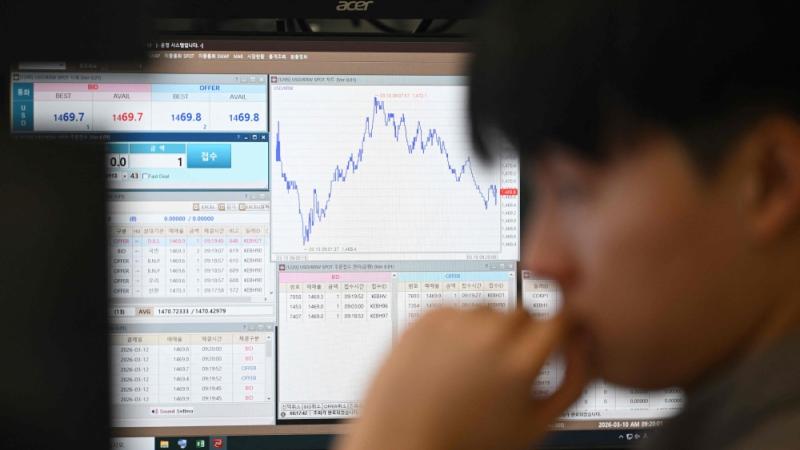
Asian markets fell following threats from Trump and Iran regarding the Strait of Hormuz.
Translated by Alqyas from Al-Wasat — Original source
Asian stock markets suffered sharp declines on Monday as U.S. President Donald Trump and Iranian leaders exchanged threats over the vital Strait of Hormuz, while Israel’s occupation forces confirmed that the war in the Middle East could continue for several more weeks. Observers said these developments prompted investors in Asian markets to reduce risk exposure and adopt a cautious stance amid growing fears of disruptions to global energy supplies and their repercussions on the international economy.
A report by Singapore-based CNN indicated that markets in Singapore, Taipei, Wellington, and Sydney posted notable losses, while the broader MSCI Asia Pacific ex-Japan index fell 1.9 percent amid escalating regional tensions and the ongoing war. Japan’s Nikkei index dropped 3.8 percent, pushing its losses since the start of March to more than 13 percent. South Korea’s main market index fell 5.2 percent, recording a monthly decline of approximately 12 percent. Major Chinese indices, including the CSI 300 and the Shanghai Composite, fell around 2 percent at the open, while Hong Kong’s Hang Seng index declined by about 3 percent.
Oil prices remained volatile. Brent crude rose 0.4 percent to $112.62 per barrel, up nearly 55 percent since the beginning of the month, while U.S. crude climbed 0.8 percent to $98.98 per barrel. Although short-term supplies improved partially after the United States allowed the sale of Iranian and Russian oil from tankers, fears of a prolonged supply shortage pushed futures prices higher, signaling that elevated prices are likely to persist, accompanied by inflationary pressures on economies in the region and worldwide.
The Middle East conflict entered its fourth week without signs of an imminent end. International Energy Agency Director Fatih Birol warned on Monday of the “worst global energy crisis in decades,” emphasizing that the global economy faces a “significant threat” due to the crisis.
President Trump had given Tehran a 48-hour deadline on Saturday evening to reopen the Strait of Hormuz to navigation, threatening to destroy Iran’s energy infrastructure if it failed to comply. This warning came just one day after Trump spoke of the possibility of “scaling down” military operations, while the strait, through which about one-fifth of global oil and gas supplies pass, remained effectively closed.
In response, Iran warned that the Strait of Hormuz would be “completely closed” if Washington carried out its threat, deepening fears that the war would widen and that its effects would spread from the military arena to financial markets, supply chains, and international maritime trade.
