Lebanon dragged back into an asymmetric war by an Iranian decision
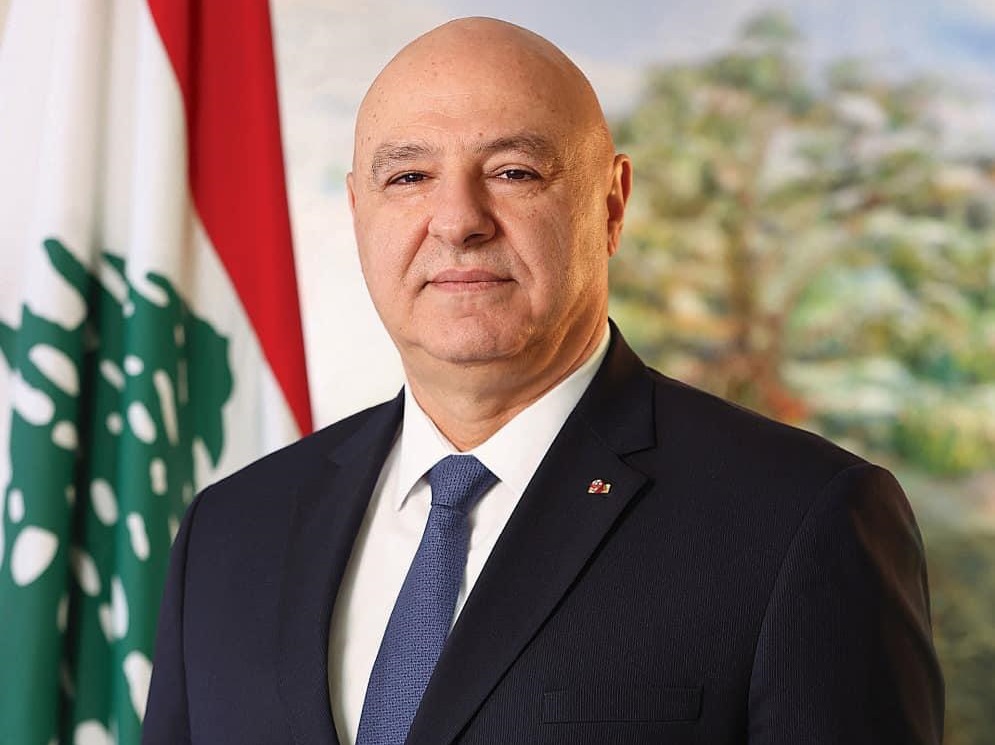
The Lebanese Cabinet issued a decision obligating Hezbollah to surrender its weapons and considering it outside the state framework
Translated by Alqyas from Al-Wasat — Original source
The Lebanese government has embarked on a course of correcting the mistakes of past years, during which Hezbollah dominated the political and military foundations and resources of the state, reducing Lebanon to a failed security and economic institutional state, hostage to its Arab and Gulf regional environment. This reality, accepted by the “men of power,” was shattered by Army Commander General Joseph Aoun, who ascended to the presidency through an inaugural oath speech centered on two main pillars: first, a return to the state through the monopoly of weapons and decision-making; and second, a return to the Arab fold and the expulsion of Iran from manipulating Lebanon’s destiny.
Since the ceasefire, President Aoun has attempted to strike a balance between Lebanese factions and Hezbollah, absorbing past errors, failures, and defeats, and reintegrating the situation into Lebanese society. However, Hezbollah engaged in protracted negotiations for months before reverting to its usual behavior, once again plunging its environment and Lebanon into an Iranian-driven asymmetric conflict that threatens to destroy the entire country.
With the support of the Prime Minister and the approval of ministers, President Aoun took a clear and bold step. The government adopted urgent and legal measures “against those who consider themselves stronger than the state and its army,” and condemned Hezbollah’s targeting of Israeli sites, which resulted in Israeli attacks on Lebanese territory. In this regard, many observers, both within Lebanon and abroad, believe that the primary and ultimate loser of Hezbollah’s uncalculated adventures with Israel is Lebanon and its people. This is in addition to the martyrdom of many Lebanese citizens caught in the crossfire, as if the blood of the Lebanese people serves as a scapegoat for external parties. Furthermore, these adventures expose the country’s infrastructure, facilities, and economy to devastation and ruin.
These observers expressed deep dismay over the successive Israeli attacks on Lebanon, triggered by Hezbollah’s renewed provocations against Israel. Hezbollah has entered the current war raging between the United States and Israel against Iran as a fourth party, seeking revenge for the killing of Iranian Supreme Leader Ali Khamenei, as if Lebanon were destined to serve as a venue for settling external scores.
They continued: It appears Hezbollah imagined that Israel would remain silent in the face of its surprise aerial strikes, but the response was swift. Unfortunately, this response also undermines much of the progress achieved by President Aoun on the economic and financial fronts, as well as the current efforts to resolve the banking deposit crisis out of compassion for depositors, alongside the various reforms he has championed across different state institutions.
They described the Lebanese Council of Ministers’ decision, chaired by Prime Minister Nawaf Salam and supported by President Joseph Aoun, as courageous. It established a clear boundary between the state and any entity that uses weapons, thereby preventing any military or security operations originating from Lebanese territory. Moreover, the decision’s content affirmed that any entity defying state directives operates outside the framework of legitimate institutions. This is particularly significant as it marks the first time in Lebanon’s history that such a designation has been applied to Hezbollah, placing it outside the state’s framework. The decision also monopolizes weapons in the hands of the state, vests the authority to declare war and peace in the legitimate state, and obligates Hezbollah to surrender its weapons, restricting its activities to the political sphere only. These messages directed at Hezbollah are backed by the general Lebanese public, who seek to halt Hezbollah’s actions that fall outside the state’s framework.
They stated that the government’s insistence in its decision on preventing Lebanon from being drawn into any conflict amid tense regional conditions is a correct step. It sends a clear message to the world that Lebanon’s legitimate system, represented by President Aoun and the government, is striving with all its energy to protect Lebanon and prevent its involvement in any conflict, in addition to their full solidarity with the Council of Ministers’ demands to halt hostilities.
The hostility directed by Israel against Lebanon, particularly since the crisis was ignited by a faction whose actions are not ultimately attributable to the state.
