"Al-Qurain Cultural" Launches Main Seminar "From Heritage to Creativity: Kuwait and the Journey of Arab Culture"
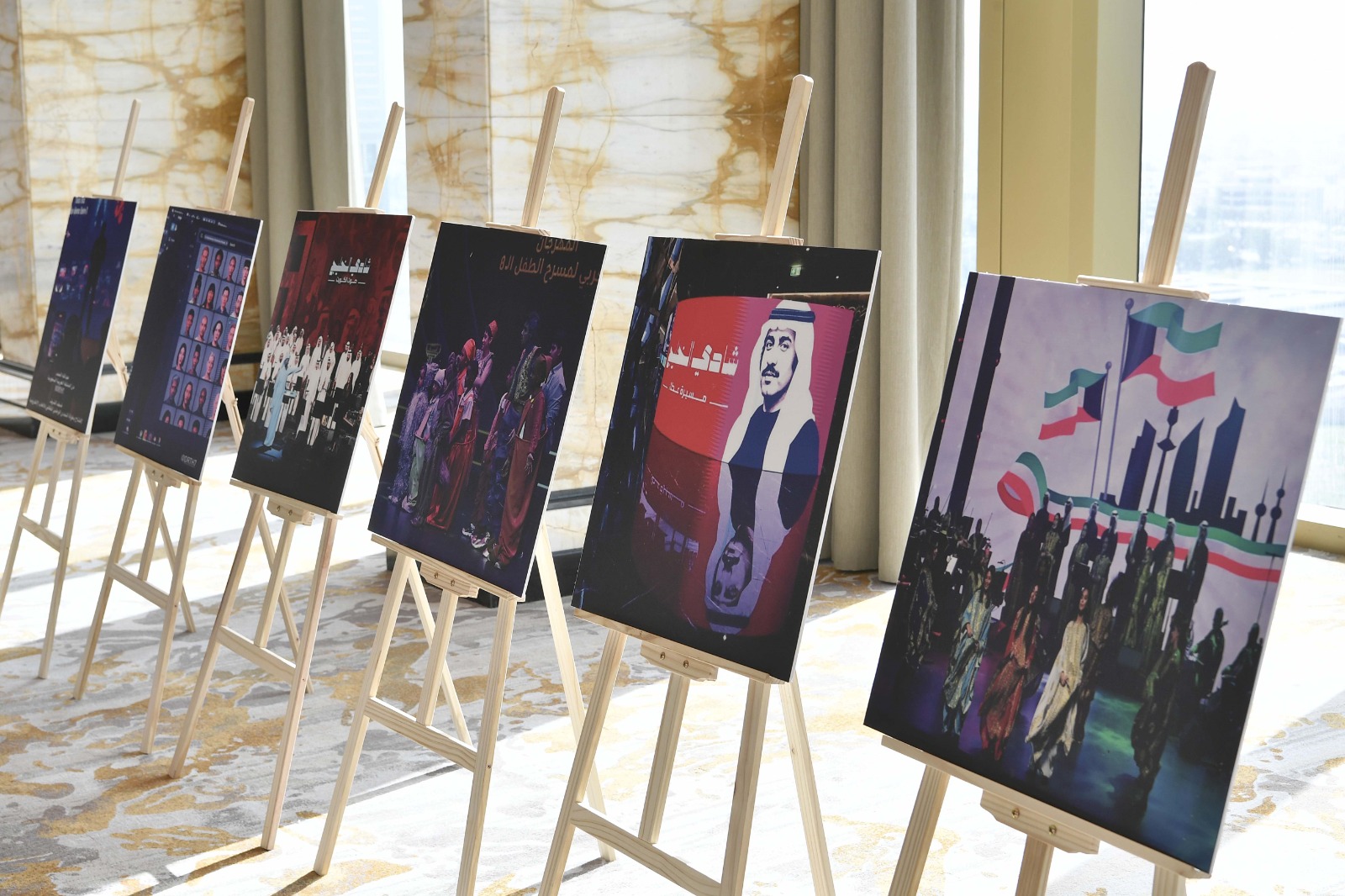
The Al-Qurain Cultural Festival launched its seminar on heritage and cultural innovation in Kuwait.
Translated by Alqyas from Al-Wasat — Original source
The main sessions of the 31st Al-Qurain Cultural Festival, themed “From Heritage to Creativity: Kuwait and the Journey of Arab Culture,” kicked off yesterday, featuring a distinguished group of academics and specialists. The event is scheduled to last for three days.
Dr. Mohammed Al-Jassar, Secretary-General of the National Council for Culture, Arts and Letters, delivered a speech on behalf of the Minister of State for Communications and Information Technology and Acting Minister of Media and Culture, Omar Al-Omar, during the opening of the symposium. He stated that the festival has become a beacon in the Kuwaiti and Arab cultural landscape, serving as a solid platform for intellectual dialogue, cognitive convergence, and the exchange of perspectives on issues of culture, identity, and creativity.
Al-Jassar added that the symposium’s title carries profound significance, reflecting the philosophy of Kuwait’s cultural experience, which has been built since its inception on a balanced equation combining pride in civilizational heritage with conscious openness to renewal and creativity. He emphasized that throughout its modern history, Kuwait has served as a model of a state that believed in the role of culture as an essential element in its national project and a fundamental pillar of its comprehensive renaissance. Kuwait has embraced free thought, supported responsible discourse, and opened its horizons to intellectuals and creatives from within and outside the country, becoming a beacon of knowledge and a bridge for Arab cultural interaction.
He noted that this renewed cultural momentum is a direct result of the wise political leadership’s vision in Kuwait, which has given special attention to culture, placing it at the core of its development policies. This approach is based on the understanding that building human capital is the foundation of state-building, and that culture represents the first line of defense for national identity, a fortress for values, and a cornerstone of social stability.
He pointed out that the state has been keen to support cultural institutions, empower them, nurture creatives and intellectuals, and encourage intellectual and cognitive initiatives, all of which reflect Kuwait’s image as a state firmly rooted in its values, open to its surroundings, and convinced of culture’s role as a tool of soft power.
He clarified that this vision is clearly manifested this exceptional year, during which Kuwait celebrated its selection as the Capital of Arab Culture and Media for 2025. This selection was not a spontaneous decision but rather the culmination of a long journey of institutional cultural work, continuous support for thought, creativity, and responsible media, reflecting the prominent status Kuwait holds in the Arab cultural consciousness.
Al-Jassar reaffirmed the National Council’s commitment to continuing support for serious cultural work, enhancing Arab cultural cooperation, and opening new horizons for creativity in alignment with the state’s vision, emphasizing the role of culture as a bridge for interaction, a tool to enhance understanding, and a platform to showcase the country’s civilizational face.
The first session of the symposium, titled “Kuwait’s Contribution to Arab Culture,” was moderated by Dr. Ahmed Al-Faraj from Kuwait. The speaker was Dr. Sulaiman Al-Asker, also from Kuwait, who served as the festival’s personality. He discussed Kuwait’s contributions to Arab culture through cultural publications, focusing on his experience during his tenure as editor-in-chief of *Al-Arabi* magazine and his role within the National Council.
Al-Asker highlighted Kuwait’s pivotal role in the Arab cultural landscape, citing its nature as a region geographically and politically open, which allowed culture to take root and exhibit openness and interaction with its Arab surroundings. He explained that a key milestone in this cultural role was the inception of *Al-Arabi* magazine, whose first issue was published in 1958, coinciding with a phase of Kuwait’s economic and social rise and its active entry into the arena of Arab culture.
He added that the magazine managed to endure despite various setbacks, particularly during the brutal Iraqi invasion of Kuwait, which hindered some stages of its progress. The magazine contributed to forming a cultural link between the Mashreq and...
It fostered a climate of familiarity and interaction among Arab poets, intellectuals, and writers. For his part, Dr. Saud Al-Harbi, who previously served as Kuwait’s Minister of Education and Minister of Higher Education, spoke about the role of the State of Kuwait in the Comprehensive Plan for Arab Culture project, highlighting its contributions to supporting joint Arab cultural efforts, consolidating the concept of institutional cultural planning, and enhancing the presence of culture as a pillar for development and human building. Al-Harbi emphasized that Kuwait played a prominent role in shaping Arab consciousness and expanding its geographical scope through an integrated cultural project aimed at strengthening Arab culture and consolidating its presence across various fields.
For his part, Saudi writer and media personality Mohammed Nasrallah stated that these collective achievements contributed to forming a distinguished Kuwaiti cultural system, complemented by Kuwait’s notable theatrical experience, which has become a solid foundation for what is known as Arab soft power, originating from Kuwait. Nasrallah clarified that since 1979, Kuwait had worked to adopt and fund the Comprehensive Plan for Cultural Development, in collaboration with a group of leading Arab experts in their respective fields, leading to the plan’s eventual publication under the name of the Arab Organization for Education, Science and Culture (ALECSO), affiliated with the League of Arab States, in 1986. He noted that this project received enthusiasm and support from the late cultured Minister Abdulaziz Hussein during the organization’s preparatory meeting held in Taif, where he pledged Kuwait’s patronage of the plan in his capacity as head of the National Council for Culture, Arts and Letters.
For his part, Dr. Al-Zawawi Bagoura, a professor of contemporary philosophy from Algeria, affirmed that Kuwait’s contribution to modern and contemporary Arab culture is well-documented, as confirmed by facts, data, practices, documents, and historical studies. He pointed to achievements in the intellectual and philosophical domain, offering a historical and philosophical perspective on cultural and scientific institutions, particularly the National Council for Culture, Arts and Letters and its pioneering publications, including the “World of Knowledge,” “World of Thought,” “Global Theater,” and “Scientific Culture” series, as well as the Kuwait Foundation for the Advancement of Sciences (scientific support and translations), Kuwait University and its scientific journals, and its distinguished philosophy department in the Arab world.
Meanwhile, Egyptian novelist and journalist Yasser Abdelhafez stated that Kuwait’s fundamental contribution to establishing the contours of modern Arab culture since the post-Arab liberation revolutions from colonialism represents a widely agreed-upon experience. He noted that these contributions extended up to the present moment, which witnesses the end of an entire era of intellectual premises, principles, and understandings that underpinned Arab culture at both the regional and global levels.
