Minister of Health: Kuwait Committed to Developing Kidney Patient Care Through Integrated Pathways
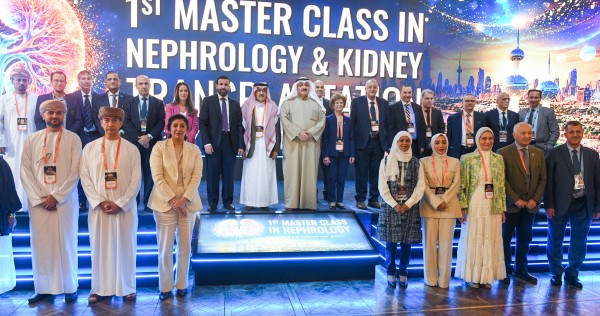
The Minister of Health affirmed Kuwait's commitment to developing kidney patient care through integrated pathways including transplantation and dialysis.
Translated by Alqyas from Al-Seyassah — Original source
- 129 kidney transplant procedures in 2025... and 126 cases by November, including 6 pediatric cases
- 2,600 patients receive dialysis services in Kuwait... with 88% undergoing hemodialysis
Kuwait’s Minister of Health, Dr. Ahmed Al-Awadi, affirmed on Thursday the state’s commitment to developing kidney disease care through integrated pathways, primarily kidney transplantation and dialysis.
In his opening address at the specialized scientific program on kidney diseases, Minister Al-Awadi stated that integrating kidney health into primary healthcare services, especially for high-risk groups, is a fundamental step to curb disease progression and its complications.
He outlined the key efforts and achievements in Kuwait, which are driven by three main pillars: kidney transplantation, dialysis centers, and service expansion. The program, lasting three days, was attended by Dr. Marcelo Tonelli, President of the International Society of Nephrology, presidents of Arab societies for kidney diseases and transplantation, and a select group of specialists from within Kuwait and abroad.
The Minister noted that Kuwait’s kidney transplantation program began in 1979 and has been continuously developed over decades through infrastructure support, equipment modernization, and enhancement of medical expertise. In 2024, the Kuwait Center for Kidney Diseases and Transplantation was opened in the Al-Sabah Medical Specialized Area, with a capacity of 80 beds. That same year, the national program performed 149 kidney transplant procedures, achieving a success rate exceeding 96 percent.
He added that in 2025, 129 transplant procedures were carried out, with 126 cases recorded by November 2026, including six pediatric cases. For the first time, these included children weighing less than 15 kilograms. Additionally, the national program for family-based kidney exchange was launched to expand compatibility opportunities and improve patient outcomes.
Regarding the second pillar, dialysis centers, Minister Al-Awadi stated that approximately 2,600 patients in Kuwait receive dialysis, with 88 percent undergoing hemodialysis and 12 percent peritoneal dialysis.
He further mentioned that last August, the Sheikh Jaber Al-Ahmad Al-Sabah Kidney Dialysis Center was opened in the Ahmadi Health Area, funded by a generous donation from the heirs of the late Emir Sheikh Jaber Al-Ahmad Al-Jaber Al-Sabah, may God have mercy on him. The center comprises 83 dialysis units, including 11 isolation rooms and four peritoneal dialysis rooms, with an estimated capacity of 500 patients for hemodialysis and 100 for peritoneal dialysis.
On service expansion, he noted that approximately 519 patients in the Ahmadi Health Area now receive dialysis services, including 449 undergoing hemodialysis. The prevalence rate of long-term hemodialysis stands at 417 patients per million population.
These indicators reflect Kuwait’s commitment to providing specialized care based on quality and patient safety, underscoring the importance of continuing to expand capacity, upgrade dialysis centers, and enhance service efficiency.
The Minister explained that kidney disease can progress silently, making early screening of kidney functions crucial for early detection and management at more advanced stages. He pointed out that the World Health Organization estimates the global number of people suffering from chronic kidney disease at approximately 674 million.
Minister Al-Awadi emphasized that addressing this health burden requires investment in prevention and awareness, expanding access to diagnosis and treatment, supporting medical and nursing staff, and developing dialysis and transplantation services.
For his part, Dr. Turki Al-Otaibi, Chairman of the Conference Organizing Committee and President of the Arab Association for Kidney Diseases and Transplantation, stated in his speech that the convening of the conference represents an opportunity to strengthen ties among Arab kidney disease associations and broaden the scope of cooperation with international scientific institutions.
Al-Otaibi clarified that challenges in the field of kidney diseases and transplantation necessitate the integration of expertise, coordinated efforts, and joint work to develop medical education and scientific research, and to enhance the services provided.
He noted that scientific research is one of the Arab Association for Kidney Diseases and Transplantation’s top priorities, adding that the “Arab Journal of Kidney Diseases and Transplantation” was launched starting in 2026, with three issues published so far.
For his part, Dr. Marcelo Tonelli, President of the International Society of Nephrology, praised the advanced scientific and clinical level of nephrology in Kuwait, affirming that the country has become a major regional hub where the region convenes to discuss and develop kidney patient care.
Tonelli said that Kuwait possesses three fundamental pillars for leadership in this field, not only at the local level but across the entire region: clinical expertise, an active and vibrant professional association, and supportive government leadership.
For her part, Dr. Hiba Rajab, President of the Kuwait Society of Nephrology, emphasized in her speech that kidney diseases are no longer merely a medical challenge limited to diagnosis and treatment, but have become one of the most prominent global public health challenges, given the continuous rise in incidence rates and their close association with other chronic diseases such as hypertension, diabetes, and obesity.
Rajib stated that the severity of kidney diseases lies in the fact that many patients reach advanced stages without obvious symptoms, making early detection and preventive intervention an urgent necessity that cannot be delayed. She stressed the importance of shifting focus from treating complications after they occur to adopting a proactive approach based on prevention, early diagnosis, and continuous follow-up.
She noted that the conference constitutes a distinguished scientific platform, featuring lectures, discussion sessions, and workshops where experts and specialists discuss the latest developments and challenges in the diagnosis and treatment of kidney diseases and transplantation.
She commended the continuous support provided by the Ministry of Health to the healthcare sector and its interest in developing kidney disease and transplantation services, as well as providing diagnostic and therapeutic capabilities to deliver comprehensive care to patients.
She appreciated the patronage and attendance of Minister of Health Dr. Ahmed Al-Awadi, considering that this “reflects the Ministry’s commitment to supporting continuing medical education, enhancing scientific research, and advancing precise medical specialties.”
