Central Bank: 14 directives to update anti-money laundering and counter-terrorist financing requirements for 2025-2026
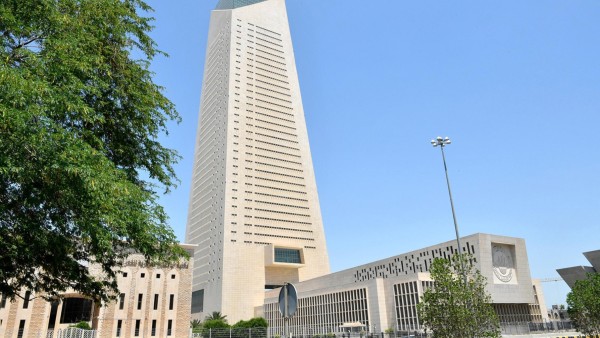
The Central Bank of Kuwait issued 14 directives and 5 guidelines to update anti-money laundering and counter-terrorist financing requirements, with a noticeable increase in the value of interbank clearing and settlement transactions during the 2025-2026 fiscal year.
Translated by Alqyas from Al-Seyassah — Original source
The 54th annual report of the Central Bank of Kuwait for the fiscal year 2025–2026 revealed that the bank issued 14 circulars and instructions during the year, aimed at updating anti-money laundering (AML), counter-terrorist financing (CFT), and combating the proliferation of weapons of mass destruction requirements.
The report noted that the Central Bank also issued five guidelines covering topics such as beneficial ownership, business risk assessment, combating the financing of weapons proliferation and its patterns, and reporting obligations for suspicious transactions related to money laundering and terrorist financing. These guidelines were designed to support the effective implementation of instructions and enhance the harmonization of practices among supervised entities.
The bank organized four workshops and awareness programs targeting compliance officers and staff at supervised entities, as part of efforts to support the implementation of the recommendations from Kuwait’s Mutual Evaluation Report and to improve the quality of compliance systems and suspicious transaction reporting.
Regarding the operations of the Central Bank of Kuwait’s clearing house, the annual report clarified that the total value of transactions executed through it during the past fiscal year rose by approximately 4.6 percent, reaching 18.23 billion Kuwaiti dinars (approximately 60.1 billion US dollars) across 2.3 million transactions (checks), with an average value of 7,908 dinars per transaction. This compares to 17.4 billion dinars (approximately 57.4 billion US dollars) for 2.3 million transactions in the previous year.
It added that the value of interbank settlement transactions among local banks during the past fiscal year amounted to 348.6 billion dinars (approximately 1.1 trillion US dollars), compared to approximately 254.3 billion dinars (approximately 839 billion US dollars) in the previous fiscal year, representing a 37.1 percent increase.
The report indicated that the outstanding volume of currency in circulation at the end of the fiscal year 2025–2026 reached 2.2 billion dinars (approximately 7.2 billion US dollars), a 4.4 percent increase compared to the previous year. It reaffirmed the Central Bank’s continued efforts to ensure the quality of circulating banknotes, withdraw and destroy notes that no longer meet the minimum quality standards set by the Central Bank, and combat crimes related to the counterfeiting and forgery of banknotes.
The report confirmed the bank’s continued role as the government’s banker, having executed 8,485 external banking transactions on behalf of various ministries and state institutions, totaling approximately 1.8 billion dinars (approximately 5.9 billion US dollars).
The Central Bank of Kuwait began its 54th annual report, published on the bank’s website yesterday, with a statement by Governor Bassel Al-Haroun. He emphasized intensifying efforts in developing financial infrastructure and digital transformation, through the continued implementation of several initiatives aimed at enhancing payment systems and digital banking services, as well as supporting financial innovation and modern fintech technologies. These efforts contribute to improving the efficiency of financial services and strengthening the competitiveness of the local banking sector.
Al-Haroun stressed the Central Bank’s continued commitment to enhancing cybersecurity levels and operational readiness, keeping pace with the rapid developments in the financial and banking industries. He also highlighted the use of available monetary policy tools and macroprudential instruments in a gradual, balanced, and flexible approach, aiming to strengthen monetary and financial stability in the country.
The annual report consists of three parts: monetary and financial stability, payment system development, and the external auditors’ report on the bank’s financial statements as of March 31, 2026.
