You succeeded, Mr. Al-Zaidi... Al-Zaidi
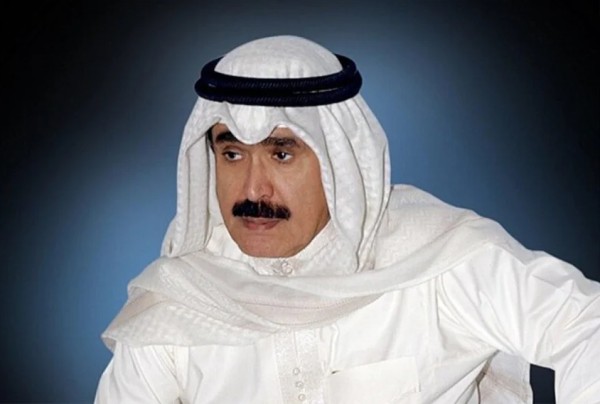
A historical and political analysis of Ali Al-Zaidi's role at the Battle of Al-Qurnah.
Translated by Alqyas from Al-Seyassah — Original source
When we speak of Iraq, this great nation, we are not referring to a single event, but to pages stretching across centuries, from the dawn of humanity to the present day. As in every country, there have been setbacks and rises, each with its own causes.
For example, the Abbasids ruled a vast empire with Baghdad as its capital. At the height of its cultural production, Baghdad was known as the "Capital of Knowledge and Scholars," home to the House of Wisdom, a library that attracted students of knowledge and learning from all over the world.
Unfortunately, preserving this legacy during that era was marred by much frivolity and recklessness, particularly under the reign of Al-Musta'sim Billah. He squandered the empire's entire wealth on indulgence, starved his army, and failed to revive institutions or restore cultural prominence. Meanwhile, his minister worked to weaken the state by encouraging the Caliph to indulge further rather than offering sound advice, as he sought to seize control of power.
This minister was Mu'ayyad al-Din al-Alqami, who was not an ordinary figure in the Caliphate but the Caliph's chief advisor. Despite his position, he conspired with Hulagu to invade Baghdad, with the aim of ruling it himself. However, the winds of the Mongol invasion blew contrary to his expectations. After Baghdad fell, he was humiliated and exiled to wander its streets.
Returning to the modern era, Iraq endured many phases throughout the last century, most of which were shrouded in darkness. This was especially true when certain officers overthrew King Faisal, despite his efforts to build a modern state at the time. Political adventures and the lust for power brought calamities upon this country. Thus, the most heinous crimes occurred during the 1958 revolution, when people were dragged through the streets. This great nation's decline continued from that time until 2003.
When Saddam Hussein's regime fell, people breathed a sigh of relief, believing it marked the end of injustice. Unfortunately, however, the United States handed Iraq's fate to Iran. For the following 23 years, the situation was the darkest, as Tehran brought in its agents—thieves and deviants—who spread violence, theft, and extortion.
Iranian influence reached the point of interfering in daily affairs through proxies, forcing Iraq to wear a non-Arab mantle. They attempted to sever the country from its Arab environment to turn it into a conduit for conspiracies against everyone. Their plot was exposed during the recent war when they, under orders from the Iranian Revolutionary Guard, aggressed against Gulf states.
Today, a window of hope has opened with Prime Minister Ali al-Allawi, who is working to restore the state's dignity and resist sectarian, regional, or external coercion. On this basis, the "Jurf al-Sakhr" operation served as the second pillar in Iraq's return to the right path, following the ongoing anti-corruption campaign that weakened militia control. Indeed, one could argue that this operation was a death warrant for Iranian influence.
During the "Jurf al-Sakhr" operation, there was a state within the state, harboring many deadly viruses. These ranged from looting and smuggling oil abroad to fund Iran's war effort, to controlling state institutions to such an extent that a country endowed with natural resources, oil, minerals, agriculture, and water lacked even the most basic daily necessities.
The equation today is clear: Iranian hegemony, which had controlled the fate of four Arab states, collapsed with the fall of "Jurf al-Sakhr." Consequently, there is strong Arab support for the Iraqi Prime Minister.
