Minister of Justice announces launch of first phase of 'Tathiq' system for electronic powers of attorney
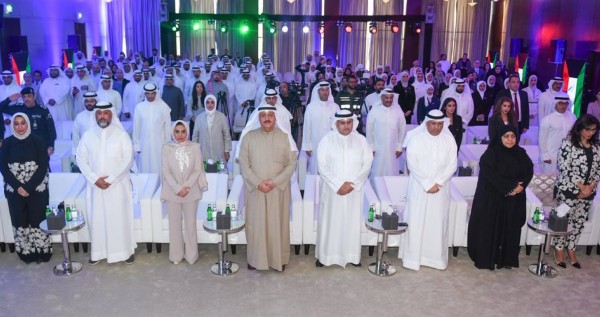
Minister of Justice and Advisor Nasser Al-Samit announces the launch of the first phase of the 'Tathiq' system for electronic powers of attorney, in the presence of several officials and representatives of government entities and companies participating in the implementation of the project.
Translated by Alqyas from Al-Seyassah — Original source
Justice Minister and Advisor Nasser Al-Sumait launched the first phase of the "Tawtheeq" system for electronic notarization today, Sunday, at a ceremony held at the Government Communications Theater, located at the headquarters of the National Cyber Security Center in the Shuwaikh area. The event was attended by a number of officials, as well as representatives from government entities and companies participating in the project's implementation.
In his speech at the ceremony, Al-Sumait stated that the launch of the system represents a key step in the Ministry of Justice’s journey to develop its services and facilitate transactions for citizens and residents. He explained that the ministry is leveraging modern technology to streamline notarization procedures, ensuring speed and efficiency while maintaining the necessary legal safeguards to protect rights.
He added that notarization is a responsibility aimed at preserving rights, and that any development of its methods must be based on a solid legal foundation that enhances the integrity of procedures and the accuracy of data. He noted that the new system allows for the electronic issuance of powers of attorney, with video conferencing required for certain types.
Al-Sumait clarified that the system aims to save time and effort, improve work quality, and protect rights by establishing electronic links with relevant authorities to verify the accuracy of agency data. Furthermore, a power of attorney is automatically revoked upon receipt of information indicating the agent’s resignation or the principal’s death, thereby enhancing the reliability of powers of attorney and the security of transactions involving them.
Al-Sumait emphasized that the goal of digital transformation is to facilitate people’s transactions and provide convenient, accurate services based on legal guarantees that ensure procedural integrity and protect the rights of all parties. He added that developing government services is not limited to accelerating transaction processing, but also includes enhancing their accuracy and reliability.
He noted that the project has received the support of Prime Minister Sheikh Ahmad Abdullah Al-Ahmad Al-Sabah and his continuous follow-up, expressing his sincere gratitude and appreciation for His Highness’s support and commitment to developing government services and elevating their performance standards.
He also extended his thanks to Health Minister Dr. Ahmad Al-Awadi, Minister of State for Communications and Information Technology Affairs and Acting Minister of Media and Culture Omar Al-Omar, and Minister of Social Affairs, Labor, and Social Security Dr. Amthal Al-Huwail, in recognition of their contributions to supporting and completing the project.
He further expressed his appreciation to the Public Authority for Civil Information, the Central Agency for Information Technology, the Direct Investment Promotion Authority, Microsoft, Tech Unicorn, and the team at the Ministry of Justice. He praised the integrated efforts of all participating entities and teams, which contributed to the completion of the project and the launch of its first phase.
Al-Sumait stressed the importance of continuing efforts to develop judicial services in line with technological developments and to meet the aspirations of citizens and residents, while adhering to legal foundations that serve as the primary guarantee for safeguarding rights and protecting interests.
He concluded his speech by praying for success in fulfilling their trust and serving Kuwait, under the wise leadership of His Highness the Amir of Kuwait, Sheikh Meshal Al-Ahmad Al-Jaber Al-Sabah, and His Highness the Crown Prince, Sheikh Sabah Al-Khaled Al-Sabah.
For his part, Minister of State for Communications and Information Technology Affairs Omar Al-Omar stated that the inauguration of the "Digital Agencies" system marks a qualitative leap in the government’s digital transformation journey. He clarified that its impact extends beyond developing notarization services, opening new horizons for digitizing additional government services, thanks to legislative updates that keep pace with technological advancements and enable transactions to be conducted electronically in accordance with approved legal regulations.
Al-Omar added in his speech during the ceremony that the previous requirement for personal attendance and paper documentation had been an obstacle to the digitalization of many services, but legislative updates have now enabled these services to be completed digitally with ease and flexibility. He affirmed that legislation keeping pace with technology does not merely develop a single service, but opens the door to dozens of related services.
He clarified that the success of digital transformation rests on three pillars: modern legislation, the reengineering of procedures, and the development of technical systems. He pointed out that the new system will also contribute to improving the business environment and simplifying procedures for companies and investors, thereby enhancing Kuwait’s competitiveness in international indices.
Al-Omar praised the “Sahel” application for strengthening public trust in digital government services. He noted that the number of application users has exceeded three million, with total transactions completed through it surpassing 180 million, via more than 530 services on “Sahel” and 220 services on “Sahel Business,” averaging approximately one million transactions per week.
He stressed that the true success of digital transformation is not measured by the number of services launched by government entities, but by the extent to which it reduces procedures and saves time and effort for citizens and residents.
He emphasized that the Ministry of State for Communications and Information Technology views digital transformation as a shared responsibility among government entities. He explained that its role is to support these entities and empower them to develop their services and enhance integration among them, in order to convert more traditional transactions into fully integrated digital services.
Al-Omar congratulated the Minister of Justice and all the ministry’s staff on the launch of the digital agencies system, and commended the efforts of the ministry’s teams, the Central Agency for Information Technology, the Public Authority for Civil Information, and all entities that contributed to completing the project. He also expressed his appreciation for the continuous support provided by the political leadership to digital transformation projects, and their commitment to developing government performance and elevating the quality of services provided to citizens and residents.
For his part, Ali Haddad, General Manager of Microsoft Kuwait, stated that launching the digital proxy system via the “Tawtheeq” platform is a qualitative achievement that enhances trust between citizens and state institutions, and contributes to developing judicial services to make them faster, easier, and more secure.
Haddad added in his speech during the ceremony that a proxy is a trust placed by an individual in someone they trust, and that the digital system strengthens this trust and embodies the use of technology to develop government services. He continued: “We at Microsoft are proud of our partnership with the Ministry of Justice in delivering a Kuwaiti achievement that makes judicial services faster, easier, and more secure, in support of the New Kuwait Vision 2035.”
For her part, Annie Day, founder and CEO of Tech Unicorn, expressed her appreciation for the Minister of Justice, Advisor Nasser Al-Samit, and his vision in completing the digital transformation project. She affirmed that a transformation of this magnitude requires commitment from the highest leadership levels, which the Ministry of Justice has demonstrated at all stages of the work.
Day praised the leadership role of Kuwaiti women in completing the project, and commended the efforts of Deputy Minister of Justice Awatef Al-Sand, Nouf Al-Qabandi, Dr. Zainab Al-Qana’i, and Haneen Al-Fudairi, highlighting their work, dedication, clarity, and determination in leading the project. She confirmed that the achieved results reflect the magnitude of the efforts made.
She added that her experience working with judicial institutions in several countries makes her work alongside Kuwaiti leaders of this caliber a contribution to shaping the future of justice, which is an exceptional honor for her.
Deif affirmed that what was achieved today marks the beginning of a broader journey, with the Ministry of Justice establishing new standards for digital justice, expressing Tech Unicorn’s pride in being part of this Kuwait-led initiative.
