Hassan Kamal: No Construction Licenses Before Implementing Traffic Study Findings
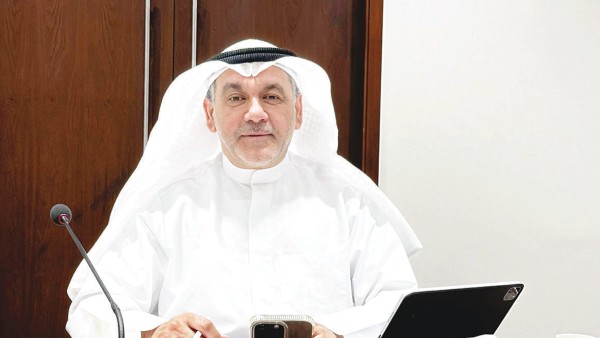
Municipal Council member Hassan Kamal warns of a gap between studies and implementation and calls for coordination among authorities.
Translated by Alqyas from Al-Seyassah — Original source
Project Licensing and Change of Use Without Inter-Agency Coordination Defers Crises
Road Expansion Alone Is Not Enough… Public Transport Is the Cornerstone of the Solution
The Master Plan Offers an Opportunity to Make Public Transport a Foundation, Not an Optional Add-on
Member of the Municipal Council, Dr. Hassan Kamal, emphasized that mandatory linkage between the outputs of traffic studies on one hand, and the issuance of construction permits, changes in land use, road development, and the public transport system on the other, is the fundamental guarantee for protecting Kuwait’s road network and avoiding the exacerbation of chronic congestion.
A Gap Between Study and Implementation
Kamal clarified that traffic studies assess the capacity of surrounding roads to absorb any new project, identify potential bottleneck points, and propose engineering solutions for them. However, the reality of some licensed projects or those with changed uses, particularly in existing urban areas, reveals a gap between the requirements of these studies and the mandatory implementation of their outputs prior to licensing and operation. This gap widens when solutions are limited to road expansion without public transport to reduce reliance on private vehicles.
He indicated that the Traffic Department requires close coordination among three main entities, in addition to developers:
- The Municipality, which grants permits and is responsible for land use.
- The General Directorate of Traffic at the Ministry of Interior, which approves traffic studies.
- The Ministry of Public Works, responsible for the design, implementation, and supervision of roads.
He pointed out that the lack of coordination among these entities defers crises. New projects, changes in use, and amendments to building and activity regulations all increase density, placing additional pressure on infrastructure unprepared to accommodate them. He stressed the need to compel the Ministry of Public Works and developers to implement the recommendations of approved studies early, before any project is commissioned, so that problems do not evolve into realities that are difficult to address engineering-wise. He called for strict scrutiny of the quality of study inputs, data, and adopted engineering standards. He noted that neglecting these studies leaves a cumulative impact that extends beyond local congestion to affect the region, governorate, and the country as a whole. Urban expansion without traffic alignment weakens road efficiency, drains the economy, and hinders development.
Public Transport as the Cornerstone of the Solution
Kamal affirmed that road expansion alone does not address congestion amid population growth, as increased capacity attracts more vehicles, leading to a return of congestion within years. Public transport, on the other hand, is the most effective option for moving large numbers of people using less road space and land. It contributes to reducing congestion, lowering the costs of time, fuel, and road maintenance, and limiting emissions and noise. It also enhances road safety, connects residential areas with employment and service centers, and provides an additional transport option. He viewed the Master Plan as an opportunity to make public transport a fundamental component in urban planning, rather than an optional add-on after land use approvals. This can be achieved by linking permits to public transport, reserving its routes and stations, integrating transport modes, ensuring simultaneous implementation, and establishing binding performance indicators for follow-up.
A Proactive Approach
In conclusion, Kamal called for technical scrutiny of traffic study inputs and the adoption of predictive models that simulate future population growth and geographical expansion. He demanded that no new investment, urban, or residential project be commissioned before the implementation of proposed traffic improvements and recommendations. He stressed that planning new cities requires a proactive approach that integrates urban design with public transport efficiency, ensuring quality of life and avoiding costly remedial measures later.
