Yemeni Ambassador to 'Al-Siyasa': Coexisting with the Houthi coup is a failed and costly option... domestically, regionally and internationally
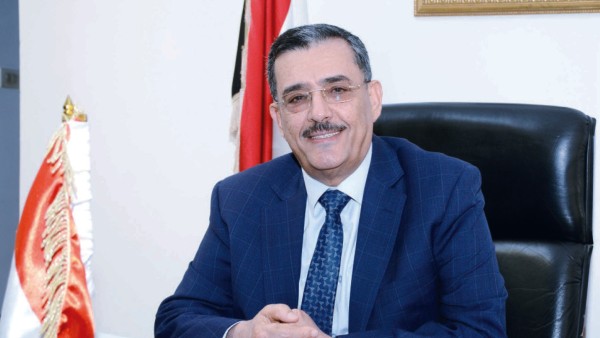
Yemeni Ambassador to Kuwait Ali bin Safaaf confirmed that coexisting with the Houthi coup is a failed option, and called for restoring state institutions to protect international navigation and regional security, stressing the need to disarm militias.
Translated by Alqyas from Al-Seyassah — Original source
“Managing the conflict instead of addressing its roots has turned the Red Sea and the Bab al-Mandab into a playground for extortion”
Restoring state institutions is not merely an internal demand, but a necessity to protect international navigation
Any political track that does not disarm militias is merely postponing the crisis and paving the way for a greater catastrophe
The Houthi belief that “rule is a divine right for a specific group” cannot serve as a foundation for state-building
Yemen will not accept the transformation of its territory or maritime corridors into platforms for threatening neighboring countries and international interests
Restoring state institutions is a fixed national goal and the only path to stabilizing Yemen and securing its neighborhood
The Yemeni Ambassador to Kuwait, Dr. Ali bin Safaaf, affirmed that the crisis in his country “has moved beyond the framework of internal conflict to one with regional and international dimensions,” warning that “continuing to manage the conflict rather than addressing its roots threatens the security and stability of the region, and turns the Red Sea and the Bab al-Mandab Strait into a arena for extortion and threats to global trade and energy.”
Ambassador bin Safaaf, in a statement to “Al-Siyasa” yesterday, stressed that “coexisting with the Houthi coup has proven to be a failed and costly option, and that restoring state institutions is no longer just an internal demand, but has become a necessity to protect international navigation.” He clarified that “the international community has relied in recent years on approaches based on freezing contact lines and seeking temporary humanitarian solutions, while accepting forced coexistence with Houthi militias as a de facto authority backed by Iran; however, recent developments have proven the failure of this approach and its inability to achieve lasting stability in Yemen.”
Threat to Navigation
The Yemeni ambassador stated that “the impact of the political vacuum and the weakness of state institutions is not limited to Yemen’s interior, but extends to threatening the world’s most important maritime corridors; the policy of crisis management has given armed groups sufficient time to reposition and develop their arsenal of missiles and drones with Iranian support, shifting from threatening local and Gulf stability to threatening international navigation.”
He affirmed that “military patrols alone are insufficient to protect maritime security and freedom of global trade, as long as the source of the threat remains on land,” emphasizing that “the restoration of the Yemeni state and its institutions has become a regional and international security necessity, based on three main considerations:
- Protecting the Yemeni people and halting their economic and livelihood depletion.
- Securing the Gulf and Arab neighborhood and halting Iranian expansion.
- Protecting international maritime corridors, which are linked to the interests of the entire world.”
He viewed that “any political track that does not lead to the disarmament of militias and their confinement solely to the state will be nothing more than a postponement of the crisis and a prelude to a greater catastrophe.” He added that “Yemen needs a genuine international partnership that ends the war at its roots and restores its role as an active partner in the security and stability of the region.”
Protecting Aden
In response to a question about recent military developments, bin Safaaf clarified that “the repositioning of southern forces in the Bab al-Mandab and Al-Dabab airport areas came within strategic priorities, which include: securing the temporary capital of Aden, enhancing the protection of maritime corridors, and supporting efforts to lift the siege on the city of Taiz, while continuing the (Yemen Dawn) operation to achieve its objectives of ending the Houthi coup.” He pointed out that “the repositioning is a reorganization of ranks, following the significant depletion suffered by government forces in recent years,” stressing the importance of “empowering the state and the coast guard to protect coastlines, ports, territorial waters, and combat smuggling operations, in parallel with international efforts to protect ships in the Red Sea.”
Ambassador Bin Sifaaf emphasized that “Yemen will not accept the conversion of its territories, ports, or maritime passages into platforms for threatening neighboring countries or international interests,” stressing that “the Houthi threat now endangers regional security, international navigation, and humanitarian operations.” He also highlighted “the resilience of the city of Taiz in the face of the Houthi siege; the militias have failed to achieve their objectives in the city despite employing various military means and continuing their pressure.”
Regarding humanitarian affairs, the Yemeni ambassador called for “distinguishing between citizens residing in areas under Houthi control and the militias themselves,” clarifying that “the legitimate government is responsible for all Yemenis without exception, both in liberated areas and in areas under Houthi control. It is keen on delivering humanitarian aid to all citizens and rejects the policy of collective punishment.”
He urged the international community to “provide economic, security, and institutional support to the legitimate government so it can fulfill its responsibilities toward the Yemeni people across all governorates,” calling for “the implementation of United Nations Security Council resolutions regarding arms embargoes, and the disruption of smuggling and financing networks that benefit the Houthi militias, whether from Iran or other parties, alongside efforts to list the Houthis on Arab terrorist lists.”
Declining Popularity
Ambassador Bin Sifaaf stressed the necessity of exerting “international pressure for the immediate release of detained United Nations staff held by the Houthis,” expressing concern over “the trial of UN employees in Sana’a and the possibility of unjust verdicts against them, which necessitates maintaining a unified international stance on restoring state institutions and ending security threats.”
The ambassador expressed optimism about the possibility of “a breakthrough in the Yemeni crisis,” noting that “the Houthis’ actions in recent periods have led to a decline in their popularity, even in areas under their control.” He stated that, in his assessment, “the group has resorted to coercion and force to recruit young people and compel students to join its ranks, having lost the ability of the slogans it championed in previous years to attract citizens.”
The Yemeni ambassador addressed a message to the Houthis, urging them to “abandon weapons and engage in political life as a Yemeni component.” He said they could “exercise party activities, participate in elections, and run for public office, just like other Yemenis, rather than imposing power by force.” He criticized what he termed “the Houthis’ belief that rule is a divine right confined to a specific group,” asserting that “such ideas cannot serve as a foundation for building a modern state based on equal citizenship.” Ambassador Bin Sifaaf concluded that “hope for resolving the Yemeni crisis remains alive, regardless of how long the war lasts, and that a genuine political solution must be based on equality among all Yemenis and reliance on constitutional institutions and the democratic process,” reaffirming that “restoring state institutions and sovereignty remains a steadfast national goal, and the path to achieving security and stability for Yemen and its regional neighborhood, as well as protecting international interests.”
