Election of 5 judges to the 'International Court of Justice' opens file on independence of international judiciary
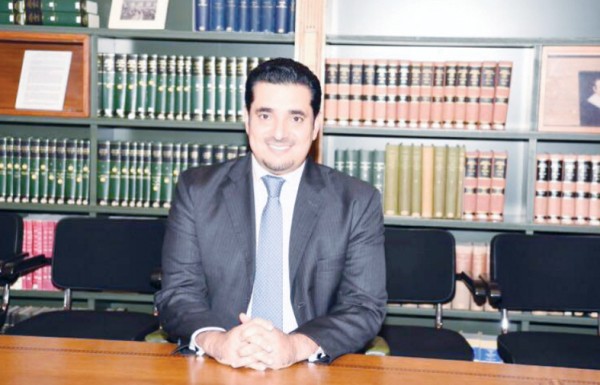
The United Nations elected five judges to the International Court of Justice for a nine-year term, highlighting the importance of judicial independence and global and Gulf representation in international institutions.
Translated by Alqyas from Al-Seyassah — Original source
Kuwait and the Gulf... When will a judge reach the Peace Palace?
As international conflicts escalate and the need for recourse to the law grows, the United Nations elected five judges to the International Court of Justice (ICJ) on November 3, 2026, for nine-year terms beginning on February 6, 2027.
The results included the election of Dapo Akande from the United Kingdom, François Alabrune from France, Mahmoud Daif Allah Hamoud from Jordan, Rina Lee from Singapore, and Phoebe Okowa from Kenya, with the Jordanian and Kenyan judges being re-elected for full new terms.
From a legal and practical perspective, given my tenure from 2012 to 2020 at the Peace Palace in The Hague, which houses the International Court of Justice and the Permanent Court of Arbitration, and my representation of the State of Kuwait and the Asian continent in international justice institutions, the significance of the election lies in the names of the winners, the nature of the Court’s independence, the qualifications leading to membership, and the potential to build a future Kuwaiti and Gulf judicial presence at the ICJ.
Kuwait, whose modern history is linked to international legitimacy
The election of judges is subject to specific legal safeguards
Gulf Cooperation Council (GCC) countries possess diplomatic expertise
Preparing a qualified Kuwaiti or Gulf judge to compete is an institutional project
Elections held in three rounds without veto power
Nine candidates competed for five seats in elections conducted independently by the General Assembly and the Security Council. Four seats were decided in the first round, while the election of Kenyan judge Phoebe Okowa required three rounds.
A candidate needed 97 votes in the General Assembly and eight votes in the Security Council to win, with no veto privilege for the five permanent members.
Article 10 of the Court’s Statute explicitly prohibits discrimination between permanent and non-permanent members when electing judges; therefore, no state can use its veto power to prevent the election of a candidate who has secured the required majority.
This differs from the selection of the UN Secretary-General. Article 97 of the Charter requires his appointment by the General Assembly based on the Security Council’s recommendation, which is a substantive recommendation subject to Article 27, allowing any permanent member to block it via veto.
This difference reflects the nature of the two systems: the election of judges is protected by specific legal safeguards that shield the process from the voting privileges of major powers, whereas the Security Council retains a decisive role in selecting the UN’s chief administrative officer.
The veto does not automatically extend to other international posts. For instance, the election of judges and the Prosecutor of the International Criminal Court (ICC) follows the Rome Statute without Security Council voting. However, substantive decisions by the Council regarding the establishment of international institutions or missions, and defining their mandates, may be subject to the veto, without implying that all its appointments are subject to it.
The International Court of Justice: 15 judges and independence from governments
The Court was established in 1945 and began its work in 1946. It is headquartered at the Peace Palace in The Hague and consists of fifteen judges elected for nine-year terms, with five seats renewed every three years.
It has jurisdiction to settle legal disputes between states, provided there is a basis for its jurisdiction, and to issue advisory opinions at the request of authorized international bodies. It differs from the International Criminal Court, which tries individuals for crimes within its jurisdiction.
The ICJ applies international treaties, customary international law, and general principles of law, and refers to judicial decisions and legal scholarship, in accordance with its Statute.
The elected judge does not represent their country’s government, nor may the Court include two judges of the same nationality. Its composition must also reflect the main legal systems and major civilizations.
The new judges hold international qualifications and experience that contributed to their securing the required votes:
Dapo Akande – United Kingdom:
Holds a Bachelor of Laws from the University of Ibadan in Nigeria, a Master of Laws from the London School of Economics, and is a Professor of International Law at the University of Oxford. He is a member of the International Law Commission and specializes in armed conflicts, immunities, and the use of force.
François Alabrune – France:
Studied law at the University of Limoges, graduated from the Institut d'Études Politiques de Paris (Sciences Po) and the École nationale d'administration (ENA). He served as Director of Legal Affairs at the French Ministry of Foreign Affairs, acted as Ambassador to the Netherlands, and participated in negotiations leading to the establishment of the International Criminal Court.
Mahmoud Daffallah Hamoud – Jordan:
Holds a Bachelor of Laws from the University of Jordan, a Master’s degree from George Washington University, a diploma in International Human Rights Law from Lund University, and another Master’s degree from the Franklin Pierce Law Center. He served as Jordan’s Permanent Representative to the United Nations and chaired the International Law Commission in 2021.
Rina Lee – Singapore:
Holds Bachelor’s and Master’s degrees in Law from the National University of Singapore, and an honorary doctorate from the University of Aberdeen. She has served as Ambassador for International Law, chaired negotiations on the 2023 High Seas Biodiversity Treaty, and possesses expertise in the law of the sea.
Phoebe Okowa – Kenya:
Holds a Bachelor of Laws from the University of Nairobi, a Kenyan Legal Practice Certificate, and both a Postgraduate Diploma in Law and a Doctorate from the University of Oxford. She is a Professor of International Law at Queen Mary University of London and specializes in international responsibility and environmental law.
These curricula vitae reveal three professional pathways to the international judiciary: the academic and research track, the legal-diplomatic track, and the track of litigation and international arbitration. These paths are overlapping, and none necessarily requires prior service as a national judge or the possession of a doctorate, provided the candidate meets the competence and integrity standards set forth in the Statute.
Five cases highlight the scope of judicial responsibility
The elections coincide with several cases currently pending before the International Court of Justice that have significant global and Arab implications, including:
South Africa v. Israel:
Concerning the application of the Convention on the Prevention and Punishment of the Crime of Genocide in the Gaza Strip. The Court issued provisional measures in 2024, without rendering a final judgment on the establishment of genocide.
Palestine v. United States:
Regarding the transfer of the U.S. Embassy to Jerusalem, and the related issues concerning the Vienna Convention on Diplomatic Relations and the Court’s jurisdiction.
Canada and the Netherlands v. Syria:
Concerning obligations arising from the Convention against Torture and state responsibility for preventing and investigating violations.
Iran v. United States:
Regarding alleged violations of the 1955 Treaty of Amity, Economic Relations, and Consular Rights, underscoring the importance of international adjudication in disputes affecting the Gulf region.
Ukraine v. Russia:
Concerning the interpretation and application of the Convention on the Prevention and Punishment of the Crime of Genocide in the context of the Russian-Ukrainian war, and the boundaries of international jurisdiction.
These cases highlight the distinction between issuing a judicial ruling and enforcing it. Article 94 of the UN Charter obliges parties to a dispute to comply with the Court’s judgments, but it allows recourse to the Security Council in cases of non-compliance, where political considerations and the veto power over substantive decisions may resurface.
Kuwait and the Gulf
When does a judge reach the Palace of Peace?
The elections raise a question worthy of attention from Kuwaiti and Gulf legal and diplomatic institutions: why is there no Kuwaiti or Gulf candidate prepared for membership on the International Court of Justice, unlike the Jordanian and Singaporean experiences, and following the precedents set by Morocco, Algeria, and Egypt?
Kuwait, whose modern history is tied to international legitimacy following the brutal Iraqi invasion in 1990, possesses significant experience in defending state sovereignty and resolving disputes through legal means. Similarly, Gulf Cooperation Council (GCC) states have expertise in diplomacy, arbitration, and the law of the sea.
There are no reserved seats for Kuwait or the Gulf. Candidates are nominated through national groups at the Permanent Court of Arbitration, and election requires approval from both the General Assembly and the Security Council.
The experiences of Jordan and Singapore demonstrate that access to the Court does not depend on the size of the state, but rather on building legal expertise with an international presence.
Hence, there is a need for a Gulf strategy encompassing advanced academic qualification, participation in international law committees, and experience in judicial and arbitral institutions, while supporting diplomatically viable candidacies with respect for the independence of candidates.
The next periodic elections are scheduled for 2029, for a term beginning in February 2030, with the possibility of extraordinary elections to fill any vacant seats.
From the Palace of Peace to the Future of International Justice
The 2026 elections affirm that the independence of international judiciary does not rest solely on legal provisions, but on the qualifications and integrity of judges, and their ability to apply the law free from governmental interests. This underscores the importance of enhancing the Arab and Gulf legal presence in international institutions by strengthening the rule of law.
Given The Hague’s significance as a center for international justice, preparing a qualified Kuwaiti or Gulf judge to compete for membership on the Court is an institutional project worthy of study and early planning. A country’s standing is measured not only by its political and economic presence, but also by the legal expertise it contributes to the independence and construction of international justice.
Former observer on the Executive Council of the Permanent Court of International Justice at the Peace Palace, The Hague
